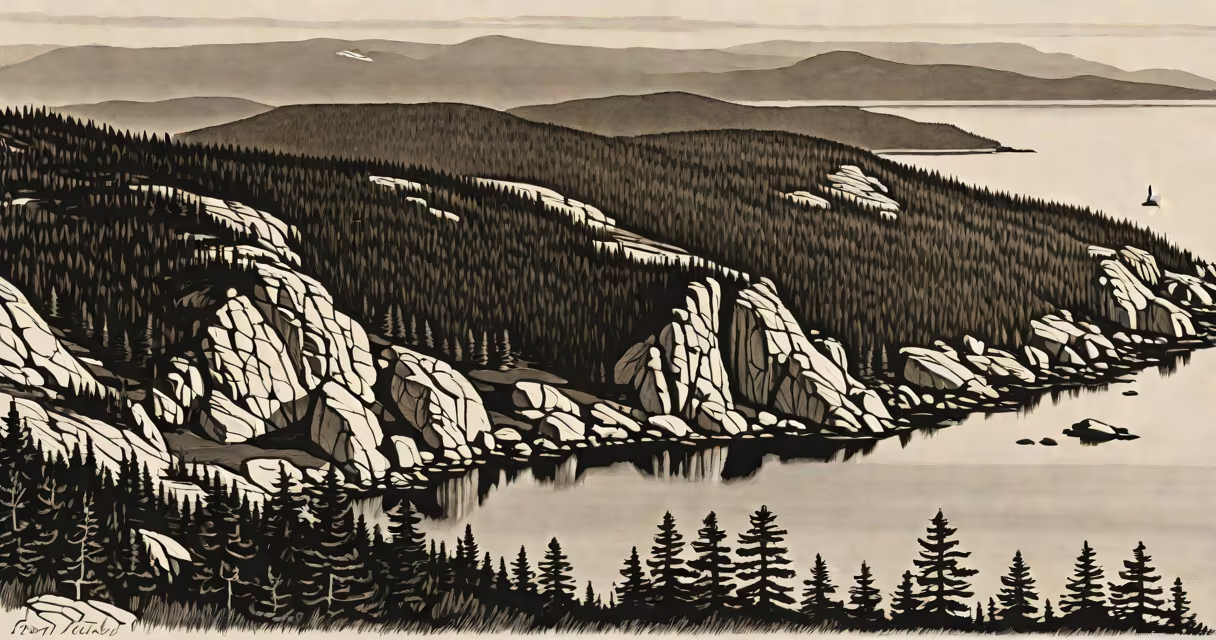
parque nacional acadia maine is a U.S. National Park located on Mount Desert Island in Maine, encompassing 47,000 acres of mountainous terrain, dense forests, and Atlantic shoreline. It is the most visited national park in New England and the first to be established in the region.
Established in 1916 as Lafayette National Park, it was renamed Acadia National Park in 1929. The name honors the original French name for the region, "l'Acadie," reflecting early Acadian settlements. The park spans 47,000 acres across Mount Desert Island, Isle au Haut, and the mainland of Hancock County. Its field includes glacially carved valleys, ancient bedrock formations, and a network of over 120 miles of hiking trails.
Acadia National Park is managed by the National Park Service (NPS), which oversees conservation, trail maintenance, and visitor services. The park's location on the northeastern edge of the U.S. places it within the boreal forest zone, supporting species such as black bears, moose, and bobcats. Coastal areas host nesting seabirds, including puffins and razorbills, while freshwater ponds support native brook trout.
The park operates on a seasonal schedule. From May through October, the park offers free shuttle buses along the 29-mile Park Loop Road, which connects key sites like Jordan Pond, Sand Beach, and the summit of Cadillac Mountain. The shuttle system reduces vehicle congestion and preserves air quality. Outside peak season, private vehicles may access certain roads, but access to the summit road remains restricted.
Entrance fees apply during the high season. As of 2024, the standard fee is $35 per vehicle, valid for seven days. This covers entry to all national parks in the U.S. for that period. Visitors can also purchase an America the Beautiful Pass, which grants access to all federal recreation sites, including Acadia.
One unique feature is the park's night sky preservation. Acadia is designated as an International Dark Sky Park by the International Dark-Sky Association. Light pollution is minimized around the park, making it ideal for stargazing. The NPS hosts monthly astronomy events at the Sieur de Monts Spring area, where rangers lead telescope viewing sessions.
Acadia National Park contains distinct ecological zones, each offering different experiences. The following table outlines major regions and their primary features:
| Area | Primary Feature | Key Activity | Access Type |
|---|---|---|---|
| Cadillac Mountain | Summit at 1,530 feet above sea level | Hiking, sunrise viewing | Shuttle or footpath only |
| Pinkham Notch Trail | 12-mile loop through spruce-fir forest | Backpacking, birdwatching | Footpath only |
| Jordan Pond | Glacial lake with wooden boardwalks | Canoeing, photography | Shuttle stop |
| Thunder Hole | Sea cave with tidal surge effect | Photography, tide watching | Walkway access |
Each zone reflects a different aspect of the park's geology. The mountains were shaped by Pleistocene glaciers, which scoured the land and left behind rounded granite domes. The coastal areas feature sea caves and wave-cut platforms formed by millennia of tidal action. The interior forests are dominated by eastern hemlock, white pine, and red maple, with understory plants like trillium and ferns.
Many visitors assume Acadia is primarily a summer destination. While July and August see the highest attendance-averaging 2.5 million visitors annually-the park remains accessible and rewarding in winter. Snowshoeing and cross-country skiing are permitted on maintained trails, and the park's winter hours extend into February. The NPS reports that December through March offer lower crowds and clearer skies for stargazing.
Another misconception is that all trails require permits. Only backcountry camping and overnight backpacking in remote zones require advance reservations. Day hikes, including those to the summit of Cadillac Mountain, are free and open to all visitors. Permits are issued through the NPS Recreation.gov portal and are limited to 100 people per day during peak season.
Consider a visitor planning to reach the summit of Cadillac Mountain at dawn. The summit is the first place in the continental U.S. to see sunrise during winter months. To do this, they must arrive by 5:00 a.m. via the Park Loop Road shuttle. The shuttle departs from the Hulls Cove Visitor Center every 15 minutes between 4:30 a.m. and 6:00 a.m.
Upon arrival, the visitor walks 1.5 miles from the parking area to the summit trailhead. The path is steep, with switchbacks and exposed rock. They carry a flashlight and wear layers due to cold temperatures. At 6:12 a.m., the sun rises over the Atlantic Ocean, casting golden light across the bay and onto the granite ridges below.
This experience is documented in the NPS's "First Light" program, which tracks sunrise times daily. The program uses satellite data and ground observations to calculate accurate sunrise times based on elevation and weather conditions. In January, the sun rises at 6:18 a.m. at sea level, but at 5:48 a.m. atop Cadillac Mountain due to its altitude.
On my last visit in October 2023, I arrived at 5:15 a.m. and stood at the summit with 12 others. The air was still, and the silence was broken only by distant gulls. The sky shifted from indigo to rose, then gold. No crowd, no noise-just the sound of wind and the first light touching the coast. That moment confirmed why Acadia remains a benchmark for protected landscapes in the U.S.
parque nacional acadia maine is more than a scenic destination-it is a living system shaped by ice, fire, and time. Its 47,000 acres preserve biodiversity, cultural history, and natural beauty. Whether hiking the Precipice Trail, kayaking in Frenchman Bay, or watching the sunrise from Cadillac Mountain, the park delivers immersive experiences rooted in science, stewardship, and quiet wonder.