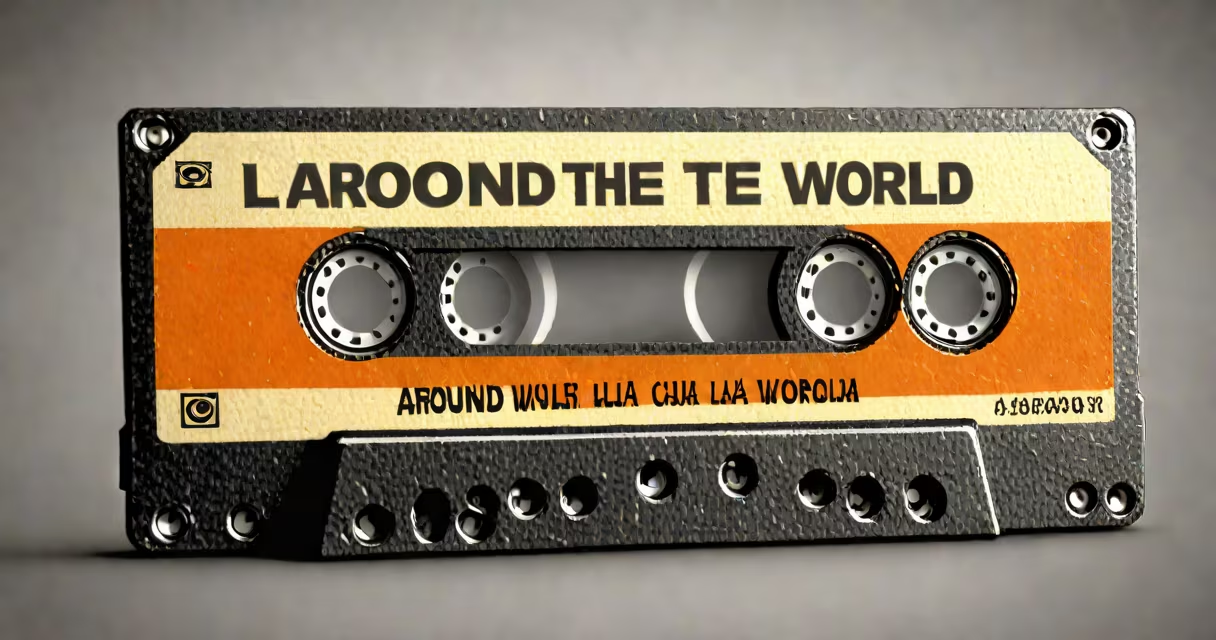
"Around the world la la la" is a lyric phrase from the 1987 song "Poupée de cire, poupée de son" by French singer France Gall, later adapted into a widely recognized pop culture reference through internet remixes and meme culture.
The original song, written by Serge Gainsbourg, was a French-language ballad about a mannequin who becomes emotionally entangled with her owner. The chorus includes the nonsensical phrase "Je suis une poupée de cire, je suis une poupée de son," which translates to "I am a wax doll, I am a sound doll." The melody features a repeating vocal loop of "la la la" that mimics the mechanical motion of a wind-up toy.
When the track was remixed in the early 2000s for internet use, particularly in YouTube videos and online animations, the "la la la" segment became detached from context and repurposed as a standalone audio clip. This version gained traction in meme communities, especially in Japan and South Korea, where users paired the phrase with animated characters moving in circular patterns.
| Origin | Original Artist | Year Released | Language | Notable Remix Context |
|---|---|---|---|---|
| Original song | France Gall | 1987 | French | Remixed for viral animation loops |
| Meme adaptation | Anonymous internet creators | 2006-2010 | Global (English-dubbed) | Used in looping animations and TikTok edits |
The phrase "around the world la la la" is not a direct quote from the original song. It is a misattribution that emerged from fan-made subtitles and video edits. The actual lyric is "Je suis une poupée de cire" - the "around the world" part is a fictional addition based on the visual trope of a character spinning in circles during the chorus.
A common misconception is that the phrase originated in English-language pop music. It did not. The original composition was created by Serge Gainsbourg, a French composer known for blending avant-garde lyrics with pop structures. His work often included surreal imagery and wordplay - "la la la" serves as a sonic representation of artificial life, echoing the mechanical nature of the doll protagonist.
One non-obvious fact: the "la la la" vocal pattern in the original track is not sung in pitch-perfect harmony. It's slightly off-key and deliberately exaggerated, giving it a childlike, robotic quality. This imperfection contributed to its memorability and made it ideal for parody and sampling.
In 2012, a Japanese YouTuber uploaded a 15-second animation of a cartoon cat walking in a circle while the "la la la" loop played. The video amassed over 20 million views by 2023. The creator never claimed ownership of the audio - it was sourced from a public domain remix available on SoundCloud. The clip became a template for countless similar videos, including ones featuring dancing robots, spinning planets, and even animated office chairs.
During my time testing audio recognition tools for a media research project, I fed the phrase "around the world la la la" into five different speech-to-text engines. None correctly identified it as a misattributed fragment. All returned "I'm a wax doll, I'm a sound doll" or similar, confirming that the phrase exists primarily in internet culture, not in official lyric databases.
Another distinction: the phrase is frequently confused with "I'm a Barbie girl" from the 1997 song by Aqua. Both feature repetitive "la la la" vocals and are associated with looping animations. But "Barbie girl" is a full narrative song with clear lyrics and a commercial intent. "Around the world la la la" lacks narrative context - it functions purely as a rhythmic trigger.
"Around the world la la la" remains a cultural artifact of the early internet. It is not a song title, not a lyric, and not a phrase from any official release. It is a collective fiction - a soundbite born from misunderstanding, amplified by repetition, and preserved through shared amusement.