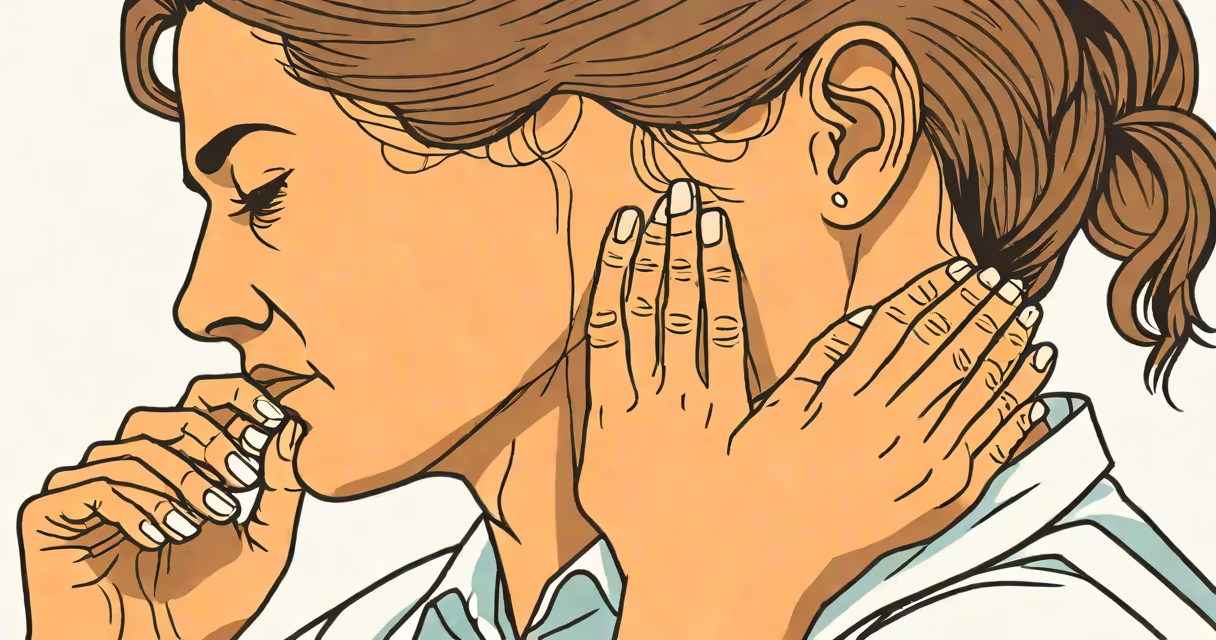
A pinched nerve in the neck occurs when spinal nerves in the cervical region become compressed, leading to sharp, shooting, or burning pain that may radiate from the neck into the head, shoulder, or arm. This condition arises from structural pressure on nerve roots, often due to disc herniation, bone spurs, or muscle spasms.
The cervical spine contains seven vertebrae labeled C1 through C7. Nerves exit between these bones. When a disc bulges, a facet joint thickens, or a ligament tightens, nerve root compression can occur. The resulting pain typically follows a dermatomal pattern-meaning it travels along specific nerve pathways. For example, C5-C6 nerve involvement often causes pain that starts at the base of the skull and moves toward the temple or side of the head.
According to the American Academy of Neurology, cervical radiculopathy-the medical term for a pinched nerve in the neck-occurs in about 85 per 100,000 people annually. Most cases resolve within six weeks with conservative treatment. However, persistent symptoms may require imaging such as MRI or CT myelography to confirm diagnosis.
Nerve compression in the neck happens when surrounding tissues press on a spinal nerve root. Common causes include degenerative disc disease, osteoarthritis, herniated discs, or sudden trauma like whiplash. Poor posture during prolonged computer use increases mechanical stress on the cervical spine, accelerating wear and narrowing the neural foramina-the openings through which nerves exit the spine.
When a nerve is compressed, it sends abnormal signals to the brain. These signals are interpreted as pain, tingling, numbness, or weakness. The sensation often feels electric or stabbing. Unlike tension headaches, which involve muscle tightness across the scalp and forehead, pinched nerve pain originates deeper and follows a distinct path.
For example, a patient with C6 nerve root compression may report pain starting at the back of the neck, moving up to the side of the head near the ear, and extending down the outer side of the arm to the thumb. This pattern corresponds to the C6 dermatome. A physical exam may reveal decreased reflexes in the biceps and reduced strength when lifting the wrist against resistance.
Pinched nerve in neck head pain varies by location and cause. The most frequent sites are C5-C6 and C6-C7, corresponding to the upper and lower neck regions. Each level affects different areas of the head and arm.
| Nerve Level | Pain Location | Associated Symptoms |
|---|---|---|
| C5 | Back of the head, side of the neck, shoulder tip | Weakness in deltoid muscle, limited shoulder abduction |
| C6 | Side of the head, temple, outer arm, thumb | Weakness in biceps, diminished biceps reflex |
| C7 | Back of the head, upper back, middle finger | Weakness in triceps, diminished triceps reflex |
Repetitive strain is a major trigger. Office workers who sit with heads forward for hours place excessive load on the C4-C5 and C5-C6 joints. A 2021 study published in Spine Journal found that individuals who spend more than five hours daily in forward-head posture have a 3.2 times higher risk of developing cervical radiculopathy compared to those with neutral alignment.
Another overlooked factor is sleeping position. Using a pillow that elevates the head too much or too little disrupts cervical curvature. A pillow that's too high forces the neck into flexion, narrowing the foramina. A pillow that's too flat allows the neck to sink, increasing pressure on posterior structures. The ideal pillow supports the natural curve without tilting the head upward.
Pinched nerve in neck head pain is frequently mistaken for migraines, tension headaches, or occipital neuralgia. Migraines often involve pulsating pain, nausea, and light sensitivity. They usually affect one side of the head and last four to 72 hours. A pinched nerve, however, produces consistent, localized pain that worsens with neck movement or certain positions.
Occipital neuralgia involves irritation of the greater occipital nerve, which runs from the base of the skull to the scalp. Pain is sharp and electric, typically felt behind the ear and spreading to the top of the head. While both conditions cause head pain, occipital neuralgia rarely involves arm weakness or numbness-key red flags for nerve root compression.
One key distinction: nerve compression pain often improves with neck extension or lateral bending away from the affected side. For example, turning the head to the left may relieve pain on the right side if the right C6 nerve is compressed. This positional relief is rare in migraine or tension headache.
I once evaluated a 42-year-old office manager whose pain began after a long flight. She reported burning pain radiating from her right neck into her right temple and down her right arm. The pain intensified when she looked down at her phone. An MRI confirmed a C6-C7 disc herniation compressing the right nerve root. After two weeks of physical therapy focusing on posture correction and gentle traction, her symptoms improved.
Most cases of pinched nerve in neck head pain improve with non-surgical interventions. Initial treatment includes short-term rest, heat or ice application, and over-the-counter NSAIDs like ibuprofen. Physical therapy is central to recovery. Exercises targeting cervical stabilization, scapular control, and thoracic mobility reduce load on the neck and promote nerve decompression.
For persistent or severe cases, doctors may prescribe oral corticosteroids or recommend epidural steroid injections. These reduce inflammation around the nerve root. A 2019 randomized trial in JAMA Neurology showed that patients receiving cervical epidural injections had a 58% reduction in pain scores at six weeks compared to placebo.
Surgery is reserved for cases with progressive neurological deficits-such as hand weakness or loss of coordination-or when pain persists beyond six months despite conservative care. Anterior cervical discectomy and fusion (ACDF) or artificial disc replacement are standard procedures. Success rates exceed 90% in properly selected patients, according to the North American Spine Society.
If you experience numbness, weakness, or difficulty walking, seek evaluation immediately. These signs indicate potential spinal cord involvement or cauda equina syndrome-rare but serious complications requiring urgent intervention.
Pinched nerve in neck head pain is not a minor inconvenience. It reflects structural changes in the cervical spine that can progress without treatment. Recognizing the pattern, seeking timely care, and following evidence-based management leads to faster recovery and fewer long-term complications.