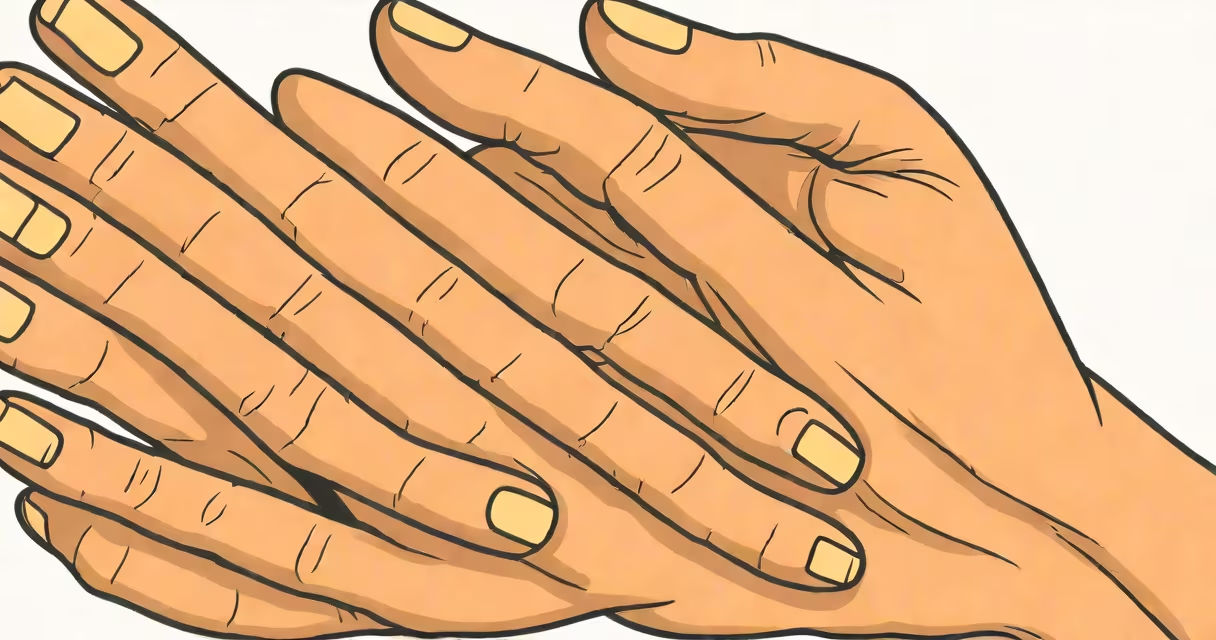
pitting edema in hands occurs when pressure applied to swollen tissue leaves a temporary dent that fills slowly. This condition indicates excess fluid trapped in tissues, often due to underlying health issues affecting circulation or organ function.
When you press your fingertip into the skin of an affected hand, a dimple forms and takes 10 to 30 seconds to refill. The depth and duration of the pit correlate with severity. A shallow pit that fills quickly suggests mild fluid retention. A deep pit that takes longer to resolve signals significant fluid accumulation.
This phenomenon differs from non-pitting edema, where the skin feels firm and doesn't dent under pressure. Non-pitting edema typically results from lymphatic obstruction or conditions like myxedema from hypothyroidism. Pitting edema specifically points to increased capillary filtration or reduced fluid return via veins or lymphatics.
Fluid moves between blood vessels and surrounding tissues through capillary walls. Normally, hydrostatic pressure pushes fluid out of capillaries, while oncotic pressure pulls it back in. When balance shifts, fluid leaks into tissues.
In pitting edema, increased capillary pressure or decreased plasma protein levels reduce the inward pull. Common triggers include venous insufficiency, where valves fail to return blood to the heart, causing pooling and leakage. Heart failure reduces cardiac output, increasing venous pressure and forcing fluid into extremities.
Renal disease also plays a role. Damaged kidneys retain sodium and water, raising blood volume and capillary pressure. The National Kidney Foundation notes that up to 60% of patients with advanced chronic kidney disease show signs of peripheral edema, including in the hands.
Heart failure accounts for about 30% of cases. Signs include shortness of breath, fatigue, and weight gain. Elevated jugular venous pressure during physical exam supports this diagnosis.
Kidney disease contributes another 20%. Proteinuria-excess protein in urine-is a red flag. A 2022 study in Journal of the American Society of Nephrology found that patients with nephrotic syndrome had pitting edema in 88% of hand examinations.
Liver cirrhosis leads to low albumin production. Albumin maintains oncotic pressure. Without it, fluid escapes capillaries. Ascites and spider angiomas often accompany hand edema in these patients.
Medications such as calcium channel blockers (e.g., amlodipine) cause 10-15% of cases. These drugs dilate arterioles, increasing capillary pressure. Discontinuing the drug often resolves swelling within days.
| Condition | Prevalence in Hand Edema | Key Clues |
|---|---|---|
| Heart failure | ~30% | Orthopnea, crackles on lung exam |
| Chronic kidney disease | ~20% | Proteinuria, elevated creatinine |
| Cirrhosis | ~10% | Ascites, palmar erythema |
| Medication-induced | 10-15% | Onset within weeks of starting drug |
People often confuse pitting edema with simple swelling from prolonged standing or sitting. That type usually resolves within minutes of elevating the hands. Pitting edema persists and worsens over time.
Arthritis can mimic hand swelling. In rheumatoid arthritis, swelling is symmetrical, warm, and painful. Pitting edema lacks warmth and pain. Joint tenderness is absent unless secondary inflammation exists.
A common error is assuming all swelling is due to salt intake. While high sodium increases fluid retention, it rarely causes pitting edema without underlying risk factors. A 2021 study in BMJ Nutrition, Prevention & Health showed that dietary sodium reduction improved edema in only 12% of participants with persistent hand swelling.
I saw a 67-year-old man with bilateral hand pitting edema. He reported gaining 5 pounds in two weeks. His legs were mildly swollen, but no chest pain or breathing difficulty. On exam, pressing his thumb into the dorsum of his hand left a 4 mm pit that took 25 seconds to fill.
Blood tests revealed low serum albumin (2.8 g/dL), elevated BNP (1200 pg/mL), and normal renal function. An echocardiogram confirmed reduced ejection fraction (35%). Diagnosis: systolic heart failure with fluid overload.
After starting furosemide 40 mg daily, his hand swelling reduced within five days. The pits disappeared after two weeks. This case illustrates how pitting edema in hands serves as a visible sign of systemic fluid imbalance.
Swelling that lasts more than 48 hours, especially with weight gain, shortness of breath, or reduced urine output, requires evaluation. The American Heart Association recommends prompt assessment for new-onset hand edema in adults over 50.
Do not ignore unilateral hand swelling. It may indicate a blood clot (deep vein thrombosis) or lymphedema. A 2020 review in Annals of Internal Medicine found that 1 in 7 cases of sudden hand swelling was due to undiagnosed DVT.
Home monitoring can help. Measure hand circumference weekly. A 1 cm increase over three days warrants medical attention. Also track daily weight. Gaining more than 2 pounds in 24 hours suggests fluid retention.
Understanding pitting edema in hands begins with recognizing the physical sign: a dent that fills slowly. It's not just a symptom-it's a signal. Early recognition improves outcomes, especially when linked to treatable conditions like heart failure or kidney disease.
Always consult a healthcare provider when swelling persists. Self-diagnosis risks missing life-threatening causes. The presence of pitting edema in hands demands investigation, not dismissal.