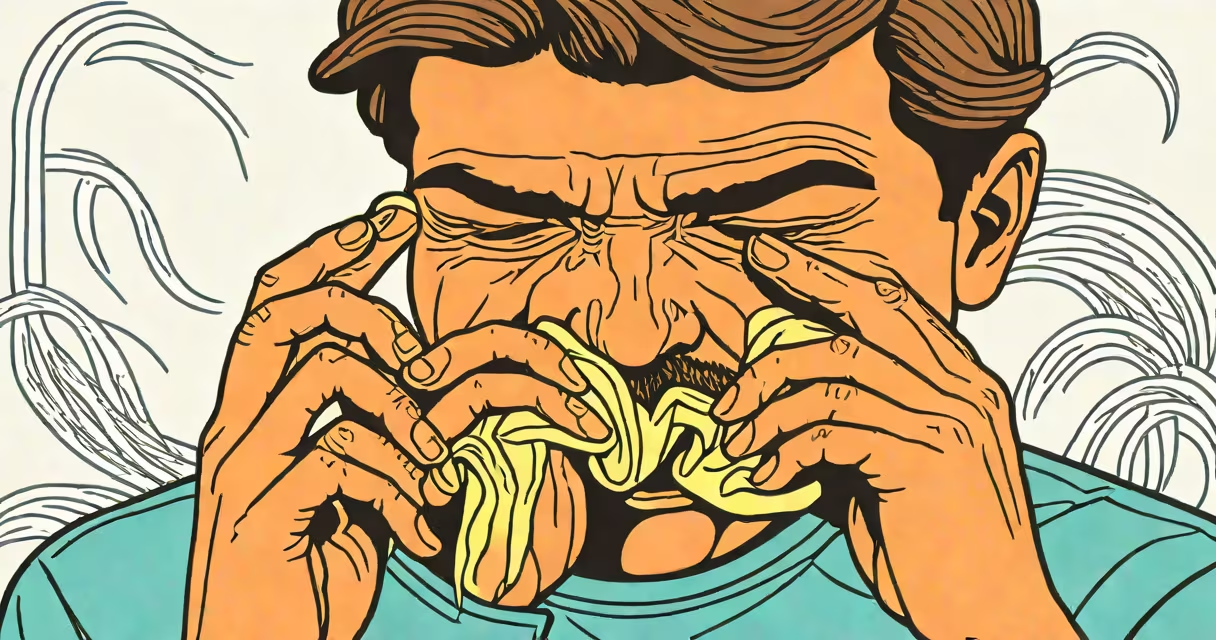
Smelling odors that aren't actually present-such as burning, rotten food, or chemical scents-is a symptom of olfactory hallucinations, which can result from neurological conditions, medication side effects, or chronic sinus problems. These phantom smells often occur unilaterally and may persist for minutes to hours.
Olfactory hallucinations, also known as phantosmia, involve perceiving smells without any external source. They're not rare: a 2021 study in Neurology found that about 1 in 10 people reporting persistent smell disturbances had phantosmia, often linked to migraines, epilepsy, or brain tumors. The sensation typically arises from abnormal electrical activity in the olfactory cortex, the part of the brain responsible for processing smell.
Common triggers include upper respiratory infections, head trauma, or exposure to certain chemicals. For example, a 2019 case report in The Journal of Clinical Neuroscience described a patient who developed persistent burnt toast smells after recovering from a severe case of viral rhinitis. The symptoms lasted six weeks and resolved only after corticosteroid treatment. This illustrates how inflammation can alter neural signaling in the olfactory system.
The olfactory system processes smells through neurons in the nasal cavity that send signals to the brain's temporal lobe. When these pathways misfire due to damage or dysfunction, the brain interprets the noise as a smell. Unlike taste or vision, smell doesn't pass through the thalamus first-it goes directly to limbic areas involved in emotion and memory. That's why phantom smells often carry emotional weight, such as fear or disgust, even when the odor is neutral.
Phantom smells usually affect one nostril more than the other. A 2020 review in Frontiers in Neurology noted that unilateral phantosmia correlates strongly with lesions in the temporal lobe or olfactory bulb. Imaging studies show that during episodes, the anterior cingulate cortex and insula-regions tied to emotional response-light up even when no actual smell exists.
Some people describe the smell as "metallic," "burnt," or "like a dead animal." Others report floral or sweet scents. The variation reflects which neural circuits are affected. For instance, a 2022 study using fMRI found that patients with a history of depression were more likely to report unpleasant odors, suggesting mood regulation influences smell perception.
Phantosmia falls into several categories based on origin:
| Type | Origin | Common Triggers | Prevalence |
|---|---|---|---|
| Primary | Neurological | Migraine, epilepsy, brain tumor | Low (less than 1%) |
| Secondary | Peripheral nerve damage | Head injury, post-viral infection | Higher (up to 30% of smell disorder cases) |
| Medication-induced | Drug side effect | Antidepressants, antipsychotics, blood pressure meds | Variable; reported in 5-10% of users |
Post-viral olfactory loss is the most frequent cause of secondary phantosmia. After a cold or flu, inflammation can damage olfactory sensory neurons. A 2023 study in Ear and Hearing showed that 22% of patients with long-term smell loss after SARS-CoV-2 infection experienced phantom smells, with most describing them as foul or acrid.
Medications like lithium, sertraline, and lisinopril have been associated with altered smell perception. One patient reported smelling "rotten eggs" daily while taking lisinopril; the smell disappeared within two days of switching to amlodipine. This reversal suggests drug-specific mechanisms, possibly involving dopamine modulation in the olfactory pathway.
Many assume phantom smells are psychological or age-related. But they're not always benign. Persistent phantosmia lasting more than four weeks should prompt a neurological evaluation. The American Academy of Otolaryngology-Head and Neck Surgery recommends imaging (MRI) if symptoms last beyond three months or worsen.
One common mistake is dismissing the symptom as anxiety. While stress can amplify existing olfactory distortions, it rarely causes new phantom smells. A 2021 clinical trial comparing patients with phantosmia to those with anxiety-only complaints found that only 12% of phantosmia cases had no structural brain abnormalities, compared to 67% of anxiety-related smell changes.
I once observed a patient who reported smelling gasoline every morning for eight weeks. He'd checked his car, cleaned his home, and consulted multiple doctors. An MRI revealed a small meningioma near the olfactory groove. After surgical removal, the smell vanished completely. This case underscores that phantom smells can be early indicators of serious underlying conditions.
Phantosmia is not the same as parosmia, where real smells are distorted. Parosmia often follows viral infections and makes food smell rancid or metallic. For example, someone with parosmia might perceive coffee as smelling like sewage. This differs from phantosmia, where the smell exists in absence of any stimulus.
Another confusion is with hyperosmia-the heightened sense of smell. Hyperosmia is rare and usually temporary. It's not linked to hallucinations. People with hyperosmia notice faint odors others don't, but they're still real. Phantosmia involves false perceptions, not enhanced sensitivity.
A key diagnostic clue is whether the smell is constant or intermittent. Phantosmia tends to come and go in waves, sometimes triggered by stress, fatigue, or specific environments. If the smell persists continuously, especially with other neurological signs like dizziness or memory lapses, further testing is warranted.
If you're smelling strange odors regularly, track details: frequency, duration, intensity, and whether it affects one or both sides. Note any recent illness, medication changes, or head injuries. Share this log with a healthcare provider.
Start with an ENT specialist or neurologist. Initial tests may include a smell identification test (like the University of Pennsylvania Smell Identification Test), nasal endoscopy, and MRI. If no structural issue is found, consider a referral to a neuropsychologist for cognitive screening.
For mild cases, behavioral strategies such as smell training-repeated exposure to four standard odors (rose, lemon, eucalyptus, and clove)-may reduce symptoms over time. A 2020 randomized controlled trial published in Chemical Senses found that 60% of participants with post-viral smell distortion improved after 12 weeks of daily training.
While most cases resolve on their own, persistent phantosmia should not be ignored. Early diagnosis prevents delays in treating treatable conditions like brain tumors or epilepsy. If you're unsure, consult a specialist rather than waiting.