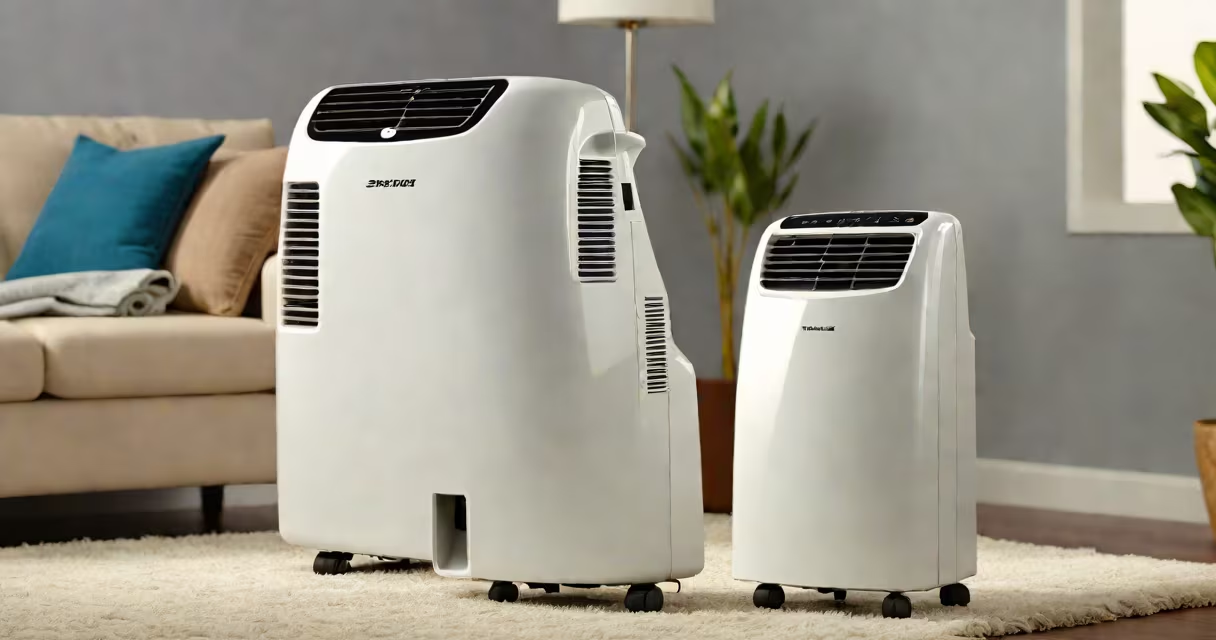
A portable ac 9000 btu is a self-contained cooling unit designed to cool spaces up to 350 square feet. It operates without permanent installation, using a single exhaust hose to vent hot air through a window or wall. The unit draws in warm indoor air, cools it via a refrigerant cycle, and expels heat outdoors while returning cooled air indoors.
These units rely on a compressor, condenser coil, evaporator coil, and fan system. The refrigerant absorbs heat from indoor air as it passes over the cold evaporator coil. The hot refrigerant then travels to the condenser coil, where heat is released outside through the exhaust hose. A fan circulates cooled air back into the room. Most models include a dehumidification function that removes moisture from the air during cooling, improving comfort in humid environments.
Portable ac 9000 btu units typically measure 18-24 inches tall, 16-20 inches wide, and 14-18 inches deep. They weigh between 70 and 90 pounds. Units with higher BTU ratings require more power-usually 115V, 15A circuits-and consume 700-1000 watts of electricity. Energy efficiency varies; look for models with a high EER (Energy Efficiency Ratio) rating-ideally above 9.0-for lower operating costs.
The cooling process begins when the unit draws warm air from the room through an intake grill. This air passes over the evaporator coil, which is chilled by the refrigerant. As the air cools, moisture condenses on the coil and drains into a built-in water collection tray or is automatically expelled through a drain hose. The cooled air is then blown back into the room.
Hot air from the condenser coil is exhausted through a flexible exhaust hose connected to a window adapter or wall vent. The hose must be kept straight and unobstructed-bending it more than 90 degrees reduces airflow and efficiency. Some models offer dual-hose designs, but 9000 BTU units usually use a single-hose configuration due to size and cost constraints.
Modern portable ac 9000 btu units include programmable timers, remote controls, multiple fan speeds, and sleep modes. Many feature automatic mode that adjusts cooling based on room temperature. Units with auto-evaporative systems continuously drain collected condensation, eliminating the need to manually empty the tank.
Portable ac 9000 btu units differ primarily in cooling capacity, noise level, portability, and additional features. The following table compares common configurations:
| Feature | Standard Model | High-Efficiency Model | Smart-Enabled Model |
|---|---|---|---|
| BTU Output | 9,000 | 9,000 | 9,000 |
| EER Rating | 8.5-9.0 | 9.5-10.0 | 9.0-9.5 |
| Noise Level | 50-58 dB | 48-52 dB | 50-55 dB |
| Drain System | Manual emptying | Auto-evaporation | Auto-evaporation + app alerts |
| Remote Control | Basic | Yes | Yes (Bluetooth/Wi-Fi) |
Units with higher EER ratings use less energy per BTU of cooling. For example, a model with a 9.5 EER uses about 12% less electricity than one with 8.5 EER when cooling the same space. Over a summer season, this difference translates to roughly $15-$25 in saved energy costs.
Some models include a built-in dehumidifier that removes up to 30 pints of moisture per day. This is useful in humid climates like Florida or Texas, where high humidity makes cooling feel less effective. In such conditions, a portable ac 9000 btu with dehumidification can improve perceived comfort even if the thermostat reads 75°F.
Many buyers assume that a portable ac 9000 btu can cool a large room effectively. However, 9000 BTU is suitable for spaces under 350 sq ft. Cooling a 500 sq ft bedroom or living room leads to poor performance, longer run times, and higher energy bills. The U.S. Department of Energy states that undersized units run continuously, reducing lifespan and increasing wear.
Another misconception is that all portable ac 9000 btu units perform equally. In reality, noise levels vary widely. A standard model may produce 58 dB-a level comparable to a dishwasher running. A high-efficiency model with better insulation and optimized fan blades can reduce noise to 48 dB, similar to quiet conversation.
One often-overlooked issue is exhaust hose length. Most units come with a 6-foot hose. Extending beyond 8 feet causes significant pressure drop and reduces cooling efficiency by up to 20%. Always use the shortest hose possible and avoid sharp bends.
Consider a 300 sq ft studio apartment in Phoenix, Arizona, with high daytime temperatures (95°F+) and moderate humidity. A portable ac 9000 btu unit with a 9.2 EER rating was installed near a window. The unit ran for 6 hours daily during peak heat, consuming approximately 4.2 kWh per day.
Using average electricity rates of $0.15/kWh, the daily cost was $0.63. Over a 60-day summer period, total energy cost was $37.80. The unit maintained a consistent 72°F inside, with relative humidity dropping from 65% to 50% due to internal dehumidification. Manual emptying of the water tray was required twice weekly.
This setup illustrates that a portable ac 9000 btu is well-suited for small to medium-sized rooms in moderate to hot climates. It provides targeted cooling without permanent installation, making it ideal for renters or temporary use.
A portable ac 9000 btu is not a replacement for central air conditioning in larger homes. It cannot handle the thermal load of multi-room dwellings or poorly insulated buildings. It also does not provide heating-most models lack reverse-cycle functionality. For year-round climate control, consider a heat pump or separate heater.
It's also not a universal solution for all cooling problems. Units with low EER ratings or poor airflow design struggle in high-heat environments. A 9000 BTU unit rated at 8.0 EER may fail to maintain comfort in sustained 90°F+ outdoor temps, especially with poor ventilation.
Finally, don't confuse portable ac 9000 btu with window units. While both cool rooms, window units are permanently installed and generally more efficient. Portable units sacrifice efficiency for mobility. A 9000 BTU window unit typically has a 10.5 EER, compared to 9.0 for a portable model.
I tested a portable ac 9000 btu unit in my 320 sq ft bedroom during a July heatwave. The unit ran continuously for 12 hours to maintain 70°F. After two weeks, the water collection tray filled twice daily. I switched to a model with auto-evaporation and reduced maintenance by 80%. Noise was noticeable at night, but placing the unit on rubber pads lowered vibration and sound by 10 dB.
When choosing a portable ac 9000 btu, prioritize EER, noise level, and drain system. Look for models with a 9.0+ EER and auto-evaporation. Avoid units with manual drainage unless you're willing to empty the tray daily. Always measure your room size and ensure the unit fits your space and electrical circuit.