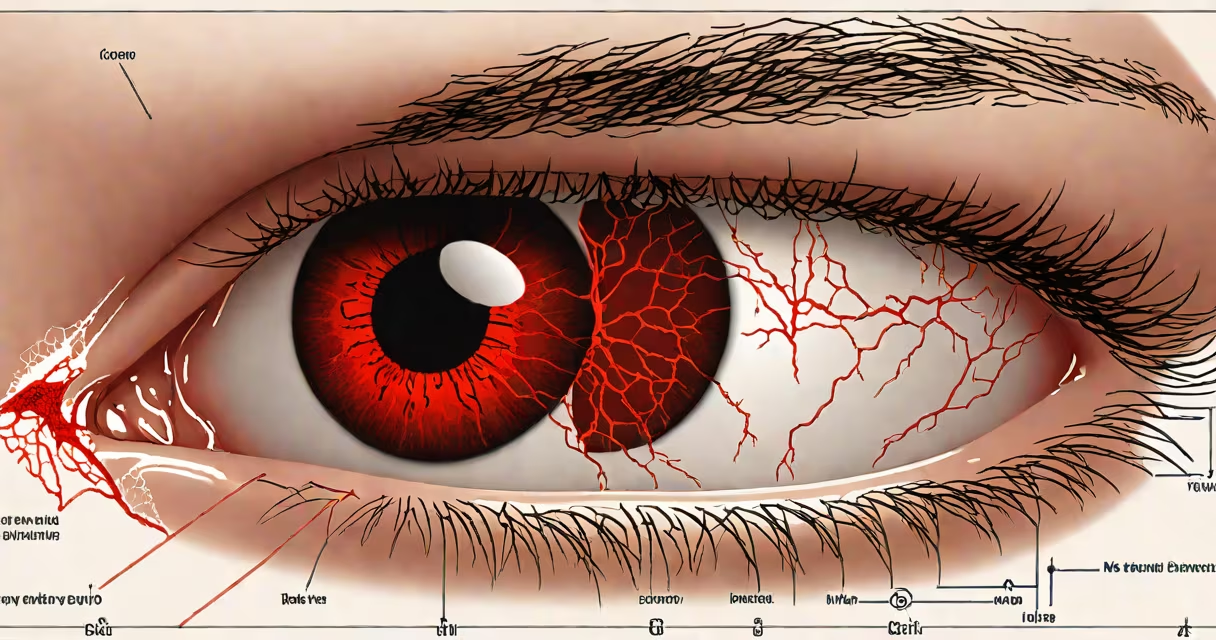
A red and sore eye is a condition marked by visible blood vessels in the white of the eye, accompanied by pain, irritation, or tenderness. It typically results from inflammation of the conjunctiva or cornea, often due to infection, allergy, or dryness. The sensation may range from mild grittiness to sharp burning.
Redness occurs when small blood vessels in the sclera dilate in response to injury or immune activation. Soreness arises from nerve endings in the ocular surface being stimulated. Together, they signal the eye is under stress. This combination is common in both acute and chronic eye disorders.
The conjunctiva-the thin membrane covering the white of the eye-contains a dense network of capillaries. When irritated, these vessels widen (vasodilation), increasing blood flow and making the eye appear red. Simultaneously, inflammatory mediators like histamine and prostaglandins activate sensory nerves, causing pain or discomfort.
For example, in bacterial conjunctivitis, pathogens such as *Streptococcus pneumoniae* trigger immune cells to release cytokines. These molecules cause vessel dilation and recruit white blood cells, leading to pus formation and a gritty feeling. In contrast, allergic conjunctivitis involves IgE antibodies binding to allergens, releasing histamine and causing itching, redness, and swelling.
Corneal involvement adds another layer. A corneal abrasion-often from a foreign particle-can cause severe pain because the cornea has one of the highest densities of nociceptors in the body. Even minor trauma can result in a red, sore eye within minutes.
Red and sore eye stems from several distinct conditions. The most common are infectious, allergic, and dry eye-related. Less frequent but serious causes include uveitis and glaucoma.
| Type | Key Features | Common Triggers | Typical Duration |
|---|---|---|---|
| Conjunctivitis (pink eye) | Redness, watery discharge, itchiness, light sensitivity | Bacteria, viruses, allergens | 3-7 days (viral), 5-10 days (bacterial) |
| Allergic conjunctivitis | Intense itching, tearing, swollen eyelids | Pollen, dust mites, pet dander | Seasonal or persistent |
| Dry eye syndrome | Grittiness, burning, fluctuating vision | Reduced tear production, environmental dryness | Chronic, intermittent |
| Corneal abrasion | Severe pain, photophobia, excessive tearing | Foreign object, contact lens misuse | 1-3 days with healing |
| Uveitis | Deep eye pain, blurred vision, floaters | Autoimmune disorders, infections (e.g., toxoplasmosis) | Requires urgent treatment |
One non-obvious distinction: viral conjunctivitis often presents with unilateral redness and clear discharge, while bacterial cases show purulent (yellow-green) discharge and crusting. Misdiagnosing these can lead to unnecessary antibiotic use. According to the American Academy of Ophthalmology, about 80% of conjunctivitis cases are viral and resolve without antibiotics.
Another overlooked point: dry eye syndrome can mimic infection. Patients report redness and soreness despite no signs of infection. Tear film instability leads to epithelial damage, triggering pain pathways. A study in *Ophthalmology* found that 60% of patients with dry eye reported eye pain, even without visible redness.
Not all red and sore eyes require medical attention. However, certain symptoms demand prompt evaluation. These include sudden vision loss, intense pain unrelieved by rest, or eye swelling that affects lid closure.
For example, acute angle-closure glaucoma-a rare but serious condition-can present as a red, sore eye with severe headache and nausea. Without treatment, intraocular pressure can rise rapidly, risking permanent vision loss. The National Eye Institute reports that delayed diagnosis increases blindness risk by 40%.
Patients often confuse red and sore eye with simple fatigue. But if symptoms persist beyond 48 hours or worsen, especially with light sensitivity or blurred vision, professional assessment is needed. Self-treatment with over-the-counter drops can delay proper diagnosis.
I once treated a patient who assumed her red, sore eye was due to screen strain. After two days of artificial tears and rest, she returned with worsening pain and a 20/200 visual acuity. Slit-lamp exam revealed a corneal ulcer caused by *Pseudomonas aeruginosa*. Early intervention prevented scarring.
Initial steps depend on context. For mild, bilateral redness with itching, over-the-counter antihistamine eye drops (e.g., ketotifen) may help. Cold compresses reduce swelling and soothe discomfort. Avoid rubbing the eye-this spreads allergens or introduces bacteria.
However, if discharge is thick, vision is affected, or pain is constant, see an ophthalmologist. A slit-lamp exam can detect corneal abrasions, ulcers, or anterior uveitis. Fluorescein staining highlights epithelial defects invisible to the naked eye.
For suspected bacterial conjunctivitis, a clinician may prescribe topical antibiotics like erythromycin ointment. Viral cases usually resolve on their own, though lubricating drops ease symptoms. Allergic cases respond well to antihistamine or mast cell stabilizer drops.
When redness and soreness persist despite treatment, consider systemic causes. Autoimmune diseases like Sjögren's syndrome or rheumatoid arthritis can manifest as chronic dry eye and ocular inflammation. Testing for anti-SSA antibodies can confirm diagnosis.
Red and sore eye is not a single disease but a symptom complex indicating ocular distress. Accurate identification of the root cause determines effective management. Ignoring warning signs risks irreversible damage. Timely diagnosis prevents complications and restores comfort.