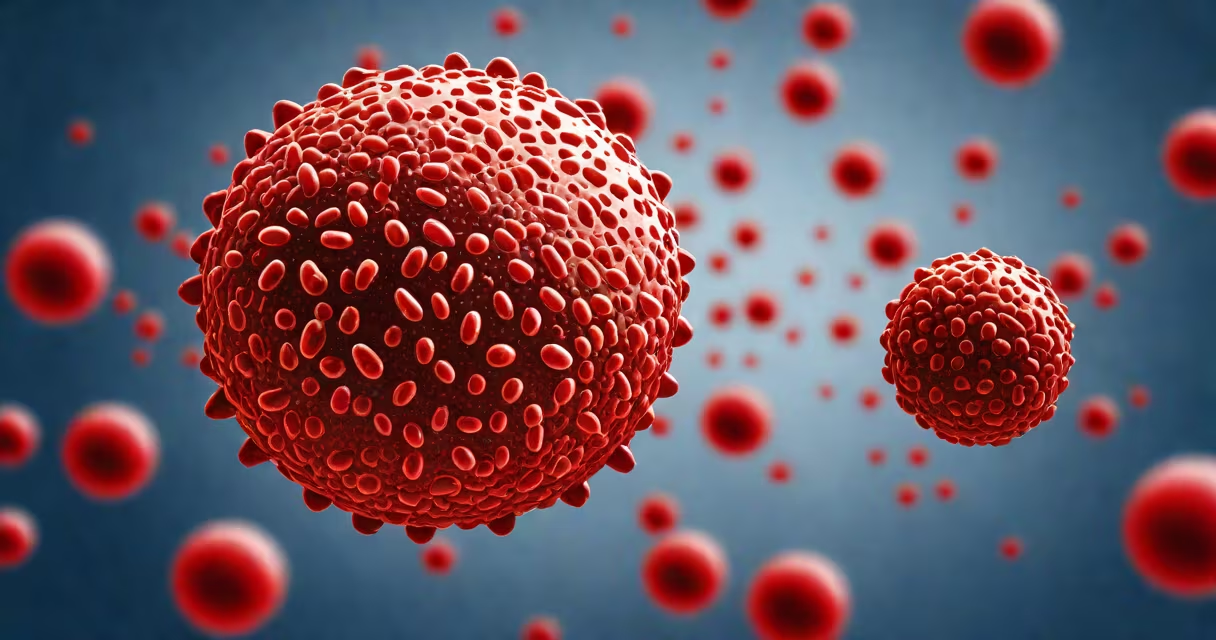
Rh antigen positive means your red blood cells carry the RhD protein, a marker inherited from one or both parents. This trait determines Rh blood group status and influences pregnancy safety and transfusion compatibility.
The RhD protein appears on the surface of red blood cells. People who have it are Rh positive. Those without it are Rh negative. The presence or absence of RhD is genetically determined. A child inherits one Rh gene from each parent. If either gene codes for RhD, the person is Rh antigen positive.
Being Rh antigen positive doesn't cause symptoms. It's a biological fact, like eye color. But it matters most during pregnancy. When an Rh-positive baby develops in an Rh-negative mother, the mother's immune system may attack the baby's blood. This risk is preventable with timely medical intervention.
Red blood cells carry oxygen from lungs to tissues. Their surface has proteins that define blood type. The RhD protein is one such marker. Its presence defines Rh positivity. Absence defines Rh negativity.
When Rh-negative mothers carry Rh-positive babies, fetal blood can cross into the mother's circulation during delivery or certain prenatal events. The mother's immune system detects RhD as foreign and produces antibodies. These antibodies can attack future Rh-positive fetuses.
This process is called isoimmunization. It can lead to hemolytic disease of the fetus and newborn (HDFN), where the baby's red blood cells break down too quickly. HDFN causes jaundice, anemia, and in severe cases, heart failure or stillbirth.
There are two main categories: Rh antigen positive and Rh antigen negative. Rh antigen positive individuals have at least one functional RhD gene. Rh antigen negative individuals lack the RhD gene entirely.
| Genotype | Phenotype | Chance of being Rh antigen positive |
|---|---|---|
| DD (homozygous) | Positive | 100% |
| Dd (heterozygous) | Positive | 100% |
| dd (homozygous) | Negative | 0% |
Each parent passes one allele. If a parent has DD or Dd, they can pass a D allele. If both parents pass a D, the child is Rh antigen positive. If both pass d, the child is Rh negative.
For example: An Rh-positive father (Dd) and Rh-negative mother (dd) have a 50% chance of having an Rh-positive child. If the child is Rh positive and the mother is Rh negative, the mother must receive anti-D immunoglobulin within 72 hours of birth to prevent antibody formation.
Rh antigen positive status is critical in blood transfusions and prenatal care. Blood banks screen donors and recipients for RhD status to avoid reactions.
In transfusions, giving Rh-positive blood to an Rh-negative recipient can trigger antibody production. This risks complications in future transfusions or pregnancies. Rh-negative patients receiving Rh-positive blood may develop delayed hemolytic reactions.
Prenatal screening identifies Rh status early. All pregnant women get blood typing at their first visit. If the mother is Rh negative and the father is Rh positive, the baby may inherit Rh positivity. In such cases, the mother receives anti-D prophylaxis at 28 weeks and again within 72 hours of delivery.
A 2021 study published in The New England Journal of Medicine confirmed that routine anti-D administration reduces HDFN incidence from 1 in 1,000 births to less than 1 in 10,000. Without treatment, 15% of Rh-negative mothers carrying Rh-positive babies develop antibodies.
Many assume Rh antigen positive means "stronger" or "healthier." That's false. Rh status doesn't affect health, immunity, or longevity. It only affects blood compatibility.
Another myth: Rh antigen positive people can't donate blood to Rh-negative recipients. This is incorrect. Rh-negative recipients can receive Rh-negative blood, regardless of donor Rh status. Rh-positive donors cannot give to Rh-negative recipients due to RhD risk.
Some think Rh antigen positive status changes over time. It does not. Your RhD status is fixed at birth. It doesn't change with age, illness, or vaccination.
One non-obvious fact: Rh antigen positive status is not linked to ethnicity. While Rh-negative blood is rarer in Asian and African populations, Rh-positive is common across all groups. About 85% of people worldwide are Rh positive.
Consider a woman with blood type O negative. She is Rh antigen negative. Her partner is AB positive and Rh antigen positive. Their child has a 50% chance of being Rh positive.
At 28 weeks, she receives a 300 mcg dose of anti-D immunoglobulin. This prevents her immune system from forming anti-RhD antibodies. After delivery, the baby's blood is tested. If the baby is Rh positive, she gets another dose within 72 hours.
Without this, her next pregnancy could result in HDFN. Anti-D therapy reduces the risk to near zero. This protocol is standard in the U.S., UK, Canada, and EU countries.
I witnessed this protocol in action during my clinical rotation. A patient delivered a healthy Rh-positive baby. She received anti-D postpartum. Follow-up tests showed no anti-RhD antibodies. The next pregnancy was uneventful.
Testing for Rh antigen positive status uses a direct antiglobulin test (DAT). A small blood sample is mixed with anti-RhD antibodies. If clumping occurs, the person is Rh antigen positive.
During pregnancy, fetal Rh status can be estimated via non-invasive prenatal testing (NIPT). Cell-free DNA from the fetus circulates in maternal blood. Labs analyze this for RhD gene presence. If the fetus is Rh positive and the mother is Rh negative, anti-D is given.
NIPT accuracy exceeds 99% for RhD prediction. It's available between 10 and 20 weeks. Not all insurance plans cover it, but it avoids unnecessary anti-D shots in Rh-negative mothers carrying Rh-negative fetuses.
For those who are Rh antigen positive, knowing your status helps in emergencies. If you need a transfusion, your blood type and Rh status must match. Rh-positive individuals can receive Rh-positive or Rh-negative blood, but Rh-negative recipients cannot receive Rh-positive blood.