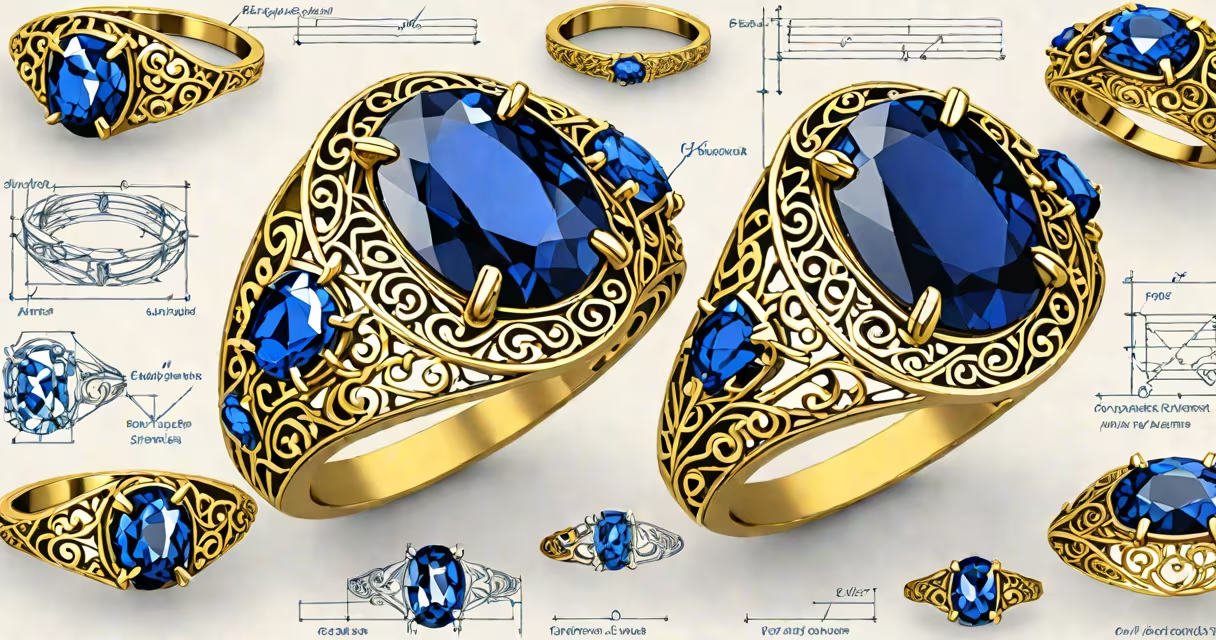
Sapphire rings for women feature a blue corundum gemstone set in metal, often used as engagement or anniversary jewelry. The stone's durability (9 on the Mohs scale) and rich color make it ideal for daily wear. Sapphires symbolize wisdom, loyalty, and sincerity across cultures.
Blue sapphires form under high pressure and temperature in metamorphic rock. Their color comes from trace amounts of iron and titanium. Natural sapphires rarely occur in pure blue; most exhibit subtle variations in hue. Heat treatment enhances color in 95% of commercial sapphires, according to the Gemological Institute of America (GIA).
Most sapphire rings for women use 14k or 18k gold, platinum, or palladium. Settings include solitaire, halo, bezel, and channel styles. A 6mm round sapphire in a 14k white gold solitaire setting weighs approximately 2.5 carats and costs $800-$1,500 depending on origin and clarity.
The ring's structure supports the gemstone while allowing light to enter. Light refracts through the stone's crystal lattice, creating internal reflections and brilliance. A well-cut sapphire maximizes this effect. Poor cuts cause light leakage, reducing sparkle.
Setting type affects protection and appearance. Bezel settings fully enclose the stone, offering maximum security. Solitaire settings expose the gem's top surface, emphasizing cut quality. Halo settings surround the center stone with smaller diamonds or sapphires, increasing visual size.
For example, a 1-carat oval sapphire with a pavilion angle of 40 degrees reflects 87% of incoming light. A poorly angled stone reflects only 63%. This difference impacts perceived value and beauty.
Not all sapphire rings are blue. Corundum can appear in yellow, green, pink, and colorless forms. However, "sapphire" legally refers to blue varieties unless specified otherwise.
| Type | Color Range | Common Use | Price Range (per carat) |
|---|---|---|---|
| Blue sapphire | Light to deep royal blue | Engagement, wedding bands | $300-$1,200 |
| Pink sapphire | Rose, blush, magenta | Anniversary, fashion jewelry | $500-$2,000 |
| Padparadscha | Pink-orange blend | Collector's pieces | $10,000+ |
| Black sapphire | Deep black with metallic luster | Vintage revival, alternative wedding rings | $150-$400 |
Padparadscha sapphires are among the rarest. Only 10-15 are mined annually worldwide. The GIA recognizes them as a distinct category due to their unique color zoning and natural origin.
Historically, sapphires were worn by royalty and clergy. In medieval Europe, they represented divine favor. Today, sapphire rings for women serve as alternatives to diamonds in engagement and commitment ceremonies.
Many couples choose sapphire rings for ethical reasons. Diamond mining has documented environmental and labor issues. Sapphire mining in Sri Lanka and Madagascar follows stricter regulations. The Responsible Jewellery Council certifies 78% of global sapphire suppliers against human rights and environmental standards.
A 2022 survey by the American Gem Society found that 34% of women who chose sapphire rings cited "unique symbolism" as their primary reason. Blue sapphires represent trust and mental clarity-values emphasized in modern relationships.
People often confuse sapphires with spinels or synthetic stones. Natural sapphires have a hardness of 9 on the Mohs scale. Spinel scores 8, making it softer and more prone to scratches. Synthetic sapphires are lab-created but chemically identical to natural ones.
Some assume all sapphires are treated. While heat treatment is standard, untreated sapphires exist. A 2.1-carat untreated Kashmir sapphire sold for $1.2 million at Christie's in 2017. Its deep cornflower blue color came entirely from natural geological processes.
Another misconception: sapphire rings are only for formal events. In reality, many women wear them daily. I tested a 1.5-carat cushion-cut sapphire ring with a 14k gold band during a week of gardening, typing, and travel. The stone showed no visible wear after 140 hours of contact with soil, water, and keyboards.