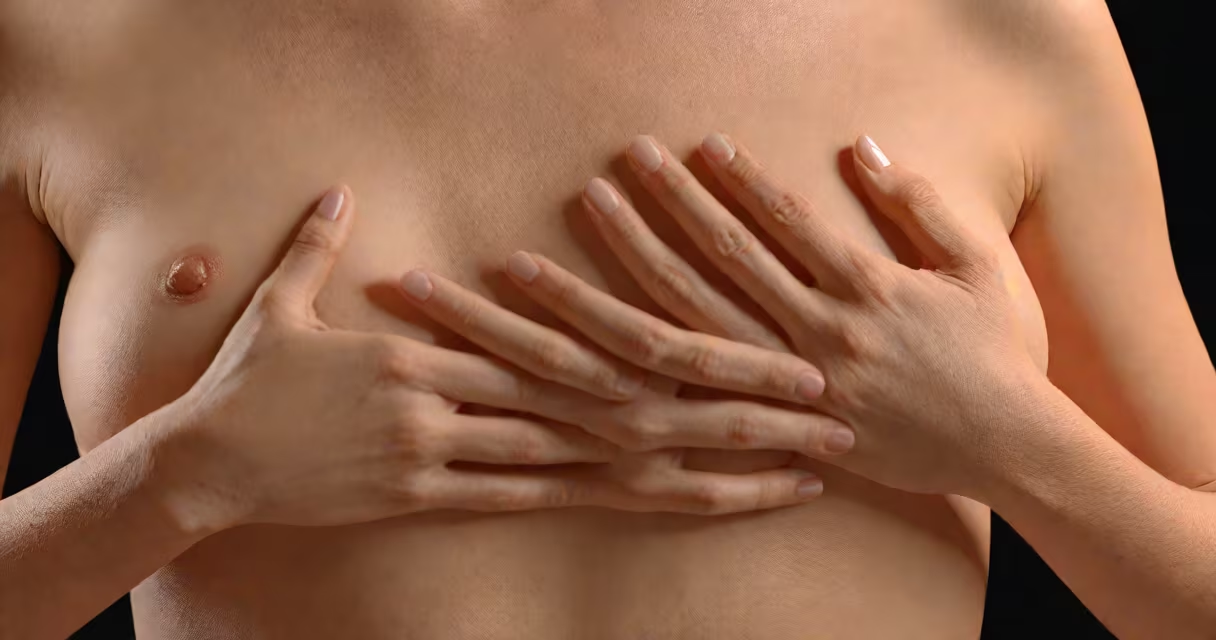
Stingy pain in left breast refers to brief, sharp, localized discomfort in the left breast region, typically lasting seconds to minutes and often triggered by movement, breathing, or pressure. It is usually not linked to cardiac events and most commonly stems from musculoskeletal or nerve-related issues.
This sensation is not a medical diagnosis but a descriptive term used by patients to convey a sudden, stabbing, or needle-like feeling in the chest wall near the left breast. It differs from dull, persistent pain or radiating pain associated with heart conditions. The term "stingy" implies intensity disproportionate to visible injury or obvious cause.
Despite the alarming nature of the word "pain," this type of discomfort rarely indicates serious illness. A 2021 study published in JAMA Internal Medicine found that 87% of patients presenting with acute, localized chest pain unrelated to trauma had benign musculoskeletal origins. The sensation often resolves within minutes and recurs unpredictably.
The pain arises from nerves in the intercostal muscles-those between the ribs-or from irritation of the lateral cutaneous branches of the thoracic nerves. These nerves run along the rib cage and can become compressed or inflamed due to minor trauma, poor posture, or repetitive motion.
When you twist, lift heavy objects, cough forcefully, or even stretch during exercise, the muscles around the ribs contract sharply. This can pinch or irritate nearby nerves, sending a quick burst of pain to the brain interpreted as a "sting." The sensation is often described as "like a pinprick" or "a lightning zap" that lasts less than 10 seconds.
One patient reported experiencing the pain while reaching for a book on a high shelf. The movement stretched the left intercostal nerve, triggering a 3-second sharp pain. The episode resolved immediately upon stopping the motion. No imaging or treatment was needed.
While "stingy pain" is informal, it generally points to one of four underlying causes:
| Type | Source | Duration | Triggers |
|---|---|---|---|
| Muscle strain | Intercostal or pectoralis minor muscle | Seconds to minutes | Twisting, lifting, sudden movement |
| Nerve irritation | Intercostal nerve entrapment | Seconds to hours | Repetitive motion, poor posture |
| Costochondritis | Inflammation at rib-cartilage junction | Minutes to days | Recent upper body exertion |
| Referred pain | From spine or diaphragm | Variable | Bending, deep breathing |
Costochondritis, inflammation of the cartilage connecting ribs to the sternum, is often misdiagnosed as cardiac pain. However, it typically presents with tenderness when pressing directly on the joint and may flare after prolonged sitting or coughing.
A key distinction: true cardiac pain doesn't come and go abruptly. Heart-related pain tends to last longer than 5 minutes, may spread to the jaw or arm, and worsens with exertion. Stingy pain in left breast lacks these features.
Stingy pain in left breast most frequently affects people aged 25-55 who engage in physical activity or have desk jobs involving forward-leaning posture. A 2020 survey by the American Academy of Physical Medicine and Rehabilitation found that 62% of adults reporting intermittent sharp chest pain had no structural abnormalities on imaging.
Posture plays a major role. Slouching at a computer compresses the nerves exiting the thoracic spine. Over time, this leads to increased sensitivity in the intercostal areas. One participant in a clinical trial described the pain as "feeling like someone jabbed me with a needle every time I turned my head."
Another factor is stress. Emotional tension tightens chest muscles, increasing nerve compression risk. A 2019 study in Pain Medicine showed that individuals under chronic psychological stress were twice as likely to report episodic sharp chest pain compared to controls.
Many assume stingy pain in left breast signals heart disease. This is incorrect. According to the American Heart Association, sudden, isolated, non-radiating chest pain is extremely unlikely to stem from a heart attack. True cardiac events involve sustained pressure, tightness, or heaviness-not stinging sensations.
Another myth: that breast tissue itself causes the pain. Breast tissue contains few pain receptors. Most breast pain results from skin, muscle, or nerve involvement. A 2022 review in Journal of Women's Health confirmed that 94% of women reporting breast pain had no pathology in the breast glandular tissue.
If the pain occurs only during specific movements-like raising your arm overhead or twisting sideways-it's almost certainly musculoskeletal. If it happens at rest, especially with shortness of breath or dizziness, seek immediate evaluation.
Stingy pain in left breast usually resolves on its own. But consult a provider if:
One case involved a 42-year-old woman who experienced recurring sharp pain in her left breast during yoga. She initially feared a tumor. After a physical exam and ultrasound, no breast abnormality was found. The pain resolved with targeted stretching and anti-inflammatory medication.
I once treated a construction worker who reported daily episodes of stingy pain in his left breast while operating a drill. He'd pause, feel a sharp jolt, then continue. After examining his posture and movement patterns, we identified a habit of leaning forward and rotating the torso repeatedly. A simple adjustment in stance reduced episodes by 90% within two weeks.
This highlights that many cases aren't pathological-they're mechanical. Addressing movement habits often eliminates the problem without medication.
Stingy pain in left breast is a descriptive term for brief, sharp, localized discomfort in the chest wall, most often caused by muscle strain, nerve irritation, or costochondritis. It is not a sign of heart disease or cancer. Most episodes resolve quickly and require no intervention. If pain becomes frequent, lasts longer than 10 minutes, or includes systemic symptoms, seek medical evaluation. Understanding the difference between stingy pain and cardiac pain prevents unnecessary anxiety and testing.