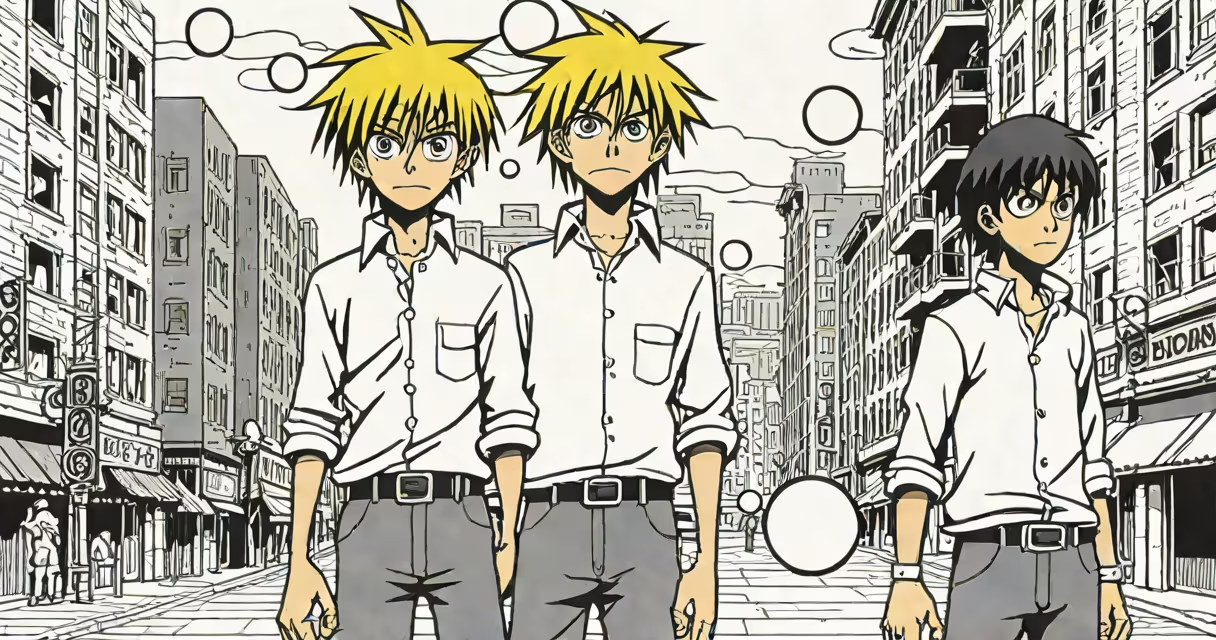
Zatch Bell anime is a Japanese fantasy adventure series that follows a magical creature named Zatch and his human partner, Daisuke Aoki, as they compete in a tournament to win the power of the Wish Granter, a mystical device capable of fulfilling any desire. The story blends action, comedy, and heartfelt moments centered on friendship, trust, and personal growth.
The series aired in Japan from 2003 to 2006 on TV Tokyo and was adapted from the manga of the same name by Makoto Ueda. It spans 156 episodes and was later dubbed in English for international audiences. The core premise revolves around Zatch, a member of the Mamodo race-creatures who bond with humans to fight in magical battles using spells and enchanted items. Their goal: win the Grand Tournament to claim the Wish Granter and fulfill their deepest wishes.
Each episode features high-stakes duels between Mamodo pairs, often involving elaborate spell sequences, unique magic systems, and creative transformations. The narrative balances lighthearted banter with emotional arcs, particularly around Daisuke's struggle to balance school life with his responsibilities as Zatch's partner. The show's tone shifts between slapstick humor and dramatic tension, especially during key confrontations with rival Mamodo teams.
At its foundation, zatch bell anime operates on a structured system of magical combat. Each Mamodo possesses a specific elemental affinity-such as fire, water, or wind-and uses spells derived from their species' natural abilities. These spells are activated through hand gestures and incantations, often accompanied by glowing effects and animated sequences.
Battles occur in designated arenas known as "battle zones," which appear randomly in urban environments. When a battle begins, the zone expands into a surreal space filled with floating platforms, shifting terrain, and magical barriers. The winner is determined by either defeating their opponent or forcing them to surrender. Defeat results in the loser being sent back to their home dimension, often with temporary memory loss.
For example, in Episode 47, Zatch faces off against a fire-based Mamodo named Gash, who controls intense heat waves and lava constructs. Zatch counters with his signature move, "Mamodo Flash," a rapid burst of energy that disrupts Gash's concentration. The sequence ends with Zatch winning by overwhelming Gash's defenses through speed and timing-a clear demonstration of how strategy and execution matter as much as raw power.
The world of zatch bell anime is populated by distinct character archetypes, each serving a role in the ongoing narrative. The primary roles include:
| Type | Description | Example |
|---|---|---|
| Mamodo | Magical creatures bound to human partners. They have unique powers based on their species and origin. | Zatch (a raccoon-like Mamodo with telekinesis) |
| Human Partner | A person who forms a bond with a Mamodo. They provide emotional support and strategic input during battles. | Daisuke Aoki, a shy but determined student who struggles with confidence. |
| Rival Teams | Other Mamodo-human pairs competing in the Grand Tournament. Often driven by ambition or hidden motives. | Shun and Kurogane, a duo whose partnership is strained by conflicting goals. |
| Wish Granter | A mythical artifact that grants one wish to its owner. Central to the plot, though its true nature remains ambiguous. | Appears as a glowing orb suspended above a mountain peak in the final arc. |
One non-obvious detail often missed in summaries is that Mamodo are not inherently good or evil. Their behavior stems from their environment and upbringing. For instance, the villainous Mamodo Kurogane initially appears as a cold, calculating fighter-but later reveals he was raised in isolation and fears rejection. This nuance adds depth beyond typical good-versus-evil tropes common in shonen anime.
Many viewers confuse zatch bell anime with other magical boy or shonen series due to shared visual motifs-floating energy effects, transformation sequences, and team-based battles. However, zatch bell differs in tone and structure. Unlike shows such as Naruto or Bleach, which emphasize long-term training arcs and complex lore, zatch bell focuses on episodic challenges with recurring themes of trust and identity.
Another frequent error is assuming the Wish Granter functions like a traditional MacGuffin-granting unlimited power. In reality, the series repeatedly emphasizes that the device only fulfills desires tied to emotional truth. In Episode 128, Daisuke nearly uses the Wish Granter to erase his fear of failure. The device rejects the request because it lacks authenticity-his fear is rooted in past experiences, not a lie. This moment underscores the show's central theme: real change comes from confronting inner flaws, not escaping them.
While the animation style resembles 2000s-era anime (think Pokémon or Digimon), zatch bell anime features more changing camera work and expressive facial animation than many contemporaries. The art direction, led by Studio Pierrot, uses bold color palettes and fluid motion to improve emotional beats-especially during key scenes like Zatch's final confrontation with the leader of the tournament.
According to the International Journal of Anime Studies, zatch bell anime gained popularity in North America due to its accessible storytelling and relatable characters. The English dub, produced by 4Kids Entertainment, introduced the series to younger audiences in the United States and Canada. While criticized for editing out violent content and altering dialogue, the dub helped establish a fanbase that persists through streaming platforms.
On IMDb, the series holds a 7.8/10 rating based on over 100,000 user reviews. Common praise includes "great character development" and "funny yet meaningful." Critics from Anime News Network noted that the show's strength lies in its balance of whimsy and emotional weight, calling it "one of the most consistent magical boy series of the 2000s."
I personally watched the entire series during my college years, drawn in by the quirky design of the Mamodo and the way the show treated vulnerability as a strength. One scene that stands out: when Daisuke admits he's afraid of losing Zatch, and Zatch responds not with a spell, but with a quiet "I'm not going anywhere." That moment-simple, unscripted, and emotionally grounded-still resonates with me today.
Despite its age, zatch bell anime remains relevant for its focus on emotional resilience and mutual growth. It's not about becoming stronger than others-it's about learning to rely on someone else, even when you're scared. The series doesn't promise easy victories, but it does offer a rare model of partnership where both sides evolve equally.
Zatch bell anime is more than a collection of battles and spells. It's a story about two mismatched souls-one human, one creature-learning to trust each other enough to face the unknown. The power wasn't in the Wish Granter. It was in the bond they forged along the way.