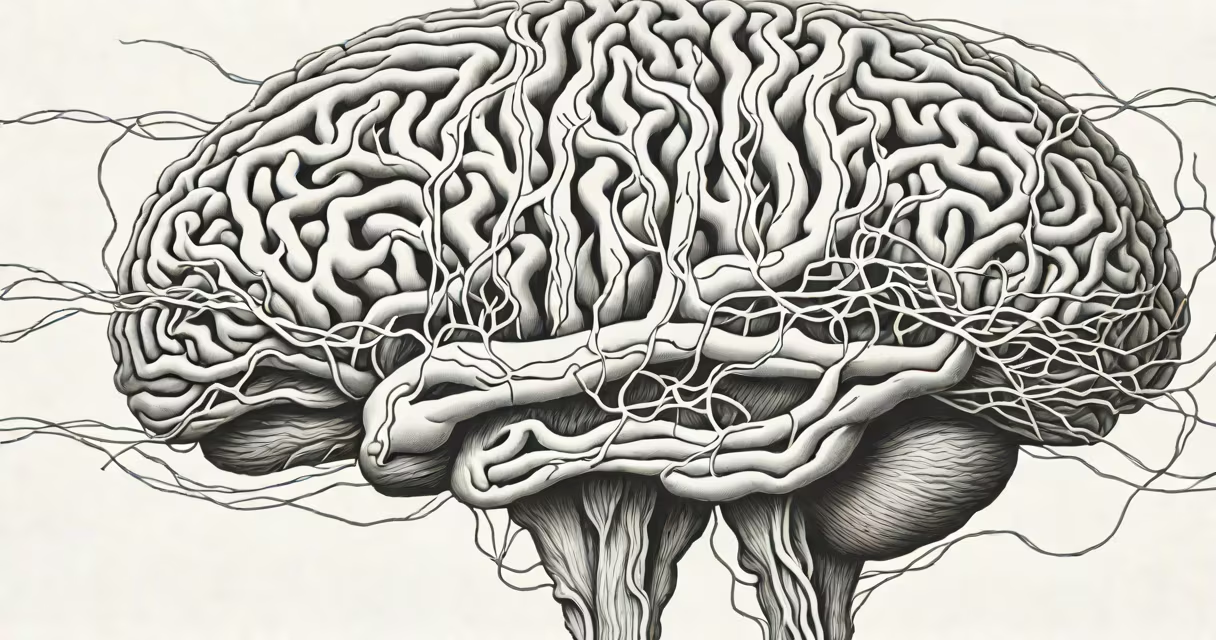
The subconscious mind and habits refer to automatic mental processes that drive routine behaviors without conscious awareness. These patterns form through repetition, wiring neural circuits that allow tasks like walking, driving, or brushing teeth to occur with minimal attention. The system operates below the level of deliberate thought, shaping decisions, emotional reactions, and long-term behavioral tendencies.
When you perform a task repeatedly-such as checking your phone every time it vibrates-the brain creates a shortcut. This shortcut becomes part of the subconscious mind's operating system. Over time, the behavior feels natural, even inevitable. You don't think about pressing the power button to turn on your computer; you do it because the subconscious mind has encoded the sequence as a habit.
Research from the University of Chicago shows that 43% of daily actions are performed automatically, not consciously planned. These behaviors are governed by the subconscious mind, which stores learned associations, emotional triggers, and ingrained routines. The process begins with a cue (a trigger), followed by a routine (the behavior), and ends with a reward (a positive outcome). This loop, identified by neuroscientist Charles Duhigg, explains how habits form and persist.
The subconscious mind functions as a high-speed processor. It filters sensory input, manages autonomic functions like breathing and heart rate, and executes learned behaviors without engaging conscious attention. When you walk into a room and automatically reach for a glass of water, your subconscious mind is interpreting environmental cues-light, temperature, past experiences-and acting accordingly.
Neuroimaging studies using fMRI show that habitual behaviors activate the basal ganglia, a cluster of nuclei deep within the brain involved in motor control and routine learning. As a behavior repeats, activity shifts from the prefrontal cortex (responsible for decision-making) to the basal ganglia. This shift reduces cognitive load, freeing mental resources for new challenges. The more often a behavior occurs, the more automated it becomes.
A real-world example: someone who drinks coffee every morning after waking up develops a habit loop. The cue is waking up. The routine is making coffee. The reward is the caffeine boost and ritual comfort. After weeks, the act becomes automatic. Even if the person decides to skip coffee, they may still feel compelled to go through the motions-because the subconscious mind has already stored the pattern.
Habits fall into four categories based on their function and origin. Understanding these types reveals how deeply the subconscious mind influences behavior.
| Type | Function | Subconscious Trigger | Example |
|---|---|---|---|
| Physical habits | Movement-based routines | Sensory cues (sound, smell) | Touching your face when stressed |
| Cognitive habits | Thought patterns | Emotional states (anxiety, boredom) | Ruminating on past mistakes |
| Emotional habits | Reactions to stimuli | Internalized beliefs | Flinching at loud noises due to childhood trauma |
| Social habits | Interaction patterns | Group norms or expectations | Interrupting others during conversation |
Each category relies on subconscious processing. For instance, emotional habits aren't chosen-they're responses shaped by early life experiences. A child who grew up in a household where anger was met with silence may develop a habit of withdrawing during conflict, even as an adult. The subconscious mind interprets current stress as a threat, triggering avoidance without conscious intent.
Many assume habits are purely voluntary choices. But research from Stanford University confirms that habits operate independently of willpower. In experiments, participants who tried to stop a habit by sheer force of intention failed 86% of the time. Willpower depletes quickly; habits survive because they're rooted in neural circuitry, not conscious effort.
Another misconception is that habits are always bad. The subconscious mind supports both constructive and destructive patterns. Brushing your teeth every night is a healthy habit. So is checking your email at set times. The issue isn't habit itself-it's whether the behavior aligns with long-term goals.
A key distinction: habits differ from compulsions. Compulsions involve intrusive thoughts and anxiety relief, such as repeatedly locking doors despite knowing they're secure. Habits lack this element of distress. They're efficient, automatic, and often neutral in emotional impact. Confusing the two leads to misdiagnosis and ineffective treatment.
I once struggled with late-night scrolling. I'd lie in bed, eyes on my phone, until 2 a.m., then feel exhausted the next day. I didn't want to do it-I knew it hurt my sleep. But the habit loop was intact: cue (boredom at bedtime), routine (scrolling social media), reward (dopamine from novelty). Breaking it required replacing the routine, not fighting the urge.
I introduced a new cue: reading a physical book under dim light. Within two weeks, the old behavior faded. My subconscious mind adapted to the new routine. The reward shifted from fleeting entertainment to calm focus. This change wasn't about motivation-it was about rewiring the habit loop.
Studies published in the Journal of Personality and Social Psychology confirm that changing habits requires altering the cue or reward, not just the behavior. Simply telling yourself "I won't check my phone" fails because the subconscious mind responds to triggers, not commands.
Understanding the subconscious mind and habits allows you to design environments that support desired outcomes. Place healthy snacks where you normally reach for junk food. Set alarms to trigger morning exercise instead of hitting snooze. The goal isn't constant vigilance-it's creating conditions where good habits emerge naturally.
The subconscious mind and habits are not invisible forces. They are measurable, modifiable systems that govern much of human action. Recognizing them is the first step toward intentional living.