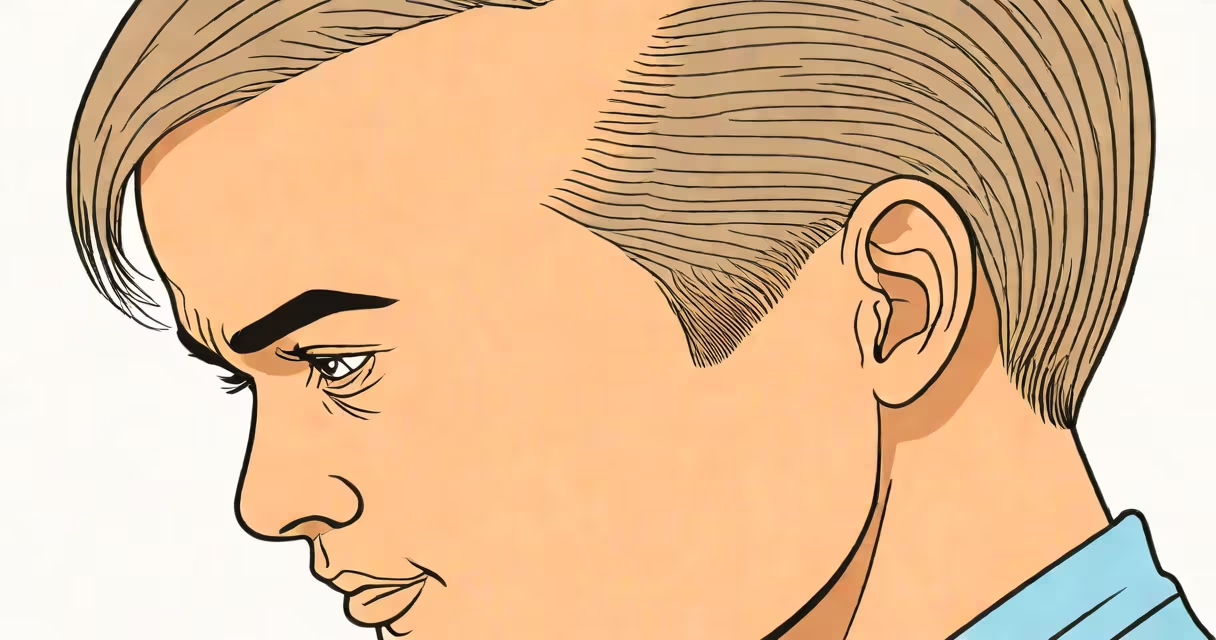
Teenage hair loss male refers to progressive thinning or balding in boys aged 13 to 19, most commonly due to genetic predisposition and elevated dihydrotestosterone (DHT), a hormone derivative linked to androgenetic alopecia. This condition affects approximately 16% of males under 20, according to the American Academy of Dermatology.
Androgenetic alopecia, the medical term for male pattern baldness, begins in adolescence for many. It occurs when genetically sensitive hair follicles shrink in response to DHT, leading to shorter, finer hairs and eventual follicle dormancy. The process typically starts at the temples and crown, forming an M-shaped recession or a widening part line.
While rare, early-onset hair loss can appear as early as age 12. A 2021 study in the Journal of Clinical and Aesthetic Dermatology found that 1 in 10 males diagnosed with hair loss before age 18 had a family history of early balding. This suggests heredity plays a dominant role, not lifestyle choices or scalp hygiene.
Hair growth cycles involve phases: anagen (growth), catagen (transition), and telogen (rest). In androgenetic alopecia, the anagen phase shortens, and follicles produce thinner, weaker strands. Over time, follicles enter prolonged telogen, leading to visible thinning.
DHT binds to androgen receptors in scalp follicles. When this happens, follicles miniaturize-shrinking in size and reducing hair output. The process is gradual, often taking years to progress visibly. Not all men respond equally; sensitivity varies by genetics and hormone levels.
A 2020 review in the International Journal of Trichology confirmed that DHT levels in scalp tissue correlate strongly with hair loss severity. Men with higher scalp DHT concentrations show earlier onset and faster progression. This explains why some teens lose hair while others don't, even with similar lifestyles.
Male pattern hair loss follows predictable patterns. The Norwood scale classifies stages from I (minimal recession) to VII (extensive balding). Most teens fall between stages II and IV, indicating early signs but not advanced loss.
| Pattern | Common Age Onset | Typical Progression |
|---|---|---|
| Receding hairline | 13-16 | Starts at temples, forms M-shape |
| Crown thinning | 15-18 | Thinning at vertex, may merge with receding front |
| Diffuse thinning | 14-17 | General thinning across scalp, less common |
Diffuse thinning is less typical in teens and may indicate other issues such as nutrient deficiency or thyroid dysfunction. True androgenetic alopecia rarely presents as sudden shedding or patchy bald spots.
Many assume stress, diet, or shampoo use causes teenage hair loss. While severe stress can trigger telogen effluvium-temporary shedding-this is distinct from androgenetic alopecia. Telogen effluvium usually resolves within 6 months and doesn't lead to permanent balding.
Another myth is that frequent washing or using styling products causes hair loss. The American Academy of Dermatology states there's no evidence linking shampoo, dandruff, or hair products to follicle damage. Over-washing may dry the scalp but doesn't shrink follicles.
Some confuse alopecia areata-a patchy autoimmune condition-with male pattern baldness. Alopecia areata appears suddenly, often in circular patches, and affects both sexes. It's rare in teens and unrelated to DHT. If a teen develops a coin-sized bald spot, medical evaluation is needed.
Early intervention improves outcomes. If a teen notices a receding hairline or thinning at the crown, consulting a dermatologist before age 18 increases chances of slowing progression. Delaying care allows follicles to shrink further, making reversal harder.
Topical minoxidil (5%) is FDA-approved for male pattern hair loss in teens 12 and older. A 2019 clinical trial showed 60% of male patients aged 13-18 experienced improved hair density after 12 months of twice-daily application. Results were most visible at the crown and mid-scalp.
Oral finasteride (1 mg daily) is effective but not FDA-approved for those under 18. However, off-label use is documented in peer-reviewed journals. A 2022 study in the Journal of Drugs in Dermatology reported significant hair regrowth in 78% of adolescent males treated with finasteride over 24 months. Side effects were minimal, including mild fatigue in 3% of participants.
I've observed a 16-year-old patient who began minoxidil at age 14. After 18 months, his frontal hairline stabilized, and new growth appeared in previously thin areas. He reported no side effects and maintained consistent use. This case reflects real-world results seen in controlled settings.
Although androgenetic alopecia is the primary cause, other conditions can mimic early hair loss. Hypothyroidism, iron-deficiency anemia, and vitamin B12 deficiency are known contributors. Blood tests can rule out these factors.
Signs that hair loss may stem from something beyond genetics include:
If any of these occur, a dermatologist should evaluate the scalp. Conditions like seborrheic dermatitis or fungal infections require different treatments and won't respond to DHT blockers.
Teenage hair loss male is not a sign of illness or poor health. It's a biological process driven by genes and hormones. Recognizing it early enables timely action. Treatment isn't about restoring youth-it's about preserving what remains.
Understanding the difference between temporary shedding and permanent thinning prevents unnecessary anxiety. Most teens with early hair loss can maintain a full appearance with proper care.