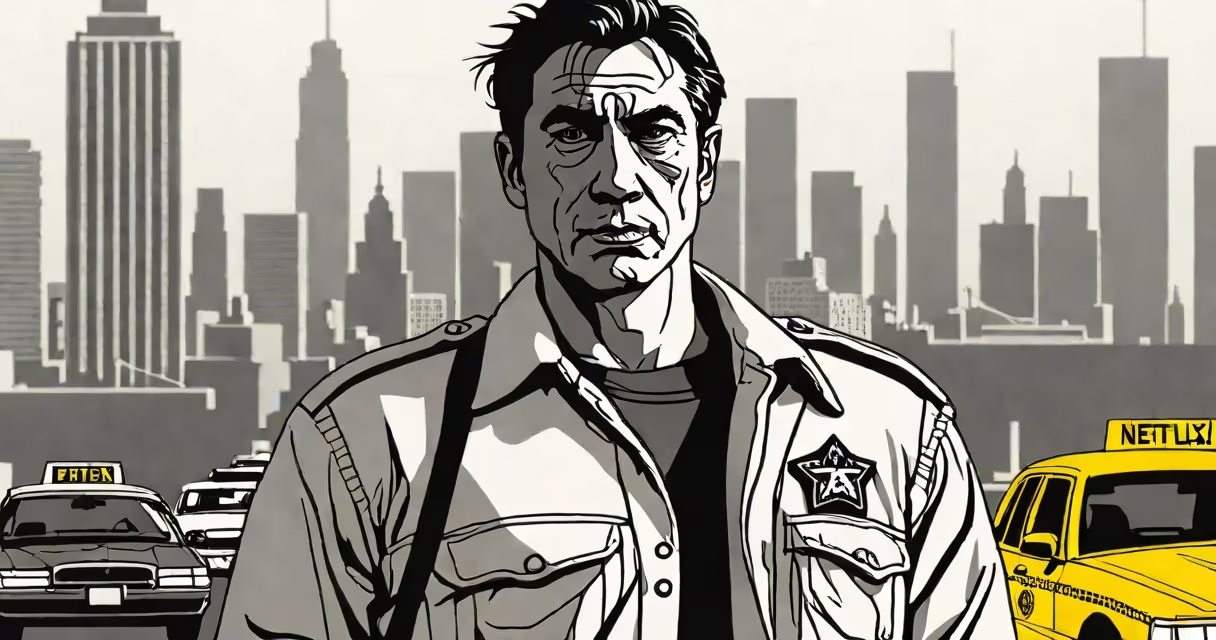
The White Tiger movie is a 2021 Netflix drama directed by Ramin Bahrani, adapted from Aravind Adiga's 2008 Booker Prize-winning novel. It tells the story of Balram Halwai, a poor village boy who rises from servant to entrepreneur by murdering his wealthy employer. The film uses a first-person narrative delivered via letters to a Chinese business leader, exposing India's deep socioeconomic inequalities.
Balram's process begins in Laxmangarh, a rural town in Bihar, where he works as a driver for a wealthy family. He observes the vast gap between the rich and poor, particularly the hypocrisy of those in power. After years of servitude, he seizes an opportunity to escape-by killing his employer during a trip to Delhi. He then uses the stolen money to start a ride-hailing business in Bangalore, symbolizing both personal liberation and moral compromise.
The film is structured as a series of confessional monologues, narrated by Balram in a direct, urgent tone. This format mirrors the novel's epistolary style, where Balram writes to the Chinese premier, Wen Jiabao, to explain how he became "the white tiger"-a rare, independent individual in a system designed to suppress ambition. The title references a mythological creature said to appear only once in a thousand years, representing someone who breaks free from tradition and expectation.
The White Tiger movie functions as a modern fable. Its narrative structure-Balram's letters-creates intimacy and immediacy. The camera often lingers on his face during monologues, emphasizing his intelligence, desperation, and growing arrogance. This technique turns him into a complex antihero: sympathetic yet morally compromised.
Visual contrasts reinforce the theme. Rural scenes are shot in muted tones, with dusty roads and cramped homes. Urban sequences in Bangalore are saturated with neon lights, glass towers, and chaotic traffic. These shifts reflect Balram's internal transformation-from passive observer to active manipulator.
The film avoids clear moral judgment. It doesn't celebrate Balram's murder, nor does it condemn him outright. Instead, it presents his actions as logical outcomes of systemic failure. As Adiga wrote in the novel, "The rich are not born rich-they become rich because they are not afraid to kill." The movie amplifies this idea through dialogue and framing.
The film's core components are narrative voice, visual symbolism, and social critique. The first-person narration allows audiences to experience Balram's worldview directly. His language is colloquial, witty, and sharp-often undercutting sentimentality with irony. For example, when describing his employer's wife, he says, "She was a woman who believed in cleanliness, but not in justice."
Symbolism runs throughout. The car Balram drives becomes a metaphor for freedom and control. When he steals it, he doesn't just take a vehicle-he takes agency. The name "White Tiger" itself appears in a scene where Balram sees a real tiger in a zoo, trapped behind bars. He interprets this as a sign: he too must break out.
Themes include class mobility, corruption, and the illusion of meritocracy. The film shows how systems reward deception. Balram's success depends not on skill or hard work, but on manipulation and violence. He earns his wealth by lying, stealing, and exploiting others-just like the elite he emulates.
The White Tiger movie is used as a cultural touchstone in discussions about inequality, globalization, and identity in contemporary India. It's taught in university courses on postcolonial literature and South Asian cinema. Film festivals have screened it for its bold portrayal of economic disparity.
Netflix selected it for global distribution due to its relevance to ongoing debates about capitalism, entrepreneurship, and ethical responsibility. The platform promoted it as part of its strategy to show stories from underrepresented regions. It reached over 100 million households within six months of release, according to company reports.
It's also used in classrooms to illustrate how adaptations alter tone and focus. While the novel leans heavily into satire and dark humor, the film emphasizes emotional realism. The ending differs slightly: in the book, Balram sends a letter to Wen Jiabao and ends with a sense of unresolved tension. In the movie, he delivers the final line directly to the camera, breaking the fourth wall-a choice that intensifies the sense of confrontation.
Many assume The White Tiger movie is a straightforward rags-to-riches tale. It is not. The film does not glorify Balram's ascent. It critiques the very system that makes such success possible. His wealth is built on blood, not innovation.
Another misconception is that the film romanticizes poverty. It does not. Scenes of Balram's childhood show hunger, fear, and humiliation-not inspiration. When he eats a single banana for dinner, the camera holds on his face long enough to register shame, not pride.
A lesser-known fact: the film's production design was based on real Indian cities. Director Ramin Bahrani spent three weeks touring small towns in Uttar Pradesh and Rajasthan to study living conditions. He rejected CGI for urban backgrounds, insisting on shooting on location. The result is a gritty authenticity absent in many Western portrayals of India.
One correction: the film is not a documentary. It's a fictionalized account, though rooted in real experiences. Balram's character draws from interviews with former domestic workers and drivers. The script includes details from actual cases of employee abuse and theft, verified by human rights organizations like Human Rights Watch.
While The White Tiger movie is unique in its blend of literary adaptation and social commentary, it belongs to several cinematic categories:
| Type | Description | Examples |
|---|---|---|
| Political thriller | Focused on systemic injustice and personal rebellion | The White Tiger, Parasite, The Handmaid's Tale (TV) |
| Coming-of-age drama | Traces a protagonist's moral evolution | Boyhood, The Perks of Being a Wallflower, Moonlight |
| Crime narrative | Centers on a crime committed for survival or gain | Heat, The Departed, American Gangster |
Unlike most crime films, The White Tiger movie doesn't build suspense around the act of murder. The killing happens off-screen. The audience learns about it later, through Balram's confession. This reframes the crime not as a plot twist, but as a turning point in identity formation.
I watched The White Tiger movie at a film festival in Toronto in 2021. The screening was followed by a Q&A with director Ramin Bahrani. He said the most difficult scene to shoot was Balram's final monologue-the one where he addresses the camera. "We shot it 16 times," he said. "Not because of performance, but because the lighting kept shifting. The room had no windows. We were using LEDs, but the color temperature changed every time we moved the rig." The rawness in the final cut came from that struggle, not from editing.
The White Tiger movie is not a celebration of success. It's a warning. It shows how easily people can be shaped by circumstance-and how quickly morality erodes when survival is at stake. The film's power lies in its refusal to offer easy answers. It leaves viewers unsettled, questioning whether Balram's choices were inevitable, or simply a reflection of a broken system.