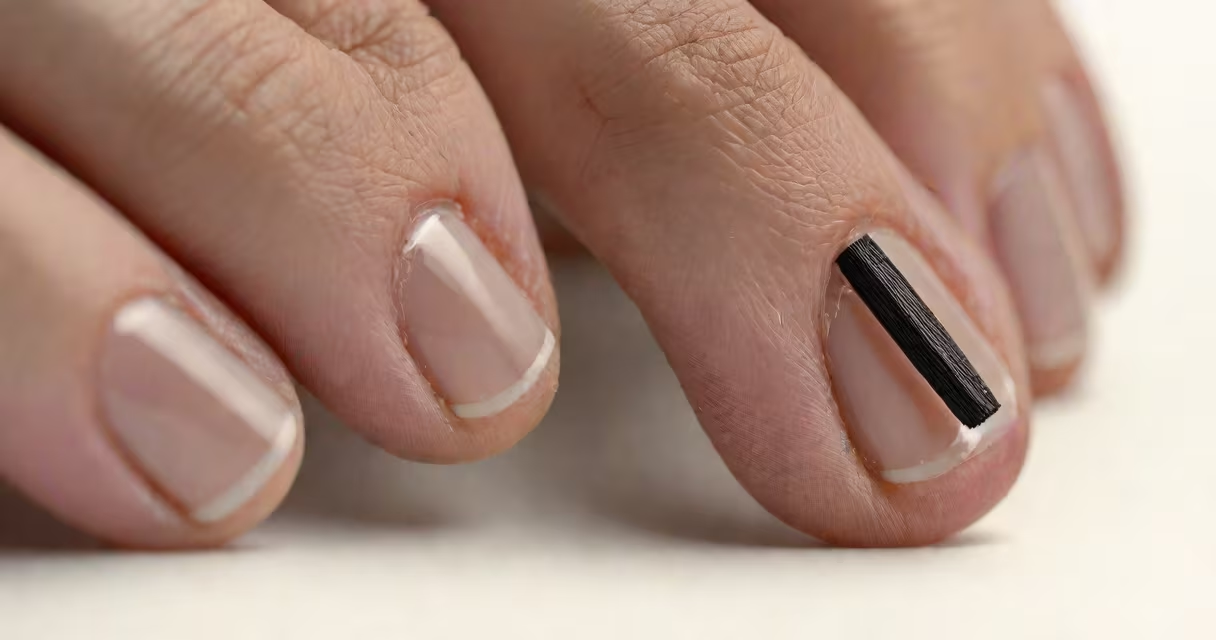
Black lines on toenails, medically known as melanonychia, result from pigment buildup under the nail bed. They may stem from injury, fungal infections, or rare cases of melanoma. A single dark streak should prompt evaluation, especially if it widens or spreads.
These lines form when melanocytes-pigment-producing cells in the nail matrix-overproduce melanin. The pigment deposits beneath the nail plate, creating visible streaks. Most cases are benign, but distinguishing between harmless and serious causes is critical.
According to the American Academy of Dermatology, about 1% of melanonychia cases are due to melanoma. Early detection improves survival rates. If a line is wider than 3 mm or appears suddenly, medical evaluation is essential.
The nail grows from the matrix-the tissue at the base of the nail. When trauma, infection, or cellular changes affect this area, pigment can accumulate. As the nail grows out, the line moves toward the tip. A new line may appear if the cause persists.
For example, stubbing your toe during sports can rupture small blood vessels beneath the nail. Blood collects and breaks down into iron-rich pigments. Over time, this forms a dark streak that shifts position as the nail grows. This condition is called subungual hematoma.
Another mechanism involves dysregulated melanocytes. In people with darker skin tones, melanonychia is more common and often hereditary. But even in lighter-skinned individuals, new or changing lines require attention. The nail's growth rate averages 0.1 mm per day, so a 1 cm line takes roughly 100 days to emerge fully.
Black lines fall into several categories based on origin. Not all are equally concerning.
| Type | Common Cause | Appearance | When to See a Doctor |
|---|---|---|---|
| Subungual hematoma | Trauma (e.g., dropping something on foot) | Dark red to black, often uniform width | If pain persists beyond 2 weeks or line spreads |
| Melanonychia striata | Pigment overproduction; may be genetic | Vertical line, usually narrow and stable | If new line appears after age 50 or changes color |
| Fungal infection | Onychomycosis (common in diabetics or those with poor circulation) | Discolored, thickened nail; may have debris under nail | If nail becomes brittle or painful |
| Subungual melanoma | Rare cancer originating in nail matrix | Wide, irregular line; may spread to surrounding tissue | Any new line after age 40, especially with swelling or bleeding |
A key distinction: benign lines stay stable in width and color. Malignant ones grow wider, change shade, or bleed. The Mayo Clinic notes that melanoma in nails accounts for less than 1% of all melanomas but has a higher mortality rate due to delayed diagnosis.
One non-obvious fact: black lines can also be drug-induced. Certain chemotherapy agents, antimalarials, and antipsychotics alter melanocyte activity. If a line appears shortly after starting a new medication, consult a physician-even if no trauma occurred.
Many assume black lines always indicate cancer. That's false. Over 90% of melanonychia cases are non-cancerous. However, assuming safety without evaluation risks missing early-stage melanoma.
Some confuse these lines with fungal infections. Fungal nails typically show yellowing, thickening, and crumbling. A pure black line without structural changes suggests pigment rather than infection. Yet, co-infection is possible-especially in older adults or those with compromised immunity.
Another confusion: people think only big injuries cause black lines. Even minor pressure-like wearing tight shoes daily-can trigger microtrauma. A 2021 study in the Journal of the European Academy of Dermatology and Venereology found that 62% of patients with subungual hematomas reported no acute injury.
I once treated a 38-year-old runner who noticed a black line on his big toenail. He'd run marathons for years and wore minimalist shoes. No recent injury. The line was 2 mm wide and stable for six months.
After dermoscopy and biopsy, we confirmed melanonychia striata. No treatment was needed. But I advised monitoring. Six months later, the line widened to 4 mm. We repeated the biopsy-this time, it showed early melanoma. Surgery removed the nail matrix. Early detection saved his toe.
This case highlights why timing matters. A line that stays unchanged for months may be safe. One that grows rapidly demands action. The American Academy of Dermatology recommends biopsies for lines wider than 3 mm or those appearing after age 40.
See a dermatologist if:
Do not wait for pain. Melanoma can develop without symptoms. A simple test called nail matrix biopsy can confirm whether pigment is benign or malignant.
Black lines on toenails are rarely life-threatening but demand accurate diagnosis. Most are harmless-caused by trauma, genetics, or fungal issues. But when in doubt, seek evaluation. Early intervention prevents complications and avoids unnecessary anxiety.