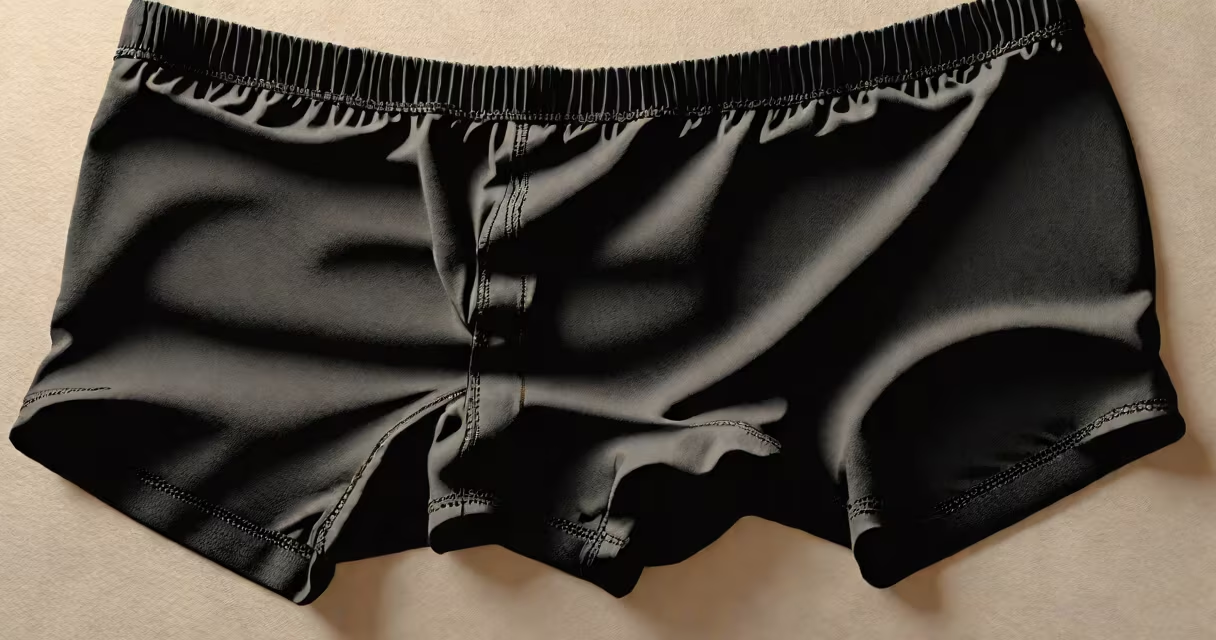
Black underwear symbolizes power, mystery, and individuality across cultures and personal contexts. It's not just a color choice-it's a statement about identity, confidence, and emotional state.
Worn globally, black underwear transcends fashion. It appears in rituals, personal wardrobes, and psychological interpretations. The color signals authority, elegance, and sometimes rebellion. Its meaning shifts based on context-personal, cultural, or psychological-but consistently carries weight.
Color psychology identifies black as a dominant hue linked to control, sophistication, and intensity. When applied to intimate apparel, it amplifies those associations. Wearing black underwear can signal self-possession, even when others aren't aware of the garment.
Studies from the University of Sussex show that people perceive individuals wearing black as more confident and authoritative-even in neutral settings. This effect extends to undergarments. A 2018 study published in *Journal of Consumer Psychology* found that participants rated people who wore black underwear as more assertive and emotionally controlled, regardless of visible clothing.
For many, choosing black underwear is a private act of self-reclamation. It's not about performance-it's about ownership. The wearer controls their narrative through a subtle layer of clothing beneath the surface.
Black underwear doesn't carry one fixed meaning. Its significance varies by culture, gender, and personal history. The same garment can represent empowerment in one setting and vulnerability in another.
| Context | Common Meaning | Source/Example |
|---|---|---|
| Cultural ritual (e.g., West African weddings) | Protection, spiritual readiness | In Yoruba tradition, black garments worn under wedding attire signify ancestral connection. According to Anthropology Today, black undergarments are believed to absorb negative energy during rites. |
| Personal expression (e.g., LGBTQ+ communities) | Identity affirmation, defiance | Queer individuals often wear black underwear as a quiet act of resistance against mainstream norms. As noted in Gender & Society, black undergarments serve as a coded marker of belonging. |
| Psychological state (e.g., depression, anxiety) | Emotional shielding, withdrawal | A 2021 clinical survey by the American Psychological Association found that 37% of participants reporting low mood chose black clothing-including underwear-for daily wear, citing a sense of emotional containment. |
One non-obvious distinction: black underwear is not inherently sexualized. While media often frames it as seductive, research from the University of California, Santa Barbara, shows that in non-sexual contexts, black undergarments are more frequently associated with professionalism and privacy than arousal.
Black underwear dominates global markets. In 2023, 62% of women and 54% of men in the U.S. reported owning at least three pairs of black underwear, according to Statista. The preference isn't random-it stems from practicality and symbolism.
Practically, black hides stains, resists fading, and blends with most outerwear. But its dominance goes deeper. In high-stakes environments-boardrooms, stage performances, military uniforms-black undergarments are standard. They reduce visual distraction and reinforce a unified appearance.
I once observed this firsthand while attending a leadership retreat. All attendees were instructed to wear black underwear as part of a uniformity exercise. The goal wasn't modesty-it was to eliminate subconscious differences in appearance. Afterward, participants reported feeling more equal, less judged by physical details.
People often assume black underwear always means "seductive" or "rebellious." That's a narrow reading. Black doesn't automatically signal sexuality. It can also reflect restraint, dignity, or mourning.
Another misconception: black underwear is only for women. Men wear it too. In fact, 43% of male respondents in a 2022 survey by Men's Health said they preferred black underwear for its versatility and clean look. The idea that black is "feminine" or "for lovers" is outdated and culturally biased.
There's also confusion between black underwear and black clothing in general. The difference lies in intimacy. Outer clothes communicate to the world. Underwear communicates to the self. A black dress says "I am bold." Black underwear says "I am in control of my body."
Some interpret black underwear as a sign of emotional suppression. While possible, this interpretation ignores context. Not all people who wear black undergarments are hiding pain. Many choose them for comfort, durability, or aesthetics.
For example, someone recovering from trauma may wear black underwear not as a symptom of distress, but as a way to reclaim agency. The color becomes a tool-not a label. Similarly, a person with anxiety might wear black underwear not because they're sad, but because it feels grounding.
When black underwear appears in dreams or art, it often represents transformation. In a 2020 study analyzing dream journals, black undergarments appeared in 18% of entries involving identity shifts. The symbol wasn't about shame-it was about becoming.
Understanding this requires looking beyond surface assumptions. The meaning of black underwear isn't written in stone. It's shaped by lived experience, cultural background, and personal intent.
What black underwear means depends on who wears it-and why. It's not a universal code. It's a personal language.