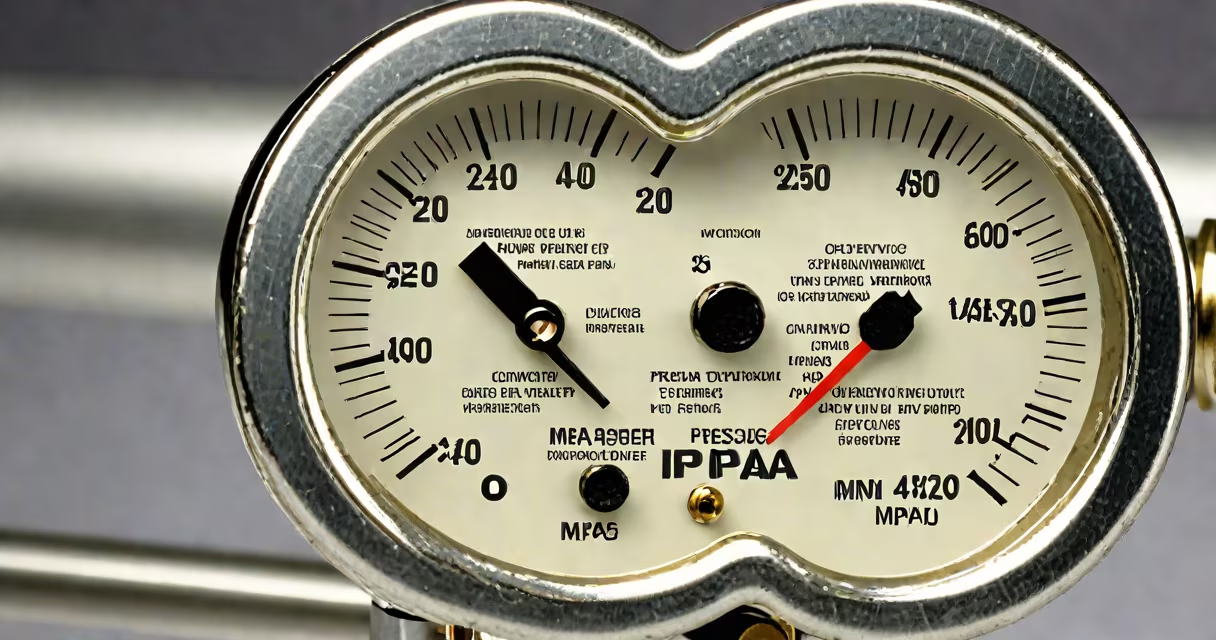
MPA stands for megapascal, a unit of pressure equal to one million pascals. It measures force per unit area, commonly used in engineering, materials science, and physics to quantify stress, strength, and pressure.
The megapascal is part of the International System of Units (SI). One pascal equals one newton per square meter. A megapascal (MPa) is therefore 1,000,000 newtons per square meter. This scale makes it practical for describing forces in structural components, such as concrete, metals, and polymers.
For context, atmospheric pressure at sea level is about 0.101 MPa. The tensile strength of mild steel ranges from 400 to 550 MPa. These numbers show why MPa is preferred over pascals in technical work-it avoids unwieldy large values.
MPA quantifies internal resistance within materials when subjected to external loads. When a bridge beam bends under traffic, engineers calculate the stress in MPa to ensure it stays below the material's yield strength.
Stress is calculated as force divided by cross-sectional area. If a 10-kN force acts on a 20 mm² surface, the stress is:
10,000 N / (20 × 10⁻⁶ m²) = 500,000,000 Pa = 500 MPaThis result indicates the material experiences 500 megapascals of stress. If the material's yield strength is 450 MPa, it will deform permanently-a critical failure point.
Testing labs use universal testing machines to apply controlled loads while measuring deformation. Data from these tests are plotted as stress-strain curves, with stress labeled in MPa. This allows direct comparison between materials like aluminum (yield ~275 MPa) and titanium (yield ~830 MPa).
MPA appears in several technical domains. The most common uses fall into three categories: mechanical engineering, geology, and medical devices.
| Application Area | Typical MPA Values | Use Case Example |
|---|---|---|
| Concrete compressive strength | 20-50 MPa | High-rise building foundations |
| Metal yield strength | 100-1,200 MPa | Aircraft landing gear |
| Blood pressure | 10-16 kPa (0.01-0.016 MPa) | Human systolic pressure |
In construction, concrete grades are labeled by their compressive strength in MPa. A C30/37 mix withstands 30 MPa of compression-enough for multi-story buildings. Engineers select mixes based on load requirements and environmental exposure.
Geologists use MPa to describe tectonic stress. The frictional resistance along fault lines can exceed 100 MPa. This helps model earthquake triggers and subsurface fluid migration.
Medical implants require precise strength ratings. Hip replacements made from cobalt-chrome alloy must sustain 1,000 MPa during walking cycles. Failure at lower values leads to implant fracture.
MPA is often confused with psi (pounds per square inch), especially in U.S. manufacturing. While both measure pressure, they differ in scale and system. 1 MPa equals approximately 145 psi. Converting between them requires multiplication by 145.0377.
Another error is assuming MPa applies only to solids. It's equally valid for fluids. Hydraulic systems in excavators operate at 30-70 MPa. A hydraulic cylinder piston experiences 50 MPa of pressure-equivalent to 500 atmospheres.
Some assume MPa is interchangeable with MPa in different contexts. But in thermodynamics, MPa describes phase boundaries. Water boils at 1 MPa at 179.9°C-higher than standard boiling point due to increased pressure. This is critical in power plant design.
One non-obvious fact: MPa is not a unit of energy. It measures pressure, not work. Energy in joules results from multiplying pressure by volume change. A 10 MPa pressure acting over 0.001 m³ produces 10,000 J-equivalent to lifting 1,000 kg one meter.
I once observed a tensile test on a 20 mm diameter steel rod. The machine applied increasing load until fracture. The software displayed stress in MPa. At 480 MPa, the rod began necking-localized thinning. At 520 MPa, it snapped. The recorded yield strength was 430 MPa, matching the manufacturer's specification. Seeing the stress curve rise in real time confirmed how MPa translates to real-world performance.
That test validated a design used in offshore drilling rigs. Without MPa-based analysis, the rig's support arms could fail under ocean currents. The margin between yield and ultimate strength is narrow-engineers rely on MPa to stay within safe limits.
MPA is sometimes abbreviated as MPa (lowercase 'p'). This follows SI conventions: units named after people (like Pascal) use uppercase 'P', but the prefix 'mega' remains lowercase. So "megapascal" becomes "MPa", not "Mpa" or "mPa".
Other related units include kPa (kilopascal), GPa (gigapascal), and bar. 1 bar equals 0.1 MPa. Some industries still use bar-especially in weather reporting and scuba diving-but MPa dominates scientific and industrial standards.
Understanding what MPA stands for enables accurate interpretation of technical specifications, safety margins, and material performance. Whether designing a skyscraper or analyzing blood flow, MPa provides a consistent, measurable basis for engineering decisions.