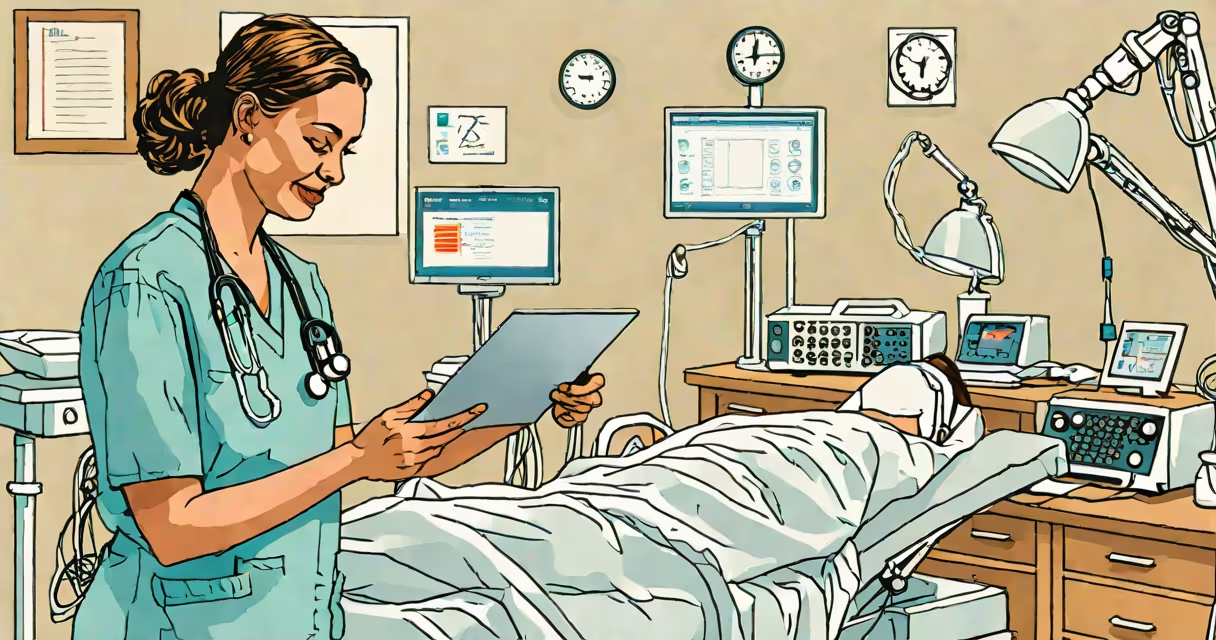
Nursing informatics applies data science and clinical knowledge to improve patient care through electronic health records, decision support tools, and system design. It bridges nursing practice and technology to reduce errors, increase efficiency, and improve care coordination.
Nursing informatics professionals analyze workflows, evaluate software usability, and implement systems that support evidence-based decisions at the bedside. They ensure that digital tools reflect real clinical needs-not just technical capabilities.
According to the American Nurses Association (ANA), nursing informatics is a specialty that "integrates nursing science with information and communication technologies to promote optimal health." The ANA defines it as essential to safe, effective, and efficient care delivery in modern healthcare environments.
At its core, nursing informatics transforms raw patient data into actionable insights. This happens through structured data entry, automated alerts, and integrated dashboards that track important signs, medication administration, and treatment progress.
For example, when a patient's blood pressure drops below a threshold, the system flags it automatically. A nurse informatician helps the alert triggers at the correct level, avoids false alarms, and routes to the right clinician based on staffing and location.
These systems don't just collect data-they interpret it. A nursing informatician designs logic rules so that a low hemoglobin reading combined with dizziness symptoms prompts a fall-risk assessment and notifies the care team within minutes.
Nursing informaticians perform a mix of clinical, technical, and managerial tasks. Their work spans implementation, training, troubleshooting, and ongoing evaluation of health IT systems.
They often lead interdisciplinary teams during EHR upgrades. At a 600-bed urban hospital, a nurse informatician coordinated the rollout of a new electronic medication administration record (eMAR) system. She mapped existing workflows, identified gaps in documentation, and redesigned forms to reduce data entry time by 37% while improving accuracy.
Other responsibilities include:
One key insight: they're not just users of technology-they're architects of how it functions in real care settings.
Roles vary by organization size, focus area, and level of specialization. The following table outlines common positions and their typical duties.
| Role | Typical Focus | Required Skills |
|---|---|---|
| Entry-Level Nurse Informatician | Supporting EHR use, reporting issues, assisting with training | Basic data literacy, nursing license, familiarity with Epic or Cerner |
| Senior Clinical Informatician | Leading system implementations, designing workflows, managing change | Project management, advanced analytics, stakeholder negotiation |
| Informatics Researcher | Studying impact of IT on outcomes, publishing findings | Statistical analysis, research methodology, grant writing |
| Health IT Consultant | Advising hospitals on system selection and optimization | Vendor evaluation, ROI modeling, policy development |
Not all roles require a master's degree-but most do. The Healthcare Information and Management Systems Society (HIMSS) notes that 80% of certified nursing informaticians hold at least a master's in nursing or health informatics.
Hospitals, clinics, public health departments, and insurance providers all rely on nursing informatics. Its primary purpose is to prevent harm, reduce waste, and standardize care.
A 2022 study published in the Journal of the American Medical Informatics Association found that hospitals using standardized nursing informatics protocols had a 22% lower rate of medication errors compared to those without dedicated staff.
One example: a rural health network in Montana reduced patient readmissions by 18% after implementing a predictive model developed by a nurse informatician. The model flagged patients at risk of returning within 30 days based on past visits, lab results, and social determinants of health.
Without nursing informaticians, many systems fail to meet clinical needs. A 2021 report from the Office of the National Coordinator for Health IT (ONC) found that 45% of EHR-related safety incidents stemmed from poor workflow integration-often due to lack of nursing input during design.
Nursing informatics is not just about coding or IT support. It's not a substitute for clinical judgment. And it doesn't mean replacing nurses with machines.
Many assume that a nursing informatician spends most of their time in front of a computer debugging software. In reality, they spend significant time observing nurses at work, asking questions, and testing prototypes in real units.
I once shadowed a nurse informatician during a shift at a Level 1 trauma center. She wasn't sitting at a desk. She was walking between rooms, watching how nurses documented injuries, adjusting a form to include new trauma codes, and then testing changes with a small group of staff. Her role was to make the system serve the clinician-not the other way around.
Nursing informatics is frequently confused with general health IT or clinical data analysis. But it differs in focus and training.
While a data analyst may identify trends in infection rates, a nursing informatician helps the system captures the right variables at the right time-for example, documenting whether a wound dressing was changed under sterile conditions, not just the date.
Another distinction: nursing informaticians are licensed nurses. They bring clinical context to every design choice. A software engineer might build a feature that logs data quickly-but a nurse informatician asks, "Does this help me catch sepsis earlier?"
In a pediatric ICU, medication errors were rising despite strict protocols. A nurse informatician reviewed the EHR and discovered that dosing calculations were buried in multiple screens. Nurses had to switch between apps to verify weight-based dosing.
She redesigned the interface so that the dose calculator appeared automatically when a medication was selected. The system pulled the child's current weight from the chart and recalculated in real time. Alerts triggered if the dose exceeded recommended limits.
After six months, the unit reported a 41% drop in near-miss medication events. The change took less than two weeks to implement-and required no new hardware.
Nursing informatics improves patient safety, reduces clinician burnout, and strengthens care delivery. It combines clinical expertise with data systems to create tools that work in real hospitals, not just on paper. Understanding what a nursing informatician does reveals how technology and nursing practice must evolve together.