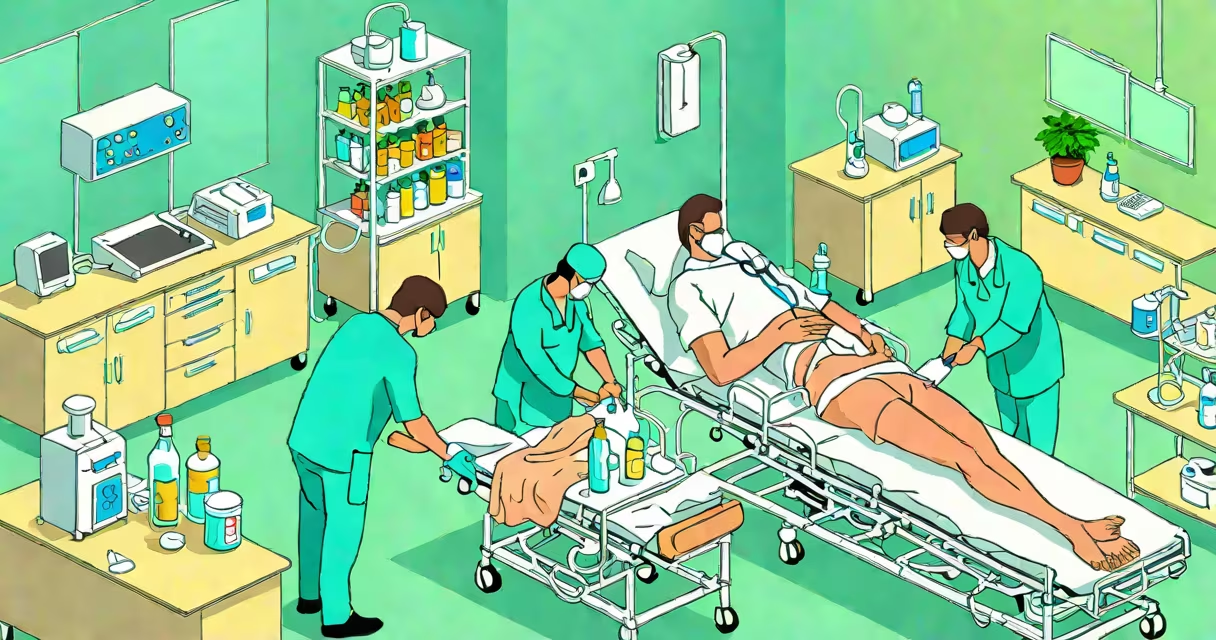
Hospitals treat food poisoning by managing dehydration, controlling symptoms like vomiting and diarrhea, administering IV fluids when oral intake fails, and using antibiotics only when specific bacterial infections are confirmed. They focus on stabilizing patients, preventing complications, and supporting recovery until the infection resolves.
Food poisoning results from ingesting contaminated food or water containing pathogens such as Salmonella, E. coli, Campylobacter, or norovirus. Most cases resolve within 24 to 72 hours with rest and hydration. But when symptoms become severe-persistent vomiting, high fever, bloody stools, or signs of dehydration-patients require medical evaluation. Hospitals intervene when home remedies fail or when risk factors like age, pregnancy, or chronic illness increase vulnerability.
The Centers for Disease Control and Prevention (CDC) estimates that 1 in 6 Americans gets foodborne illness annually, with about 128,000 requiring hospitalization. The most common reasons for hospital admission include inability to keep fluids down, electrolyte imbalances, and sepsis from invasive bacteria. Emergency departments assess patients through history, physical exam, and lab tests to determine severity and cause.
When a patient arrives with suspected food poisoning, clinicians follow a step-by-step protocol. First, they evaluate important signs-blood pressure, heart rate, temperature-to detect early signs of shock or dehydration. A low blood pressure reading or rapid pulse may indicate significant fluid loss. Patients with altered mental status, dizziness, or sunken eyes often have moderate to severe dehydration.
Laboratory testing includes complete blood count (CBC), basic metabolic panel (BMP), and stool cultures. A CBC can show elevated white blood cells indicating infection. The BMP checks sodium, potassium, chloride, glucose, and creatinine levels-key indicators of kidney function and fluid balance. Stool samples are sent for pathogen identification, especially if the patient has bloody diarrhea or prolonged symptoms beyond 72 hours.
For example, a 72-year-old woman presented to the emergency department with 18 hours of watery diarrhea, six episodes of vomiting, and confusion. Her blood pressure was 90/60 mmHg, and her serum potassium was 2.8 mEq/L-well below normal. She received 1 liter of normal saline over 30 minutes, which raised her blood pressure to 118/76 mmHg and improved her mental clarity. She was admitted for observation and continued IV fluids.
Hospital treatment centers on restoring fluid and electrolyte balance. Oral rehydration solutions (ORS) are preferred if the patient can tolerate them. But when vomiting prevents oral intake, intravenous (IV) fluids become essential. Common IV fluids include normal saline (0.9% NaCl) or lactated Ringer's solution, both of which replace lost sodium and chloride.
Antibiotics are not routinely given. The Infectious Diseases Society of America (IDSA) guidelines state that antibiotics should only be used for confirmed invasive pathogens like Shigella, Salmonella typhi, or certain strains of E. coli. Using antibiotics in viral food poisoning (e.g., norovirus) can worsen outcomes by disrupting gut flora and increasing the risk of Clostridioides difficile infection.
Anti-diarrheal medications like loperamide are avoided in hospitalized patients. The American College of Gastroenterology warns that these drugs can trap toxins in the bowel, increasing the risk of toxic megacolon-a rare but life-threatening condition. Instead, clinicians focus on supportive care: anti-emetics like ondansetron for nausea, and antipyretics like acetaminophen for fever.
| Intervention | When Used | Common Examples |
|---|---|---|
| IV Fluids | Unable to keep fluids down, low blood pressure, abnormal labs | Normal saline, lactated Ringer's |
| Antibiotics | Confirmed invasive bacterial infection | Ciprofloxacin for Salmonella, azithromycin for Shigella |
| Anti-emetics | Recurrent vomiting | Ondansetron, promethazine |
| Electrolyte Replacement | Low potassium, sodium imbalance | Potassium chloride IV, sodium bicarbonate |
Patients are admitted if they cannot maintain hydration orally, have severe abdominal pain, show signs of sepsis, or belong to high-risk groups. Adults over 65, infants under 1 year, pregnant individuals, and people with weakened immune systems face higher risks of complications like hemolytic uremic syndrome (HUS), which can lead to kidney failure.
A non-obvious distinction: not all diarrhea requires hospitalization. Diarrhea lasting less than 72 hours with mild symptoms and normal mentation typically doesn't need hospital care. But if diarrhea persists beyond 72 hours, especially with fever above 101.3°F (38.5°C), blood in stool, or weight loss, further investigation is required. This differentiates food poisoning from conditions like inflammatory bowel disease or irritable bowel syndrome.
One key insight from clinical practice: patients often underestimate the danger of dehydration. During a summer outbreak of Salmonella in a regional hospital, 14 out of 22 admitted patients had mild initial symptoms but deteriorated rapidly due to delayed care. Early intervention reduced ICU transfers by 60% compared to historical averages.
Food poisoning is frequently mistaken for other gastrointestinal conditions. Unlike food poisoning, which typically begins abruptly within 1-6 hours of eating, viral gastroenteritis (often called "stomach flu") has a longer incubation period-12 to 48 hours. Symptoms overlap, but food poisoning more often involves bloody diarrhea and high fever.
Diarrhea vs. food poisoning is another frequent mix-up. Diarrhea is a symptom, not a diagnosis. Food poisoning is a cause of diarrhea. Not all diarrhea stems from foodborne pathogens. Conditions like celiac disease, lactose intolerance, or medication side effects can mimic food poisoning. A patient with chronic diarrhea and weight loss may have celiac disease rather than an acute infection.
Severe cases may progress to sepsis, particularly with E. coli O157:H7, which produces Shiga toxin. This toxin damages kidney cells and can trigger HUS. Children under 5 and elderly adults are most vulnerable. In one study, 25% of pediatric HUS cases were linked to E. coli food poisoning.
Most patients recover within 24 to 72 hours after hospitalization. Discharge criteria include stable important signs, ability to drink fluids without vomiting, and normal mental status. Patients are advised to resume a bland diet gradually-bananas, rice, applesauce, toast (BRAT diet)-and avoid dairy, spicy foods, and caffeine for 24-48 hours.
Prevention remains key. The FDA recommends cooking meat to safe internal temperatures (165°F for poultry, 145°F for whole cuts), washing hands before handling food, and refrigerating perishables within two hours. Proper food handling reduces the risk of contamination by 80%, according to the USDA.
Understanding hospital responses to food poisoning clarifies when to seek care. When vomiting, diarrhea, and dehydration combine, prompt medical intervention prevents serious harm. Hospitals provide targeted support based on the underlying cause, not just symptom relief.