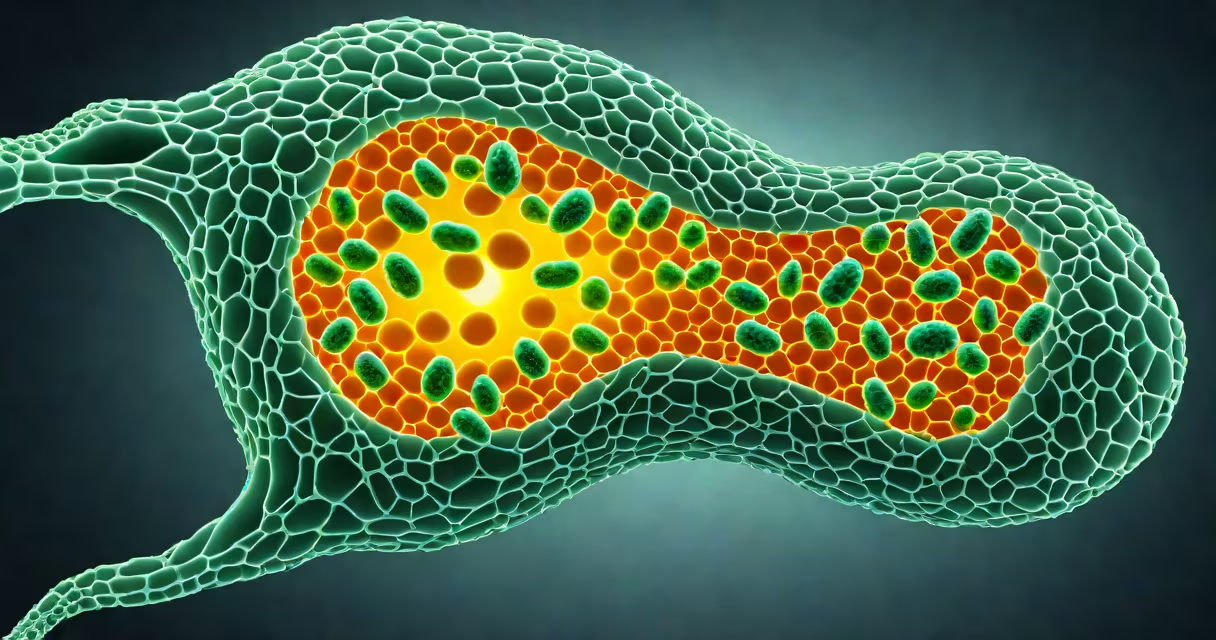
Cellular respiration produces adenosine triphosphate (ATP), carbon dioxide (CO₂), and water (H₂O) as its primary outputs. This process converts glucose and oxygen into usable energy, waste gases, and metabolic water, sustaining nearly all life on Earth.
At its core, cellular respiration is a series of biochemical reactions that extract energy from food molecules-primarily glucose-and store it in ATP. The process occurs mainly in the mitochondria of eukaryotic cells. For every molecule of glucose broken down, the net yield is approximately 36-38 ATP molecules under ideal conditions. This ATP powers muscle contractions, nerve impulses, protein synthesis, and countless other cellular functions.
The chemical equation for aerobic cellular respiration is:
C₆H₁₂O₆ + 6O₂ → 6CO₂ + 6H₂O + ~38 ATPThis balanced reaction shows that one glucose molecule and six oxygen molecules produce six carbon dioxide molecules, six water molecules, and around 38 ATP units. The process runs continuously in active tissues like muscle and brain cells.
Cellular respiration unfolds in three main stages: glycolysis, the Krebs cycle (citric acid cycle), and oxidative phosphorylation. Glycolysis occurs in the cytoplasm and splits glucose into two pyruvate molecules, yielding a small amount of ATP and NADH. Pyruvate then enters the mitochondria, where it's converted into acetyl-CoA and fed into the Krebs cycle.
In the Krebs cycle, acetyl-CoA is broken down further, releasing CO₂ and generating electron carriers (NADH and FADH₂). These carriers shuttle electrons to the electron transport chain embedded in the inner mitochondrial membrane. As electrons move through the chain, protons are pumped across the membrane, creating a gradient.
When protons flow back through ATP synthase, the enzyme uses the energy to convert ADP and phosphate into ATP. Oxygen acts as the final electron acceptor, combining with protons and electrons to form water. Without oxygen, the electron transport chain halts, and ATP production drops sharply.
The three key outputs-ATP, CO₂, and H₂O-each serve distinct biological roles. ATP is the universal energy currency of cells. A single ATP molecule stores enough energy to drive processes like ion pumping, molecular transport, and biosynthesis. Human cells contain about 1 billion ATP molecules at any given time, recycling them roughly 1,000 times per day.
Carbon dioxide forms during the Krebs cycle and is transported via blood to the lungs, where it's exhaled. On average, a resting adult produces about 200 mL of CO₂ per minute. During exercise, this rate can increase tenfold. Excess CO₂ leads to respiratory acidosis, while too little causes alkalosis-both disrupt pH balance critical for enzyme function.
Water is generated at the end of the electron transport chain. For every mole of oxygen consumed, one mole of water is produced. In humans, this contributes about 1 liter of metabolic water daily-enough to meet part of hydration needs without drinking.
| Product | Source Stage | Quantity per Glucose Molecule | Biological Role |
|---|---|---|---|
| ATP | Oxidative phosphorylation | ~36-38 | Energy for cellular work |
| CO₂ | Krebs cycle | 6 | Waste gas, regulated by breathing |
| H₂O | Electron transport chain | 6 | Metabolic water, supports hydration |
Many assume cellular respiration produces heat as a major output. While heat is released as a byproduct-especially during shivering thermogenesis-it's not a direct product of the reaction. Instead, it results from entropy increases during energy transfer. Only about 40% of glucose energy becomes ATP; the rest dissipates as heat.
Another frequent error is equating cellular respiration with breathing. Breathing brings oxygen into the lungs and removes CO₂. But cellular respiration happens inside cells. You can breathe normally while your cells are starved of oxygen-this leads to anaerobic metabolism and lactic acid buildup, which causes muscle fatigue and soreness.
A lesser-known fact: some organisms perform incomplete respiration. Certain bacteria and yeast ferment sugars without oxygen, producing ethanol or lactate instead of CO₂ and H₂O. This yields only 2 ATP per glucose-far less efficient than aerobic respiration. Yet it allows survival in low-oxygen environments.
Consider a marathon runner completing a 42-kilometer race in 4 hours. Their body consumes about 2,500 kilocalories of energy. To meet this demand, they metabolize roughly 150 grams of glucose per hour. At peak effort, their cells produce about 1.5 moles of CO₂ per minute and generate 100-150 moles of ATP daily.
Each breath expels 5% CO₂ by volume-measurable using capnography. Blood tests show rising lactate levels when oxygen delivery lags behind demand, indicating a shift to anaerobic respiration. This confirms that even elite athletes rely on aerobic respiration for most energy-but when oxygen is limited, they fall back on less efficient pathways.
I once observed a high school biology class measure CO₂ output using a bromothymol blue indicator. When students breathed into a test tube containing the solution, the color shifted from blue to yellow-confirming CO₂ presence. The visual change made the invisible process tangible. That moment clarified for me how deeply connected our breath is to cellular energy production.
Cellular respiration produces ATP, carbon dioxide, and water. These outputs sustain life, regulate homeostasis, and enable complex biological functions. ATP powers cellular machinery, CO₂ is exhaled as waste, and water contributes to internal hydration. Understanding what cellular respiration produces reveals how energy flows through living systems.