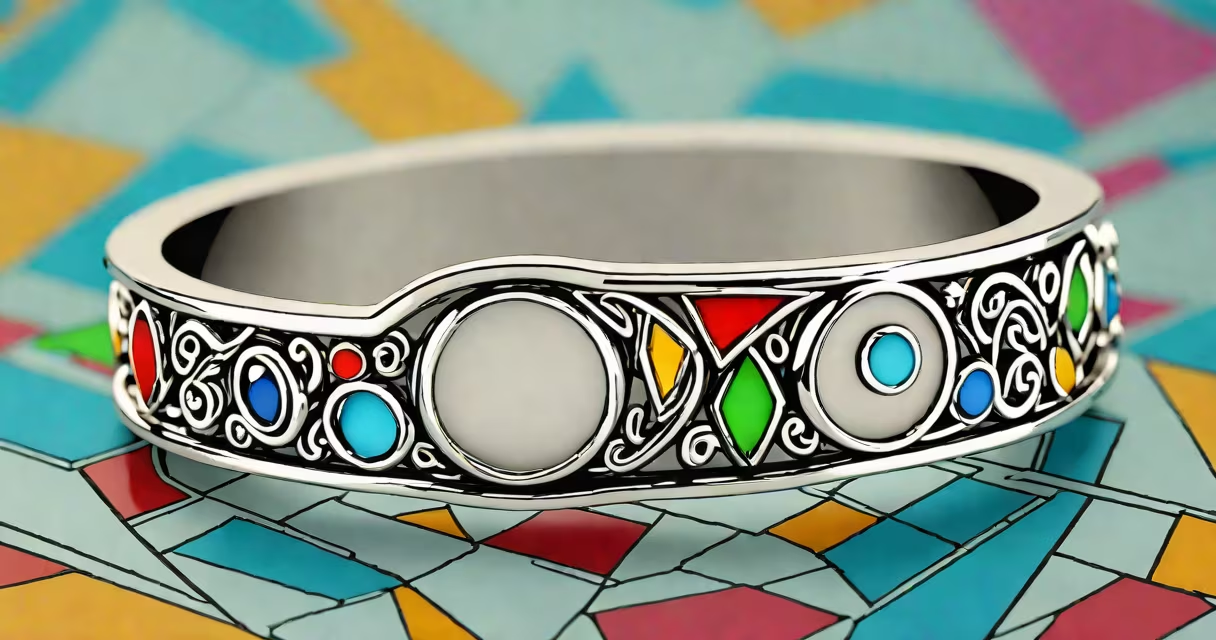
JCM on jewelry is a manufacturer's mark, not a measure of metal purity. It identifies the maker or brand responsible for producing the piece, typically stamped inside the band or on a hidden surface.
Manufacturers use codes like JCM to track production, ensure quality control, and protect against counterfeiting. These marks appear on items ranging from sterling silver rings to gold bracelets. Unlike standardized hallmarks such as 14K or 585, which indicate metal content, JCM tells you who made the item-not what it's made of.
For example, a silver bracelet marked "JCM" and "925" likely contains 92.5% pure silver, with "925" indicating the standard purity and "JCM" identifying the producer. The same applies to gold pieces: a ring with "14K" and "JCM" means it's 14-karat gold and was made by the company using the JCM identifier.
Jewelry hallmarks are standardized symbols or letters stamped on metal items to convey information about composition, origin, and maker. They serve as a form of consumer protection and industry transparency.
Common sign components include:
These marks are legally required in many regions. In the UK, for instance, all silver items over 1/20th of a troy ounce must carry a sign. In the US, while not federally mandated, reputable jewelers voluntarily use them.
Manufacturer marks vary widely in format and style. Some are initials, others are logos or stylized symbols. JCM is a common alphanumeric code used by small-scale manufacturers and independent designers.
| Mark Type | Example | Meaning |
|---|---|---|
| Initials | JS, LM, JCM | Personal or company name abbreviation |
| Logo or Symbol | ⚡, ⭐, 🌟 | Brand-specific design |
| Alphanumeric Code | ABC123, JCM01 | Internal production ID |
Some brands use consistent marks across collections. For instance, a jeweler might use "JCM" on all their silver pieces. Others rotate codes based on production batch or location.
One non-obvious fact: JCM is not a registered trademark. It's not listed in the USPTO database, nor is it tied to a specific country of origin. That means multiple companies can legally use the same code. A ring with "JCM" could come from a New York boutique or a factory in Thailand.
JCM appears most frequently on costume jewelry, fashion accessories, and mass-produced silver or gold-plated items. It's less common on high-end luxury pieces, which often feature engraved signatures or official brand logos.
It shows up on rings, earrings, necklaces, and bracelets-usually inside the band or on a flat surface where it won't wear off easily. On silver items, it may appear alongside "925." On gold, it may appear with "14K" or "585."
For example, a pair of silver earrings marked "925" and "JCM" were produced by a small workshop in California. The "925" confirms the silver purity. The "JCM" identifies the artisan who cast and finished the pieces. Without the "JCM," it would be difficult to trace the item back to its maker during recalls or warranty claims.
Many people mistake JCM for a metal standard. They assume it means "jewelry certified mark" or "jewelcraft master." This is incorrect. JCM does not indicate purity, weight, or certification level.
Another frequent error: thinking JCM means "jewelry craftsmanship mark." There is no such standard. The term "jewelry craftsmanship" is not a recognized sign system. The closest equivalent is the "Master Jeweller" designation in some European countries, but it's not abbreviated as JCM.
A third misconception is that JCM implies low quality. Not true. A piece with "JCM" can be handcrafted, ethically sourced, and made to high standards. The mark is neutral-it only identifies the maker.
I once examined a vintage silver locket from the 1960s with "JCM" and "925" stamped inside. The piece had complex engraving and a worn patina. The JCM mark helped confirm it was made by a small American silversmith, not a large chain. The absence of a major brand logo didn't diminish its value-it added provenance.
When evaluating a piece with "JCM," cross-reference the mark with known manufacturer databases. Websites like sign.org.uk and jewelleryhallmark.com list thousands of maker's marks, including JCM.
Use the mark in combination with other identifiers. A ring with "JCM" and "14K" is more verifiable than one with only "JCM." If the metal type and purity match the expected standard, the mark becomes part of a larger verification chain.
If you're uncertain, consult a certified appraiser. They can test the metal content and compare the stamp against known samples. In my experience, JCM marks are rarely forged-because they're not valuable on their own. The real value lies in the material and craftsmanship.
Understanding what JCM means on jewelry prevents misinterpretation. It's not a purity grade. It's not a certification. It's a producer ID. When combined with other hallmarks, it adds context, not confusion.