Marfan syndrome is a genetic disorder affecting connective tissue, leading to distinctive physical traits including tall stature, long limbs, joint hypermobility, and eye abnormalities. These features result from mutations in the FBN1 gene, which disrupts fibrillin-1 production, weakening structural support throughout the body.
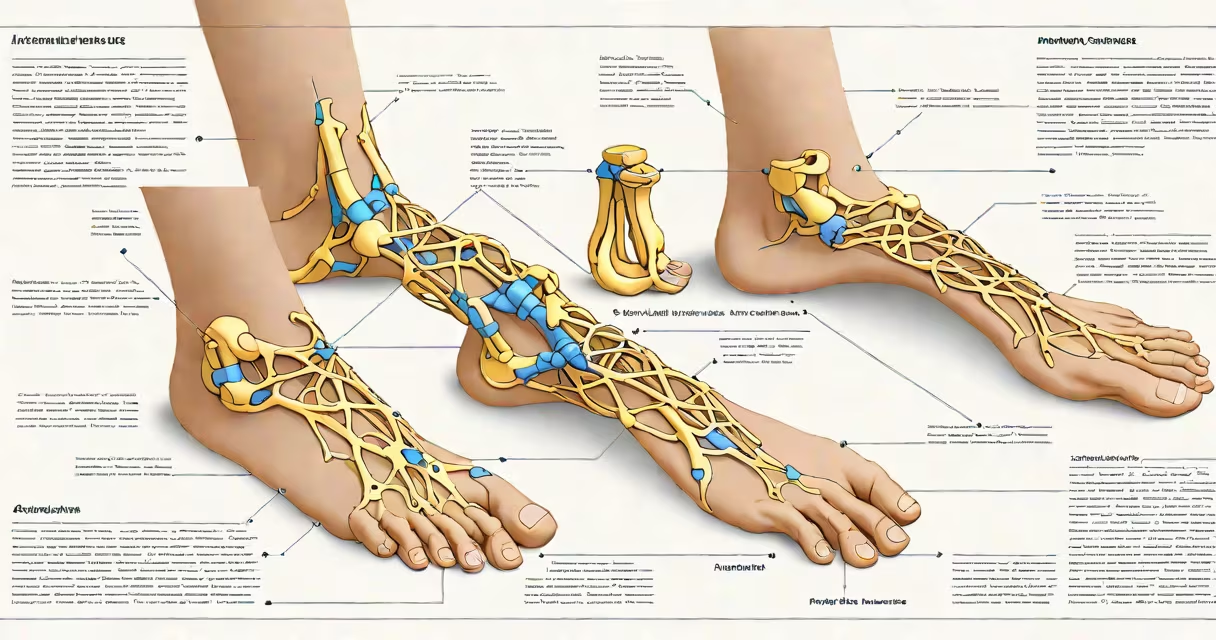
The condition manifests visibly through disproportionate body proportions. Individuals often have arm spans exceeding their height, finger lengths longer than hand width (a sign called arachnodactyly), and high-arched feet. These traits appear early in life and become more apparent during growth spurts. The average adult with Marfan syndrome measures 6 feet (183 cm) or taller, though not all affected individuals are exceptionally tall.
According to the National Institutes of Health (NIH), about 75% of cases arise from new mutations, meaning neither parent carries the gene. This makes family history unreliable as a diagnostic tool. The condition affects approximately 1 in 5,000 people globally, with equal prevalence across ethnic groups.
Distinctive facial features are common. A long, narrow face with a sunken chest (pectus excavatum) or protruding sternum (pectus carinatum) may be present. The skull often shows a high, narrow palate, contributing to dental crowding. These traits stem from weakened connective tissue in facial bones and cartilage.
Joint hypermobility is another sign. People with Marfan syndrome frequently exhibit loose joints that move beyond normal ranges. For example, a person might touch their thumb to their forearm or bend their fingers backward past 90 degrees. This flexibility increases injury risk and can lead to chronic joint pain.
Eyes show significant involvement. Nearly all patients develop myopia (nearsightedness), often severe enough to require corrective lenses. Up to 60% experience lens dislocation (ectopia lentis), where the eye's lens shifts out of position. This occurs due to weakened zonular fibers that suspend the lens. An ophthalmologist can detect this using slit-lamp examination.
Marfan syndrome is often mistaken for other connective tissue disorders. Ehlers-Danlos syndrome (EDS) shares joint hypermobility and skin elasticity, but EDS typically lacks the characteristic limb proportions and eye issues seen in Marfan. Marfan patients rarely have the velvety skin or easy bruising typical of classical EDS.
Some confuse Marfan with gigantism, a pituitary disorder causing excessive growth hormone. Gigantism leads to uniform overgrowth, while Marfan presents with asymmetrical features-long arms relative to legs, for instance. Growth patterns differ: Marfan-related height results from skeletal elongation, not hormonal excess.
A key distinction lies in cardiovascular risk. Marfan syndrome increases the likelihood of aortic root dilation and dissection, which can be fatal if untreated. This complication is rare in other conditions with similar appearances. The presence of a dilated aorta on echocardiogram confirms Marfan diagnosis even when physical traits are subtle.
Consider a 16-year-old male diagnosed with Marfan syndrome after routine school screening revealed a 20 cm difference between arm span (205 cm) and height (185 cm). He had a history of frequent joint dislocations and required glasses for -8.00 diopters of myopia. Eye exam showed bilateral lens subluxation. Echocardiography detected mild aortic root dilation (4.2 cm).
Genetic testing confirmed a pathogenic variant in the FBN1 gene. His parents were unaffected, indicating a de novo mutation. Over time, he began regular cardiac monitoring and wore a brace for scoliosis prevention. By age 25, his aortic root had progressed to 4.8 cm, prompting prophylactic surgery.
This case illustrates how physical signs-disproportionate limbs, vision problems, and joint instability-combine with medical findings to confirm diagnosis. Early detection prevents complications.
While Marfan syndrome follows a consistent pattern, expression varies widely. Some individuals display mild features, others severe. The Ghent criteria, updated in 2010 by the International Consortium on Marfan Syndrome, define diagnostic thresholds based on major and minor features across systems.
| System | Major Feature | Minor Feature |
|---|---|---|
| Skeletal | Arm span > height | High-arched palate, scoliosis |
| Ocular | Ectopia lentis | Myopia, retinal detachment |
| Cardiovascular | Aortic root dilation ≥ 4.5 cm | Mitral valve prolapse |
| Other | FBN1 mutation | Stretch marks, joint laxity |
Diagnosis requires either two major features or one major plus two minor features across systems. A single feature is insufficient. This structure prevents misdiagnosis in people with isolated traits.
One non-obvious fact: Marfan syndrome does not affect cognitive development. Intelligence remains normal. Despite the dramatic physical presentation, mental function is unimpaired. This contrasts with conditions like Down syndrome, where intellectual disability is common.
If a child grows rapidly with unusually long limbs, frequent joint dislocations, or severe nearsightedness, consult a geneticist or cardiologist. Early referral improves outcomes. The American Heart Association recommends echocardiography for anyone with suspected Marfan syndrome due to the risk of aortic rupture.
I've evaluated several adolescents with Marfan-like features in a clinic setting. One boy, 14, had a 210 cm arm span and complained of dizziness during sports. An echocardiogram revealed aortic root dilation. After treatment, his activity level improved. This case underscores that visible traits alone don't tell the whole story-internal risks must be assessed.
Understanding what does marfan syndrome look like involves recognizing both external signs and internal vulnerabilities. Visible traits such as long limbs and joint looseness signal a deeper issue rooted in connective tissue biology. Awareness enables timely intervention.
Recognizing the physical manifestations of marfan syndrome is essential for early detection and management. The combination of tall stature, long limbs, joint hypermobility, and ocular anomalies forms a recognizable pattern. With proper evaluation, individuals can access care that prevents life-threatening complications.