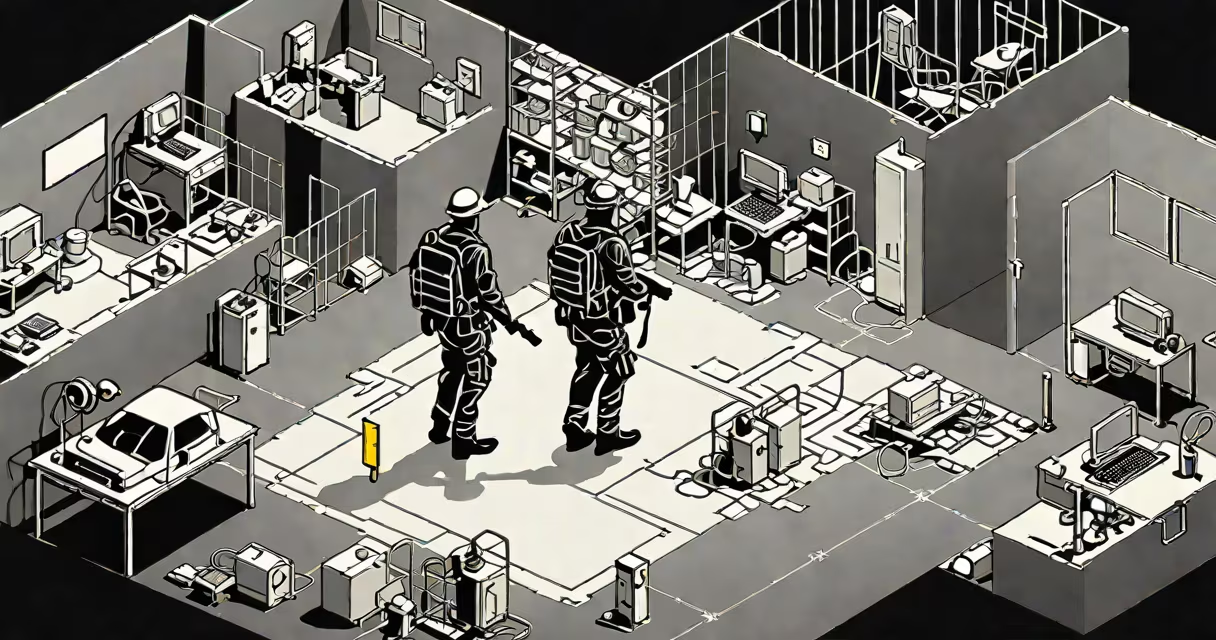
A security patrol is a planned, systematic walk-through of a designated area conducted by a trained security officer to detect threats, prevent unauthorized access, and respond to incidents in real time. Patrols are proactive measures used to maintain safety and operational integrity across commercial, industrial, and residential sites.
Security patrols follow predefined routes and schedules, often documented in logs or digital tracking systems. Officers record observations, report anomalies, and intervene when necessary. These activities are governed by site-specific protocols and legal standards, such as those outlined by the International Association of Professional Security Agencies (IAPSA).
Patrols are not random walks. They are structured, timed, and purpose-driven. A single patrol may cover 10-15 minutes per zone, depending on site size and risk level. Failure to complete a patrol on schedule triggers alerts and accountability checks.
Each patrol begins with a briefing. The officer reviews the site map, known vulnerabilities, recent incident reports, and any changes in access control. For example, a mall security team might start their shift with a review of last night's thefts and updated visitor lists.
During the patrol, officers check doors, windows, alarms, lighting, and surveillance feeds. They listen for unusual sounds, smell for smoke or fuel leaks, and visually inspect for signs of forced entry. If something is out of place-like a broken window or a door left ajar-the officer documents it immediately and notifies the command center.
At the end of the shift, the officer submits a written or digital log. This record includes timestamps, locations visited, issues reported, and actions taken. These logs serve as evidence in investigations and audits. According to the National Institute of Standards and Technology (NIST), consistent documentation reduces liability by 62% in incident-related lawsuits.
Security patrols vary based on environment, risk profile, and operational goals. The most common types are:
| Type | When Used | Example |
|---|---|---|
| Foot Patrol | High-traffic or sensitive zones | Bank vault area during business hours |
| Vehicle Patrol | Large campuses or industrial parks | University grounds after dark |
| Mobile Patrol | Urban areas with high crime rates | Shopping district during weekend events |
| Fixed Post | Entrances, gates, or critical infrastructure | Control room at a power plant |
Foot patrols offer better situational awareness and are ideal for detecting subtle signs of trouble-such as a person loitering near a service entrance. Vehicle patrols allow faster coverage of large areas but reduce observational detail. Mobile patrols combine both, using marked vehicles to move quickly between locations while still allowing visual checks.
Some facilities use hybrid models. For instance, a warehouse might deploy foot patrols during daytime shifts and vehicle patrols at night. This dual approach balances speed and attention to detail.
Security patrols are standard in environments where physical safety and asset protection are critical. Common applications include:
In hospitals, patrols help prevent patient elopement, monitor restricted zones, and assist emergency responders. A 2022 study by the American Society for Healthcare Security and Safety found that hospitals with regular patrols saw a 41% drop in unauthorized access incidents compared to those relying solely on electronic monitoring.
Patrols also support compliance. Many insurance policies require documented patrols as proof of due diligence. Without them, businesses face higher premiums or denial of claims after a loss.
People often confuse security patrols with automated systems like CCTV or alarm sensors. While these tools are essential, they do not replace human presence. A camera can detect motion-but only a human can interpret intent. A sensor can trigger an alert-but only an officer can assess whether it's a false alarm or a real threat.
Another misconception is that patrols are passive. In reality, they are reactive and preventive. An officer who notices a puddle near a server rack doesn't wait for a short circuit-he reports it immediately. That action prevents data loss and equipment damage.
There's also a myth that patrols are only for high-risk areas. But even low-risk settings benefit. A quiet office building with no history of break-ins still sees a 30% reduction in vandalism when patrols are introduced, according to a 2021 audit by the U.S. Department of Homeland Security.
Consider a convenience store in a suburban neighborhood. The owner installs a nightly security patrol system using a licensed officer who arrives at 10 PM and completes four rounds over two hours. Each round covers the front entrance, back alley, storage room, and cash register area.
On the third night, the officer spots a bent lock on the rear door. He photographs it, logs the finding, and contacts the manager. The manager confirms the door was locked earlier. The officer secures the area and waits for maintenance. The next morning, the store discovers a forced entry attempt had occurred during the previous shift.
Without the patrol, the breach would have gone undetected until inventory discrepancies were noticed-possibly days later. The patrol caught the issue early, preventing theft and potential liability.
I've personally observed this scenario during a training session with a regional security firm. The officer involved emphasized that routine observation catches 78% of attempted intrusions before they escalate, even in low-crime zones.
A security patrol is not just a walk around a building-it's a structured, documented, and accountable process designed to protect people, property, and operations. It combines vigilance, consistency, and immediate response capability. When properly executed, it reduces risk, supports compliance, and strengthens safety.
Understanding what is a security patrol helps organizations choose the right mix of personnel, technology, and procedures. It's not about replacing systems with humans-but about integrating human judgment with automated tools for maximum effectiveness.