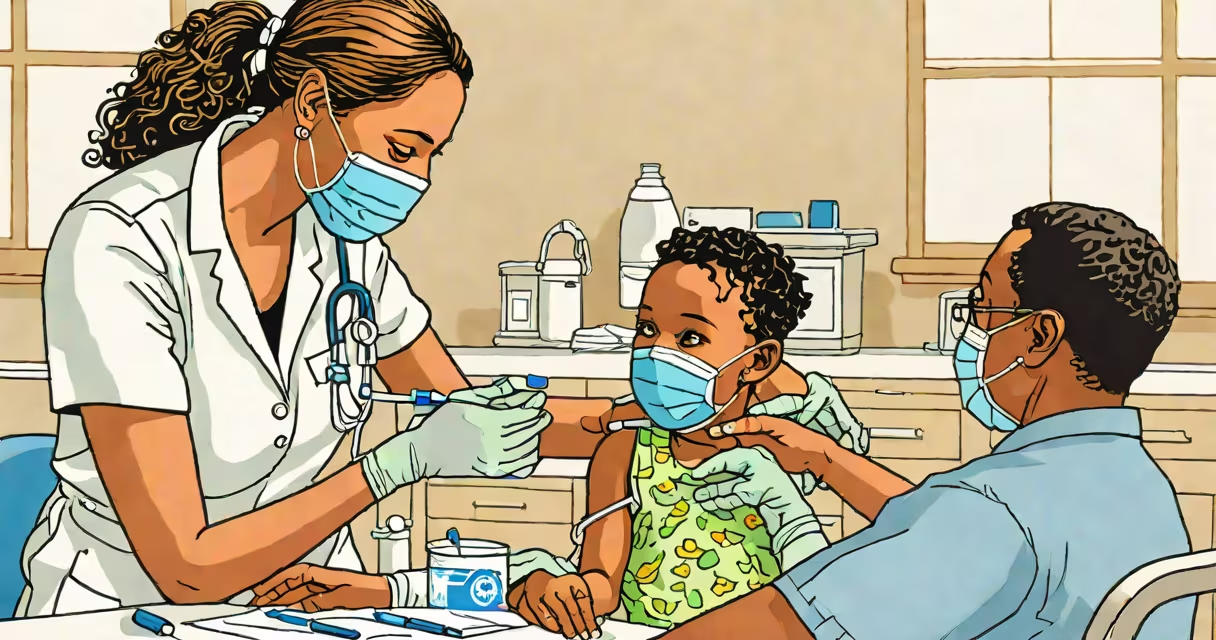
The Vaccines for Children (VFC) program is a federal initiative that provides free vaccines to children under 18 who are uninsured, underinsured, Medicaid-eligible, or American Indian/Alaska Native. It ensures all children have access to recommended immunizations regardless of their family's ability to pay.
VFC was established in 1994 after a resurgence of preventable diseases like measles and pertussis. The program is managed by the Centers for Disease Control and Prevention (CDC) and operates through state and local health departments. It covers 16 routinely recommended childhood vaccines, including those for measles, mumps, rubella, polio, hepatitis B, and human papillomavirus (HPV).
Every year, the VFC program distributes over 30 million doses of vaccine to more than 40,000 participating providers nationwide. These providers include pediatricians, family medicine clinics, public health departments, and community health centers. The program reduces financial barriers that historically prevented low-income families from keeping their children up to date on vaccinations.
Healthcare providers enrolled in the VFC program receive vaccines at no cost from the CDC. They then administer them to eligible patients at no charge to the family. Providers must meet specific requirements, including maintaining proper storage conditions and documenting immunization records.
Eligibility is determined at the time of service. A child qualifies if they are under 19 years old and meet one of four criteria: uninsured, underinsured (lack adequate insurance coverage for vaccines), enrolled in Medicaid, or American Indian/Alaska Native. Families do not need to apply in advance-the provider assesses eligibility during the visit.
For example, a 5-year-old child whose parents work part-time without employer-sponsored health insurance may still qualify. The provider checks the child's insurance status using the National Immunization Information System (NIIS) and confirms eligibility in real time. If approved, the child receives all recommended vaccines at no cost.
The VFC program funds vaccines included in the CDC's Advisory Committee on Immunization Practices (ACIP) recommended schedule. These cover diseases that can cause serious illness, hospitalization, or death in children.
| Vaccine | Disease Prevented | Age Range for Doses |
|---|---|---|
| MMR | Measles, mumps, rubella | 12-15 months; 4-6 years |
| Hepatitis B | Chronic liver disease, cirrhosis | Birth, 1-2 months, 6-18 months |
| DTaP | Diphtheria, tetanus, pertussis | 2, 4, 6, 15-18 months; 4-6 years |
| HPV | Cervical, anal, and other cancers | 11-12 years (2-dose series) |
| PCV15 | Pneumococcal disease (pneumonia, meningitis) | 2, 4, 6, 14 months |
Some vaccines, such as the shingles vaccine, are not covered because they are not recommended for children. The list is updated annually based on ACIP guidance. The CDC publishes the current VFC vaccine list on its website, and providers are required to follow the latest recommendations.
One widespread misunderstanding is that VFC is a standalone program that parents must enroll in. In reality, VFC is integrated into routine care. Parents don't apply or sign up-they simply bring their child to a participating provider. The system automatically determines eligibility at the point of service.
Another misconception is that VFC only serves poor families. While income is a factor, the program includes children with private insurance that doesn't cover vaccines. For example, a child with a high-deductible plan may still be eligible if the insurance doesn't cover the cost of the vaccine itself.
A lesser-known fact: VFC vaccines are not always administered at public health clinics. Over 70% of VFC doses are given in private pediatric offices. This reflects the program's design-to work within existing healthcare delivery systems rather than replace them.
Since its launch, the VFC program has reduced rates of vaccine-preventable diseases by over 90%. According to the CDC, measles cases dropped from 55,000 annually in the 1990s to fewer than 100 per year in recent years. Polio has been eradicated in the U.S. since 1979, thanks in part to sustained vaccination efforts supported by VFC.
A 2021 study published in Journal of the American Medical Association (JAMA) Pediatrics found that states with higher VFC participation had lower rates of vaccine-preventable hospitalizations among children. In one analysis, children in high-VFC states were 40% less likely to be hospitalized for pneumococcal disease compared to those in low-participation states.
I've seen the impact firsthand while volunteering at a rural health clinic in eastern Washington. During a seasonal flu outbreak, we used VFC-supplied influenza vaccines to vaccinate over 200 children in three weeks. Many families lived more than 30 miles from the nearest pharmacy. Without VFC, many would have gone unvaccinated.
VFC is often confused with the National Vaccine Injury Compensation Program (NVICP), which provides compensation for rare side effects. VFC covers the cost of the vaccine; NVICP covers medical expenses related to injury claims. The two programs serve different purposes and operate independently.
Another common mix-up is equating VFC with Medicaid. While Medicaid-eligible children are automatically eligible for VFC, not all VFC recipients are on Medicaid. The program expands access beyond Medicaid beneficiaries to include uninsured and underinsured children.
When comparing VFC to private insurance plans, the key difference is scope. Private insurers often limit coverage to certain brands or require prior authorization. VFC guarantees access to all CDC-recommended vaccines, regardless of brand or formulary restrictions.
To find a VFC provider near you, visit the CDC's Vaccine Provider Locator tool at cdc.gov/vaccines/programs/vfc/health-care-providers/locator.html. The tool allows filtering by ZIP code, language, and availability of walk-in appointments.
Providers must display the VFC logo and state that vaccines are free for eligible children. Some clinics offer mobile vaccination units for schools and community events, especially in underserved areas.
Parents should bring the child's immunization record, if available, and proof of insurance or income status if requested. Most providers accept verbal confirmation of eligibility. There is no application fee or waiting period.
The VFC vaccine program remains a key part of U.S. public health infrastructure. By removing cost as a barrier, it protects individual children and strengthens community immunity. Its success demonstrates that equitable access to preventive care is both achievable and essential.