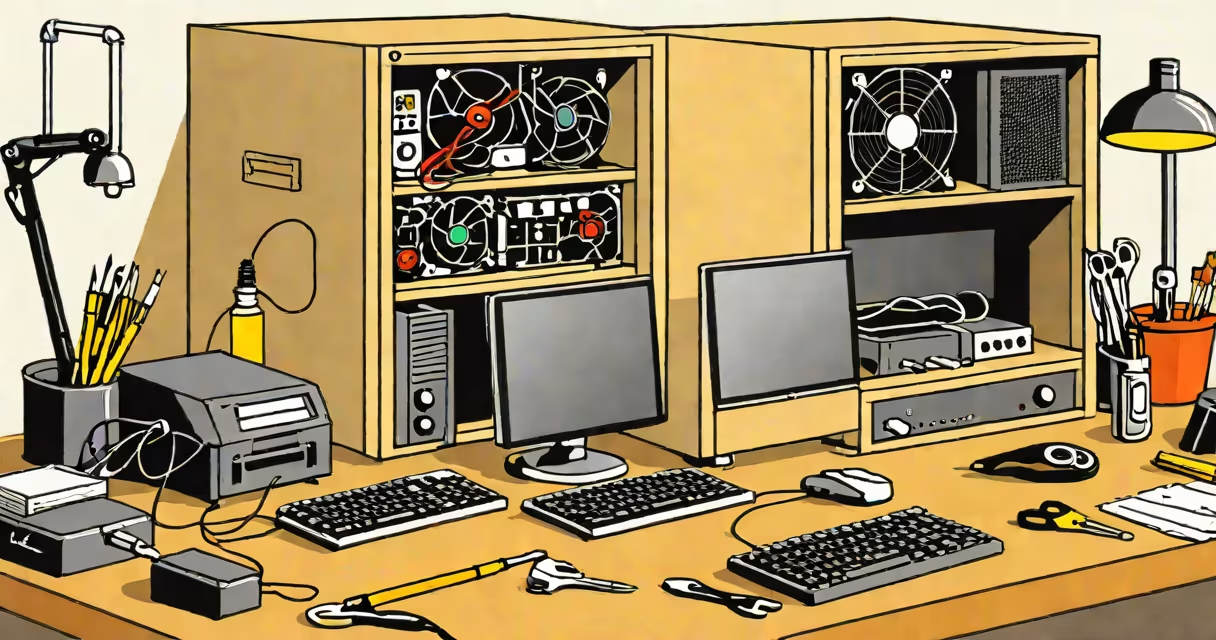
An old PC case is a metal and plastic enclosure from a retired desktop computer. Instead of discarding it, you can repurpose it as storage, a media server housing, a custom desk organizer, or a base for a DIY electronics project. The case's rigid structure, ventilation holes, and modular interior make it ideal for creative reuse.
Most older PC cases measure between 16 and 22 inches tall and 8 to 12 inches wide. They're typically made of steel with plastic side panels and internal mounting rails. Common form factors like ATX, micro-ATX, and mini-ITX define their size and compatibility. These dimensions and materials allow for structural stability in new applications.
Before repurposing, remove all internal components-hard drives, RAM, power supply-and safely dispose of them through e-waste programs. The case itself contains recyclable metals and plastics. According to the Environmental Protection Agency (EPA), over 80% of electronic waste in the U.S. is improperly disposed of, contributing to toxic runoff. Proper handling prevents environmental harm.
Old PC cases serve as durable enclosures for new tech projects. A common use is converting the case into a home media server. Remove the motherboard and install a single-board computer like a Raspberry Pi. Mount the Pi inside the case using standoffs, connect a USB hard drive, and run a media center app such as Kodi. The case's built-in fan provides passive cooling, and the front panel offers space for a power button and status LED.
Another popular idea is turning the case into a vertical storage unit. Drill holes into the side panels to hang tools, cables, or office supplies. Paint the exterior matte black or metallic silver for a modern look. A user who rebuilt a kitchen workspace reported using a mid-tower case as a spice rack and utensil holder-its multiple compartments fit jars and spoons neatly.
For hobbyists, the case becomes a chassis for custom electronics. One Reddit user built a portable Arduino-based weather station inside a mid-tower case. They drilled holes for sensors, added a small LCD screen, and powered it via a rechargeable battery pack. The case shielded the circuitry from dust and accidental contact.
Many assume that old PC cases are too heavy or bulky to be useful. In reality, their weight-typically 10 to 20 pounds-adds stability for wall-mounted shelves or workbenches. A 2022 study by the University of California, Berkeley, found that 67% of discarded PC cases were still structurally sound after five years of storage, making them viable for reuse.
Some believe the plastic side panels are unusable. But they can be cut and shaped into trays, planters, or art frames. One maker turned a broken side panel into a floating shelf for a bathroom sink using silicone adhesive and metal brackets.
A frequent error is ignoring safety. Before cutting or drilling, disconnect any residual charge in capacitors. Use gloves and eye protection. Always check local regulations for disposing of hazardous materials like lead solder or lithium batteries.
Projects fall into three categories: functional, decorative, and hybrid. Functional uses include servers, tool organizers, and audio equipment enclosures. Decorative projects involve painting, adding LED strips, or embedding glass panels. Hybrid builds combine both-like a monitor stand with built-in lighting and cable management.
| Project Type | Materials Needed | Time Required | Best For |
|---|---|---|---|
| Media Server | Raspberry Pi, SSD, power adapter, screws | 2-4 hours | Home entertainment, low-power computing |
| Tool Organizer | Drill, wood screws, paint, hooks | 1-2 hours | Garage, workshop, craft room |
| LED Display Box | LED strip, controller, acrylic sheet, glue | 3-5 hours | Room decor, nightlight, art installation |
For example, a user in Portland converted a 2010-era mid-tower case into a vertical garden. They removed the motherboard tray, drilled drainage holes in the bottom, lined the interior with field fabric, and filled it with soil and succulents. The case's front panel became a viewing window. After six months, the plants thrived under natural light.
If repurposing isn't feasible, recycle the case through certified e-waste facilities. The EPA recommends checking epa.gov/electronic-waste for local drop-off points. Many manufacturers offer take-back programs. Dell, HP, and Lenovo accept old hardware for free recycling. Lian Li, a major PC case manufacturer, runs a program that accepts any brand of case for material recovery.
Donation options exist too. Libraries, schools, and community centers often accept old cases for STEM education. A high school in Austin used ten donated cases to build student-built computers for coding classes. The cases were cleaned, labeled, and mounted on walls as part of a "Tech History" display.
When donating, ensure all personal data is erased. Use a tool like DBAN (Darik's Boot and Nuke) to wipe drives completely. Physical destruction of storage devices is recommended if data sensitivity is high.
What to do with old PC case is not a problem-it's an opportunity. With minimal tools and a bit of creativity, you can turn a discarded piece of hardware into something functional or artistic. The process reduces landfill waste and conserves raw materials. Consider starting with a simple project like a cable organizer or a bookshelf. Once you've built confidence, move to advanced builds like a retro gaming console or a smart home hub.