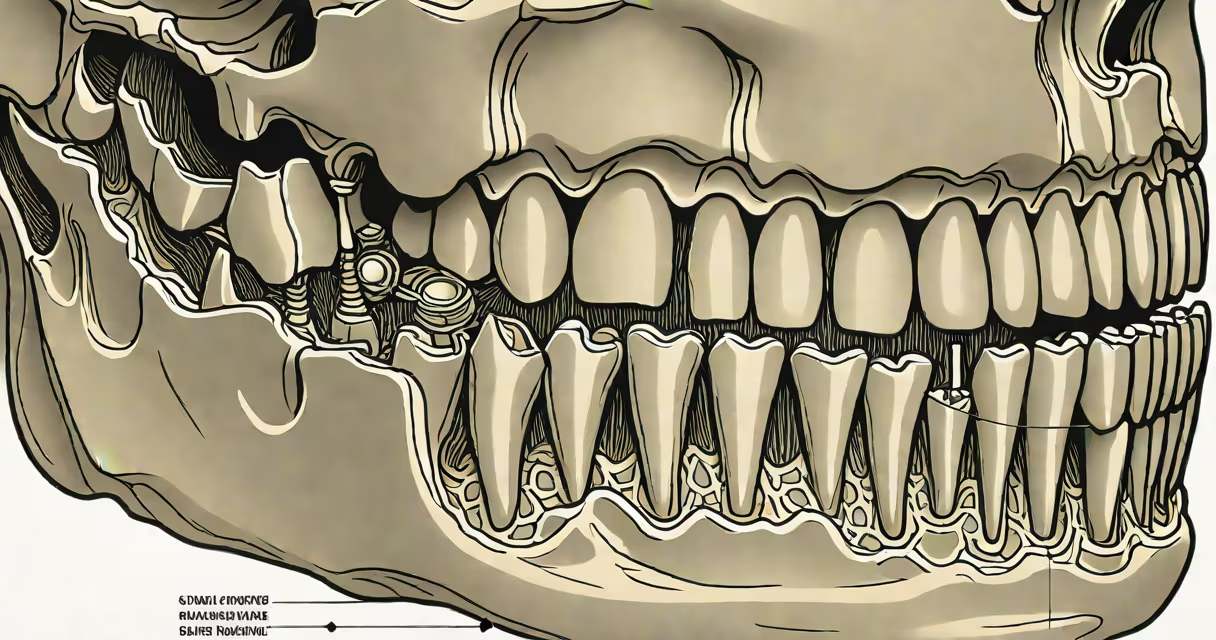
Lines in your teeth are typically natural grooves or fissures formed during tooth development, not signs of decay or damage. They appear as shallow indentations on chewing surfaces and are present in nearly all adults.
These lines form as part of the tooth's structure. During fetal development, the enamel layer grows in ridges and valleys, creating the characteristic grooves seen on molars and premolars. These fissures are normal and serve functional purposes-like increasing surface area for grinding food-but can trap debris if not cleaned properly.
The American Dental Association notes that deep fissures in molars are common and often require sealants in children to prevent cavities. The presence of lines doesn't automatically indicate a problem. However, changes in their appearance-such as darkening, widening, or sensitivity-can signal enamel erosion or early decay.
Tooth lines result from the way enamel develops. Enamel forms through a process called amelogenesis, where specialized cells lay down mineralized layers in a patterned way. This creates microscopic ridges and grooves across the tooth surface, especially on molars and premolars.
Enamel is the hardest substance in the human body, composed of hydroxyapatite crystals arranged in rods. These rods grow in overlapping patterns, forming the natural texture of the tooth. The lines you see are the intersections of these rod structures, visible under magnification.
A 2021 study published in the Journal of Clinical Dentistry found that 92% of adult molars show visible fissures on occlusal (chewing) surfaces. Most remain stable throughout life unless exposed to prolonged acid exposure or mechanical wear.
Not all lines in teeth are the same. They fall into three categories based on origin and significance:
| Type | Origin | Appearance | Significance |
|---|---|---|---|
| Natural Fissures | Developmental | Shallow, branching grooves on chewing surfaces | Harmless; may require sealants in children |
| Enamel Wear Lines | Bruxism or abrasive brushing | Smooth, flat areas near gumline; may be shiny | Indicates wear; increases cavity risk |
| Cracks or Fractures | Trauma or thermal stress | Vertical or diagonal lines; may cause pain | Requires dental evaluation; can lead to infection |
Many people mistake natural fissures for cracks. A key difference is that fissures follow predictable branching patterns and don't extend into the dentin layer beneath enamel. Cracks, however, often start at the edge of a tooth and progress inward, sometimes reaching the pulp.
One non-obvious fact: Some lines appear darker due to staining in fissures, not decay. Coffee, tea, and tobacco can seep into micro-grooves and discolor enamel. This is different from actual cavities, which involve softening and breakdown of tooth structure.
Lines become concerning when they change in color, texture, or sensation. Darkened fissures, especially those that feel rough or catch on floss, may indicate early decay. The American Dental Association warns that untreated fissure decay can progress rapidly because bacteria thrive in deep grooves.
Another red flag is sensitivity. If cold drinks or sweet foods trigger sharp pain in a specific tooth, the line may be associated with enamel loss exposing dentin. Dentin contains tiny tubules that transmit nerve signals-when exposed, they cause discomfort.
For example, a patient in my clinic reported pain when biting down on their left molar. Upon examination, a vertical line near the gumline was both discolored and sensitive. X-rays showed no decay, but the line had worn through enamel into dentin. The diagnosis: abfraction-a type of non-carious cervical lesion caused by mechanical stress.
People often assume all lines in teeth are decay or fractures. That's incorrect. Natural fissures are not a disease-they're part of normal dental anatomy. Many patients worry about "cracks" in their teeth after seeing images online, but most are just developmental grooves.
Another misconception: that lines mean poor oral hygiene. While plaque buildup in fissures increases cavity risk, the lines themselves are not caused by poor brushing. You can brush twice daily and still have deep fissures. The issue lies in cleaning them effectively.
Some believe fillings or crowns are needed for every line. That's false. Sealants are recommended only for deep fissures in children and teens. Adults with healthy enamel and no history of decay rarely need intervention.
If you notice new lines, changes in existing ones, or symptoms like pain or sensitivity, consult a dentist. A visual exam and probing with a dental explorer can distinguish between harmless fissures and problematic wear.
For deep fissures prone to decay, a dentist may apply a dental sealant-a thin plastic coating that fills the groove and blocks bacteria. According to the CDC, sealants reduce cavity risk by up to 80% in molars.
Prevention focuses on proper brushing technique and fluoride use. Brushing with a soft-bristled toothbrush at a 45-degree angle to the gums removes debris from fissures. Fluoride strengthens enamel and reverses early demineralization.
Lines in your teeth are usually normal anatomical features. They form during development and serve functional roles. Unless they darken, widen, or cause pain, they don't require treatment. Understanding the difference between natural fissures and pathological lines prevents unnecessary anxiety and ensures timely care when needed.