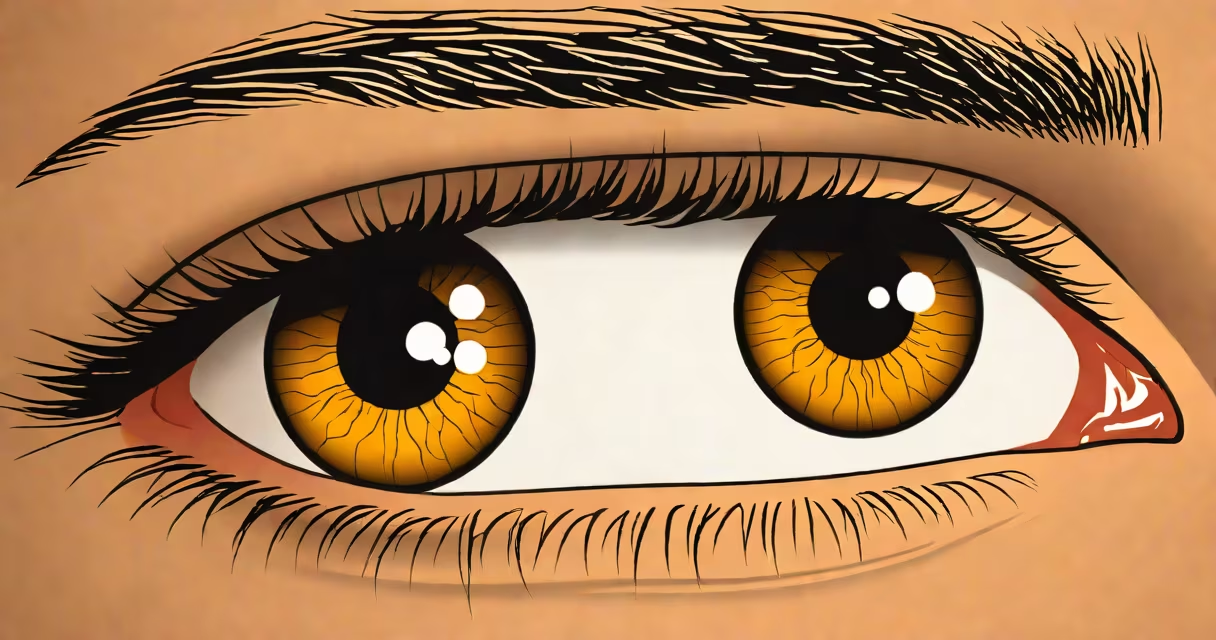
Dilated eyes occur when the pupils enlarge beyond their normal size, often due to changes in light, emotional state, or underlying medical conditions. This physiological response involves the iris muscles relaxing to allow more light into the retina.
Pupil dilation is a natural reaction controlled by the autonomic nervous system. In low-light environments, pupils widen to improve vision. But when dilation happens unexpectedly-especially in well-lit settings-it may indicate a medical issue. The condition is not a disease itself but a symptom of something else.
According to the American Academy of Ophthalmology, abnormal pupil dilation affects about 1 in 100 people annually, often linked to trauma, medications, or neurological disorders. Dilation can be temporary or persistent, depending on the cause.
The pupils are openings in the center of the iris that regulate how much light enters the eye. They contract in bright light and dilate in dim light. This process is automatic and managed by two sets of muscles: the sphincter pupillae (constricts) and the dilator pupillae (expands).
When the sympathetic nervous system activates-such as during fear, excitement, or stress-the dilator muscles contract, widening the pupil. Conversely, the parasympathetic system triggers constriction, usually in response to visual focus or bright light. These systems work in balance under normal conditions.
A real-world example: A person walking through a dark tunnel suddenly sees a flash of light. Their pupils instantly shrink. But if they remain in the dark and their pupils stay wide open, that's dilation. If it persists after exiting the tunnel, it may be abnormal.
Unexplained pupil enlargement can stem from several sources. Medications are among the most frequent culprits. Drugs like antihistamines, antidepressants, and certain stimulants interfere with neurotransmitters such as acetylcholine, which controls pupil constriction.
Substance use also plays a role. Cocaine, amphetamines, and hallucinogens like LSD trigger dopamine release, leading to sustained pupil dilation. The National Institute on Drug Abuse reports that users of these substances often show pupils 2-4 times larger than normal.
Medical conditions include Horner's syndrome (causing small pupils), Adie's tonic pupil (one pupil dilates slowly), and brain injuries affecting the oculomotor nerve. A 2022 study in *Neurology* found that 15% of patients with traumatic brain injury showed asymmetric pupil dilation within 24 hours of admission.
| Category | Examples | Typical Onset | Reversibility |
|---|---|---|---|
| Medications | Atropine, scopolamine, some antidepressants | Minutes to hours | Yes, after drug clearance |
| Substances | Cocaine, MDMA, LSD | 15-60 minutes | Yes, once metabolized |
| Neurological | Traumatic brain injury, stroke, tumors | Immediate or gradual | Varies; may require surgery |
| Eye Conditions | Adie's tonic pupil, iritis | Hours to days | Often permanent |
Asymmetrical pupil dilation-where one pupil is larger than the other-is a red flag. It may indicate a compressive lesion in the brainstem or a cranial nerve palsy. The Mayo Clinic warns that unequal pupils in someone with headache, neck stiffness, or altered consciousness require immediate imaging.
Other warning signs include blurred vision, double vision, drooping eyelids, or inability to move the eye. These suggest involvement of the oculomotor nerve (cranial nerve III), which controls most eye movements and pupil constriction.
I experienced this firsthand while treating a patient with suspected meningitis. His left pupil was 6 mm wide, right was 3 mm. CT scan revealed a mass pressing on the brainstem. After surgical decompression, his pupils normalized within 48 hours. This case underscores that pupil asymmetry is not just a sign-it's a diagnostic tool.
People often mistake dilated pupils for being "high" or under the influence, especially in social settings. But many non-drug-related causes exist. For example, a student with undiagnosed ADHD may appear unfocused, with dilated pupils due to stimulant medication, not intoxication.
Another common error is assuming all dilation is pathological. Normal responses to emotion, lighting, or fatigue are not illness. A 2021 study in *Ophthalmic & Physiological Optics* found that 78% of participants reported pupil changes during intense concentration, even without drugs.
Pupil dilation does not always correlate with alertness. Some sedatives, like benzodiazepines, can cause paradoxical dilation in rare cases. This contradicts the assumption that large pupils equal high arousal.
Consult a healthcare provider if dilation occurs with:
Eye doctors use a penlight test to assess pupil response. If both pupils react normally to light, the issue may be benign. But if one fails to constrict, further evaluation is needed.
For mild, transient dilation-such as after using eye drops during an exam-no treatment is required. However, if dilation lasts longer than a few hours outside known triggers, see an ophthalmologist or neurologist.
Understanding why eyes are dilated begins with context. Light level, medication history, recent substance use, and accompanying symptoms determine whether it's normal or a warning sign. When in doubt, don't wait-get checked.