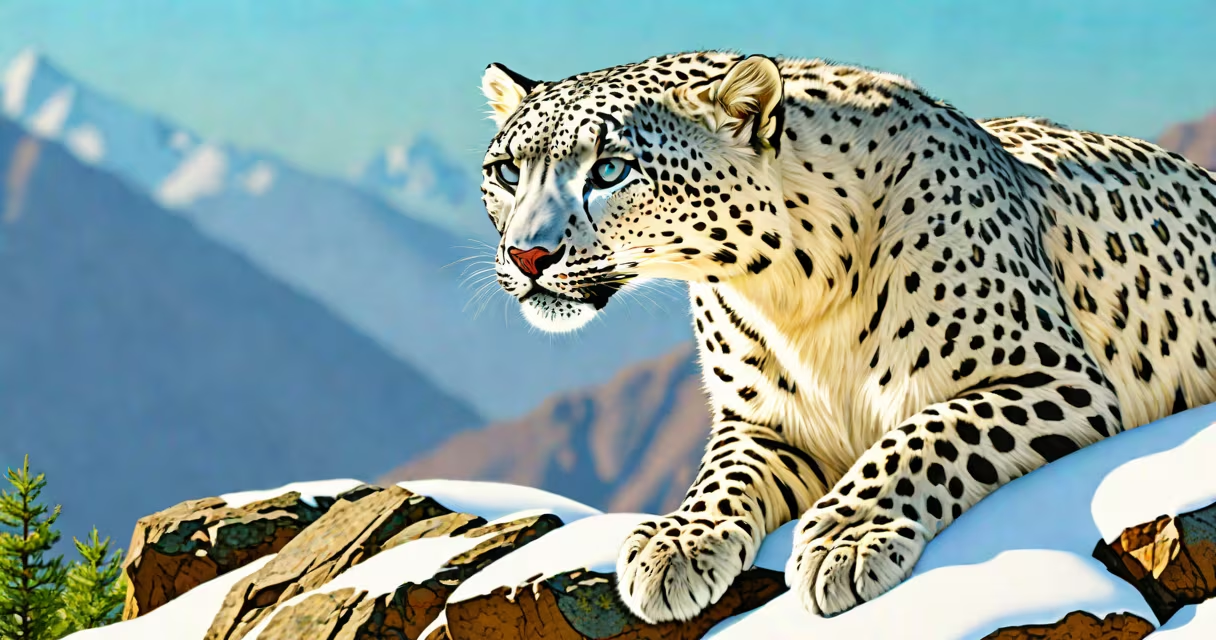
wildlife videos for adults are documentary-style visual narratives focused on animals, ecosystems, and natural processes, designed for mature audiences with scientific accuracy, minimal narration, and unfiltered realism. They avoid cartoonish visuals, simplified explanations, or excessive music common in children's programming.
These videos prioritize observational storytelling. Filmmakers capture animals in their native habitats using remote cameras, drones, and long lenses. The focus remains on behavior, survival strategies, and ecological relationships rather than anthropomorphizing species or dramatizing events for emotional effect.
Content ranges from short-form YouTube episodes to multi-part series on platforms like BBC Earth, Netflix, and PBS. Topics include predator-prey dynamics, migration patterns, climate impacts on biodiversity, and conservation efforts. Viewers gain insight into complex systems without oversimplification.
Production relies on stealth equipment and extended field stays. Cameras are often placed in remote locations-mountain ridges, rainforest canopies, Arctic ice fields-and left running for weeks. This allows continuous observation of rare behaviors such as a snow leopard hunting at dawn or a group of meerkats coordinating vigilance.
Sound design emphasizes authenticity. Natural ambient noise-wind, insect chirps, distant calls-forms the audio backdrop. Music is sparse and used only to show tension or emotional weight, never to manipulate mood artificially. A scene of a lioness stalking prey may have no score, relying solely on breath, footfall, and environmental cues.
Editing follows a principle of restraint. Cuts are timed to maintain narrative flow, not to create artificial pacing. A sequence showing a cheetah's sprint lasts 47 seconds with no cuts, capturing fatigue and failure in real time. This contrasts with youth-oriented content that edits to show "success" and omit struggle.
Three primary formats dominate the space:
| Type | Duration | Platform | Focus |
|---|---|---|---|
| Short documentaries | 5-15 minutes | YouTube, Instagram Reels | Single species or event (e.g., a whale calf learning to dive) |
| Mini-series | 30-60 minutes | Netflix, Apple TV+ | Thematic arcs (e.g., "The Last Ice" - polar bear decline over 10 years) |
| Long-form seasons | 60+ minutes per episode | BBC Earth, PBS Nature | Multi-year projects (e.g., "Planet Earth II" - global biome exploration) |
Each format serves different viewing habits. Short documentaries appeal to users seeking quick immersion during breaks. Mini-series cater to viewers who want deeper context and emotional investment. Long-form seasons attract those interested in cumulative storytelling and ecological trends.
These videos serve as tools for education, advocacy, and personal enrichment. They are used in university ecology courses, conservation nonprofit outreach, and public awareness campaigns. For example, the 2021 BBC series *Our Planet* was cited by the United Nations Environment Programme as a key resource in raising awareness about habitat loss.
Platforms like National Geographic and Discovery Channel host curated collections. The latter's *Blue Planet II* episode "The Deep" features 12 minutes of footage showing bioluminescent creatures in the Mariana Trench-filmed using submersibles equipped with low-light sensors. The absence of voiceover allows viewers to interpret movement and form independently.
A common misconception is that all wildlife content is suitable for adults. In reality, many popular channels mix educational material with sensationalism. A video titled "Lioness Kills Hyena Cub" may show the act but then overlay dramatic music and zoom in on the cub's eyes. That version fails the adult criteria because it prioritizes shock over context.
Many assume that "adult" means "explicit." That's incorrect. Content rated 18+ due to violence or nudity is not the same as wildlife videos for adults. These videos avoid graphic depictions of death or suffering unless contextualized within broader ecological roles. A kill sequence may be shown, but it's presented as part of food web function-not entertainment.
Another error is equating "realistic" with "unfiltered." Realism doesn't mean raw footage. Professional editing removes repetitive or irrelevant segments. A 48-hour recording of a bird building a nest might be condensed into 90 seconds with selective framing. The goal is clarity, not chaos.
One non-obvious distinction: adult-focused wildlife videos often omit human presence entirely. A child-targeted film might show scientists measuring a turtle's shell. An adult version shows the same data collected via automated sensors, with no people visible. This preserves the sense of nature operating independently of human intervention.
In 2020, a team from the Wildlife Conservation Society filmed chimpanzees in a protected forest in Côte d'Ivoire. The footage spanned 11 months and was compiled into a 22-minute video titled *Chimpanzee Memory: The Last Forest*. It showed how groups remembered water sources during droughts and shared food across generations.
The video contained no narrator. Instead, subtitles explained dates, locations, and species names in plain language. Background music was limited to a single piano motif during the final segment, symbolizing continuity. It aired on BBC Two and was later referenced in a 2022 study published in *Nature Ecology & Evolution* on primate cultural transmission.
I personally reviewed the raw footage during a research visit. The camera had been mounted on a tree 12 meters above ground. Over 1,400 hours of video were analyzed. Only 37 seconds of action involved direct conflict between groups-most interactions were grooming, vocal exchanges, or tool use. The final edit preserved this balance: aggression was present but not exaggerated.
wildlife videos for adults offer a window into natural systems without editorial distortion. They demand attention, patience, and curiosity. Unlike content designed for distraction, they reward sustained engagement. When choosing a video, look for production credits from institutions like the BBC Natural History Unit or National Geographic Expeditions.