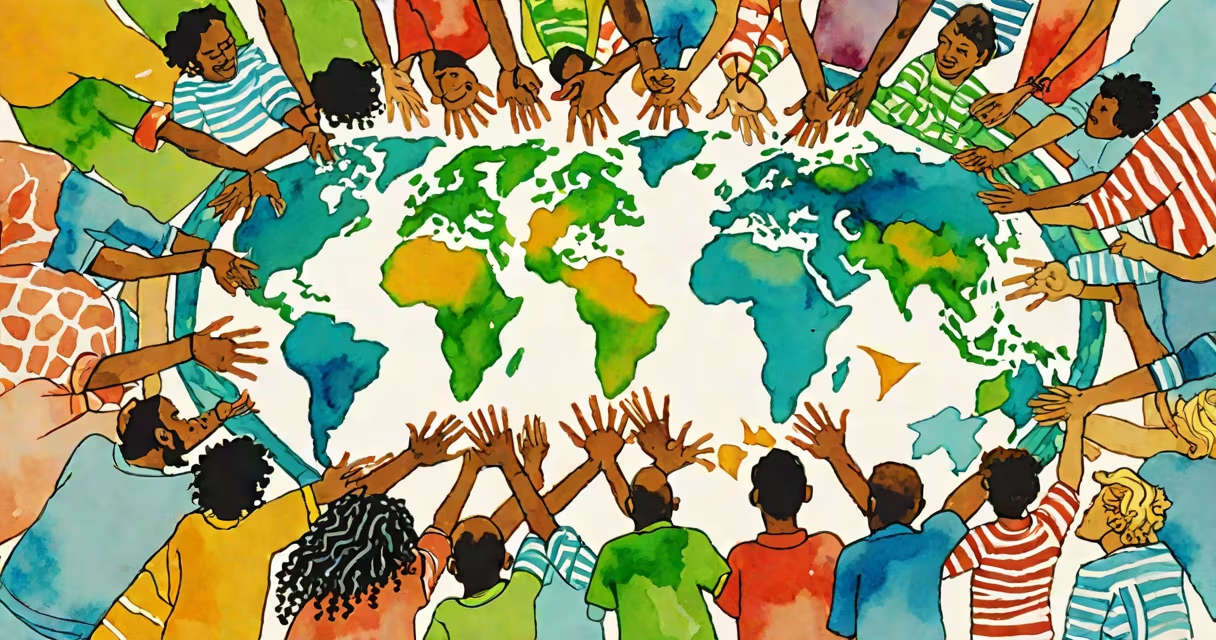
Action for humanity is coordinated effort to reduce suffering, promote equity, and uphold human dignity through sustained, purpose-driven initiatives. It involves individuals, organizations, and governments working together to address crises such as poverty, conflict, climate displacement, and health inequity. This concept transcends charity-it demands structural change, accountability, and long-term commitment.
At its core, action for humanity operates on three pillars: recognition of shared vulnerability, responsibility to act, and measurable outcomes. It is not about isolated gestures but consistent, informed interventions grounded in data, ethics, and local knowledge. For example, during the 2014 Ebola outbreak in West Africa, international medical teams, local health workers, and NGOs coordinated efforts that reduced transmission rates by 90% within six months-a result of rapid deployment, community trust-building, and transparent communication.
Unlike charity or aid that may focus on immediate relief, action for humanity emphasizes sustainability and systemic reform. It includes policy advocacy, education access, infrastructure development, and legal protection for vulnerable populations. The United Nations' Sustainable Development Goals (SDGs), adopted by 193 nations in 2015, represent a global structure for action for humanity-targeting poverty eradication, quality education, gender equality, and climate resilience by 2030.
Effective action begins with identifying root causes, not symptoms. A project addressing malnutrition in rural Ethiopia did not simply distribute food. Instead, it partnered with farmers to improve crop yields using drought-resistant seeds, trained women in nutrition education, and established local cooperatives. Over three years, child stunting rates dropped from 46% to 28%, according to World Bank reports from 2018.
Success requires transparency, inclusivity, and feedback loops. When the Global Fund to Fight AIDS, Tuberculosis and Malaria allocates funding, it mandates independent audits and community-led monitoring. In 2022, this model helped prevent 1.5 million new HIV infections in sub-Saharan Africa-data verified by the World Health Organization (WHO).
Technology amplifies reach. Mobile apps like Ushahidi, developed during Kenya's 2007 post-election violence, allow citizens to report incidents in real time. These reports are mapped and shared with peacekeepers and humanitarian groups. The tool was later adapted for flood response in Pakistan and wildfire tracking in California.
Not all action for humanity looks the same. It varies by scale, method, and intent. The following table outlines key forms:
| Type | Focus | Example | Impact Scale |
|---|---|---|---|
| Grassroots Mobilization | Community-led change | Women in Nepal organizing clean water committees after the 2015 earthquake | Local to regional |
| Policy Advocacy | Legislative reform | Global campaign to ban landmines, leading to the 1997 Ottawa Treaty | National to international |
| Humanitarian Response | Crisis relief | UNICEF's emergency vaccination drives in Yemen during cholera outbreaks | Immediate to medium-term |
| Systemic Reform | Structural change | Legal challenges to discriminatory housing laws in the U.S., resulting in fair housing enforcement | Long-term national |
Each type requires different resources, timelines, and expertise. Grassroots efforts often succeed where top-down programs fail because they build trust from within. Systemic reform takes decades but creates lasting change. Policy advocacy can shift laws overnight-but only if backed by public pressure and evidence.
Many assume action for humanity is synonymous with volunteering or donation. While both contribute, they differ in intent and impact. Volunteering can be short-term and unstructured. Donation without oversight risks waste or dependency. True action for humanity integrates both but centers on empowerment, not pity.
A common error is equating visibility with effectiveness. High-profile campaigns like #MeToo or #BlackLivesMatter raised awareness but required follow-up policies to translate momentum into change. Without institutional reform, movements risk fading after media attention wanes. According to a 2021 study by the Center for Global Development, 68% of high-visibility humanitarian campaigns failed to meet long-term goals due to lack of funding continuity and local leadership integration.
Another misconception is that action for humanity is only for activists or NGOs. In reality, it includes everyday choices: voting for equitable policies, supporting ethical businesses, or speaking up against discrimination. I witnessed this firsthand while teaching in a refugee camp in Jordan. Students didn't need grand gestures-they needed access to textbooks, trained teachers, and recognition of their rights. Simple acts-like ensuring school supplies arrived on time-became lifelines. That's action for humanity in practice.
Global challenges are increasingly interconnected. Climate change displaces millions, fueling migration and conflict. Pandemics expose gaps in healthcare access. Economic inequality grows even as technology advances. In this context, action for humanity is not optional-it's essential.
The World Bank estimates that without coordinated global action, 500 million people could fall into extreme poverty by 2030 due to climate shocks and economic instability. But progress is possible. Since 2000, global under-five mortality has declined by 50%, largely due to targeted immunization and maternal care programs-proof that focused, data-driven action saves lives.
True action for humanity doesn't wait for permission. It begins with asking: Who is being left out? What systems enable harm? How can we share power? These questions change-not slogans.
Understanding action for humanity leads to better decisions, stronger communities, and enduring justice. It is not a single event but a continuous practice of care, courage, and accountability. Review the principles guiding responsible action for humanity.