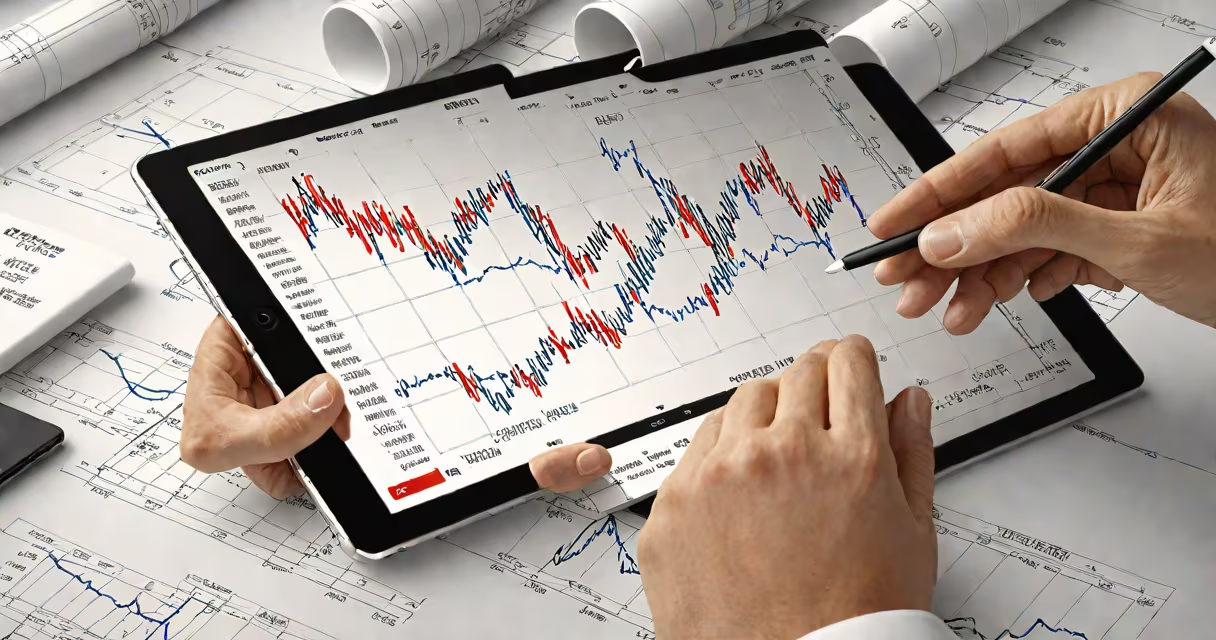
basics for forex trading refer to the foundational principles, tools, and practices that enable individuals to participate in the global foreign exchange market, where currencies are bought and sold based on fluctuating exchange rates. This includes understanding currency pairs, using use responsibly, managing risk, and interpreting market trends through technical and fundamental analysis.
The foreign exchange market operates 24 hours a day, five days a week, with major trading centers in London, New York, Tokyo, and Sydney. Traders buy one currency while simultaneously selling another, aiming to profit from changes in exchange rates. For example, if the euro strengthens against the U.S. dollar, a trader who bought euros with dollars earlier can sell them at a higher value.
According to the Bank for International Settlements (BIS), daily average turnover in the global forex market reached $7.5 trillion in 2022, making it the largest financial market by volume. This scale ensures high liquidity, meaning trades can be executed quickly with minimal slippage. However, the size also introduces complexity that beginners must learn to go through.
Forex trading occurs through a network of banks, brokers, and electronic platforms. When a trader opens a position, they are not physically exchanging banknotes-they are speculating on the relative value of two currencies. A trade is always conducted in pairs, such as EUR/USD (euro/U.S. dollar), GBP/JPY (British pound/Japanese yen), or USD/CAD (U.S. dollar/Canadian dollar).
Each pair has a base currency and a quote currency. The base currency is the one being bought or sold, and the quote currency shows how much of it is needed to purchase one unit of the base. In EUR/USD, the euro is the base currency. If the rate is 1.1000, one euro equals 1.10 U.S. dollars. A rise in the rate means the base currency is strengthening.
Trades are executed via online trading platforms like MetaTrader 4 or cTrader. These platforms provide real-time pricing, charting tools, and automated execution. Brokers act as intermediaries, offering access to liquidity pools and setting spreads-the difference between the bid and ask prices. Spreads can vary widely depending on market volatility and the broker's model.
Understanding the building blocks of forex trading is essential. These include currency pairs, use, margin, pips, and order types. Each plays a role in shaping strategy and risk exposure.
| Component | Description | Example |
|---|---|---|
| Currency Pair | Two currencies traded together; base currency is first, quote is second. | EUR/USD = 1.0850 means 1 euro = 1.0850 USD |
| Pip | Smallest price movement, usually 0.0001 in most pairs. | A 10-pip move in EUR/USD is a 0.0010 change in rate. |
| Use | Borrowed capital to increase position size; amplifies both gains and losses. | 100:1 use allows a $1,000 account to control $100,000 in trades. |
| Margin | Collateral required to open a leveraged position. | With 2% margin, $200 is needed to open a $10,000 position. |
One common misconception is that use increases profitability automatically. In reality, it magnifies risk. A 1% adverse move in a leveraged position can wipe out a significant portion of capital. For example, with 50:1 use, a 2% drop in a currency pair results in a 100% loss of margin.
Another non-obvious point: most retail forex traders lose money. The U.S. Commodity Futures Trading Commission (CFTC) reports that 70% to 80% of retail forex traders lose money within their first year. This outcome stems less from market complexity and more from poor risk management, emotional decision-making, and overtrading.
New traders often assume that forex is easy money because of the market's accessibility. They may jump into trades without testing strategies or understanding how news events affect prices. For instance, the release of U.S. non-farm payroll data can cause sudden spikes in USD-related pairs. Without preparation, traders can get stopped out during normal volatility.
One mistake is ignoring the difference between fundamental and technical analysis. Fundamental analysis uses economic indicators-like interest rates, inflation, and employment-to predict long-term trends. Technical analysis relies on historical price patterns and chart formations to time entries and exits. Both are necessary for a balanced approach.
I once watched a novice trader place a series of trades based solely on a "hot tip" from a social media group. Over three weeks, he lost 60% of his account. He wasn't using stop-loss orders, wasn't tracking performance, and didn't understand the concept of drawdown. After reviewing his trades, we identified that he was reacting emotionally to small losses, which led to revenge trading.
Individuals trade forex for several reasons: speculation, hedging, arbitrage, and portfolio diversification. Speculators aim to profit from short-term price swings. Hedgers-often multinational corporations-protect themselves from exchange rate fluctuations that could impact profits. Arbitrageurs exploit tiny price differences across markets.
For example, a U.S.-based company expecting to receive €1 million in payments from a European client in six months might enter a forward contract to lock in an exchange rate. This avoids the risk of the euro weakening before payment arrives.
Major currency pairs dominate trading volume. EUR/USD accounts for about 25% of all forex transactions. USD/JPY and GBP/USD follow closely. Crosses-pairs not involving the U.S. dollar, like EUR/JPY-are less liquid and more volatile. Beginners should start with majors to reduce slippage and improve execution reliability.
Forex trading is not gambling, though it shares elements of risk. Gambling involves chance with no skill component. Forex trading requires research, discipline, and continuous learning. Success comes from consistent application of strategy, not luck.
Some confuse forex with stocks or cryptocurrencies. Unlike stocks, forex doesn't involve ownership of a company. Unlike crypto, forex pairs are backed by national economies and central banks. The forex market is also far more regulated than decentralized crypto exchanges.
Another confusion: many think forex is only for large institutions. Retail traders now have access to the same data and tools as banks. Platforms like Interactive Brokers and IG offer low spreads, advanced charting, and educational resources. Still, institutional traders benefit from deeper liquidity and lower transaction costs.
For those ready to begin, start with a demo account. Practice trading with virtual money for at least three months. Focus on mastering one strategy-such as trend following or range trading-before going live. Track every trade: entry, exit, reason, and outcome. This builds discipline and reveals patterns in behavior.
Understanding the basics for forex trading is not about memorizing terms. It's about developing a process: define your goals, test your ideas, manage risk, and adapt. The market rewards patience and consistency more than speed or aggression.
Successful traders don't chase every move. They wait for high-probability setups. They accept that losing trades are part of the game. And they never risk more than they can afford to lose. That's the foundation of sustainable success.