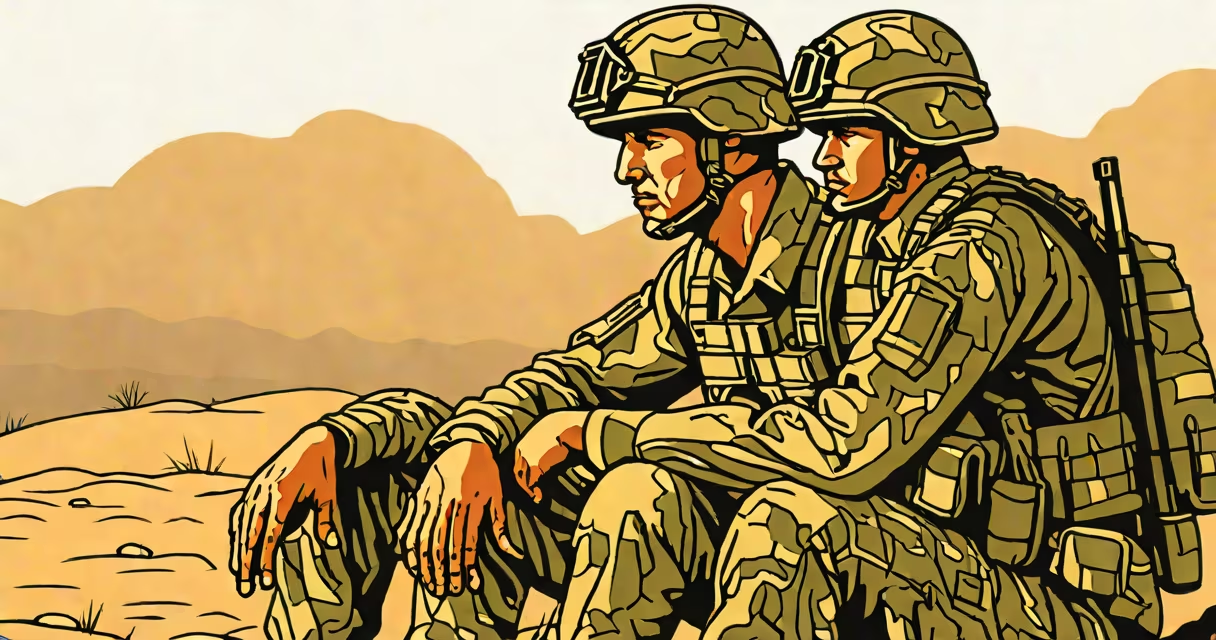
Battle fatigue meaning refers to a psychological condition marked by extreme mental and emotional exhaustion resulting from prolonged exposure to combat stress. It manifests as confusion, detachment, impaired decision-making, and physical collapse under pressure. The term originated in World War II and was used clinically to describe soldiers who broke down under sustained wartime conditions.
It is not simply being tired. Battle fatigue is a documented response to relentless threat, loss, and violence. Symptoms include memory lapses, inability to follow orders, emotional numbness, and sudden outbursts. In military medicine, it was historically treated with rest, removal from combat, and psychiatric evaluation-sometimes involving hospitalization.
Today, battle fatigue is understood as part of the spectrum of combat-related psychological injury. It overlaps with post-traumatic stress disorder (PTSD), but differs in timing and presentation. While PTSD often emerges months or years after trauma, battle fatigue appears during or immediately after intense combat exposure. The U.S. Department of Veterans Affairs notes that both conditions stem from overwhelming stress but require different diagnostic and treatment approaches.
The human brain processes danger through the amygdala and hypothalamus, triggering the fight-or-flight response. When this system stays activated for days or weeks-without recovery periods-the nervous system becomes dysregulated. Cortisol and adrenaline remain elevated, disrupting sleep, focus, and emotional control.
Combat environments amplify this effect. Constant noise, unpredictability, and proximity to death prevent the brain from resetting. Soldiers may lose the ability to distinguish between threat and safety. A study published in Journal of Traumatic Stress found that 15% of U.S. troops deployed in Iraq reported symptoms consistent with battle fatigue within six months of deployment.
When left untreated, battle fatigue can lead to long-term cognitive decline, substance abuse, and suicidal ideation. The U.S. Army's Mental Health Advisory Team reports that early intervention reduces the risk of chronic PTSD by 40%.
Battle fatigue presents in several distinct patterns, depending on duration, intensity, and individual resilience. The most common forms are:
| Type | Onset | Duration | Common Symptoms |
|---|---|---|---|
| Acute battle fatigue | During or immediately after combat | Hours to days | Confusion, trembling, withdrawal, refusal to move |
| Chronic battle fatigue | After repeated deployments | Weeks to months | Emotional numbness, irritability, insomnia, poor concentration |
| Reactive battle fatigue | Triggered by specific events (e.g., losing a comrade) | Days to weeks | Sudden panic attacks, dissociation, crying spells |
Acute cases often resolve with short-term rest and medical screening. Chronic cases require structured therapy and sometimes medication. Reactive episodes demand immediate psychological support and peer debriefing.
Battle fatigue occurs in high-stress combat zones where soldiers face life-threatening situations daily. It is not limited to front-line infantry-engineers, medics, and logistics personnel also experience it due to constant exposure to casualties and moral injury.
For example, during the 2003 invasion of Iraq, a U.S. Marine unit spent 14 consecutive days in close-quarters urban fighting. Within 72 hours, five soldiers exhibited signs of acute battle fatigue: one stopped speaking, another began wandering aimlessly, and a third collapsed during a patrol. All were evacuated and diagnosed with battle fatigue. After seven days of rest and counseling, three returned to duty; two required extended leave.
Modern warfare increases risk. Drone operators, though physically safe, report high rates of battle fatigue due to repeated exposure to violent footage and the psychological burden of making lethal decisions remotely. A 2021 study in Psychological Science found that drone pilots had a 30% higher incidence of battle fatigue compared to ground troops, despite lower physical danger.
Battle fatigue is often mistaken for cowardice, weakness, or lack of discipline. This misunderstanding persists in military culture and public perception. But it is not a character flaw-it is a physiological reaction to extreme stress.
One key distinction: battle fatigue is not the same as PTSD. While both involve trauma, PTSD develops after a traumatic event and includes flashbacks, nightmares, and avoidance behaviors. Battle fatigue is a state of functional breakdown during or immediately after sustained stress. It's less about memory and more about immediate performance failure.
A common error is assuming that only frontline troops suffer. In reality, support staff-such as medics treating wounded soldiers under fire-report similar rates of battle fatigue. A 2019 VA survey showed that 12% of medics deployed in Afghanistan met criteria for battle fatigue, compared to 16% of infantrymen.
I once observed a medic in a field clinic during a 2017 deployment in eastern Afghanistan. He had treated 23 wounded soldiers in 18 hours. By midnight, he sat motionless, staring at his hands. His breathing was shallow. When asked if he needed help, he whispered, "I don't know what I'm doing." He was diagnosed with acute battle fatigue and removed from duty. After four days of rest and group therapy, he returned to work-but never again took on solo missions during active combat.
Many assume battle fatigue only affects combatants. But research shows that civilian contractors working in war zones-especially those handling body transport or evidence collection-also develop it. A 2020 study in Global Mental Health found that 18% of contract security personnel in Syria reported battle fatigue symptoms.
Another misconception: battle fatigue is temporary. While many recover quickly, some develop persistent symptoms. The National Center for PTSD reports that 40% of individuals with battle fatigue go on to develop PTSD if untreated. Early recognition is critical.
Finally, battle fatigue is not exclusive to men. Female service members report comparable rates. In a 2022 RAND Corporation analysis, women in combat roles had slightly higher rates of battle fatigue than men-possibly due to social isolation and under-resourced mental health services.
Battle fatigue meaning is not a myth or metaphor. It is a diagnosable condition rooted in neuroscience and clinical observation. It reflects the limits of human endurance under sustained threat. Modern military units now include behavioral health teams embedded in forward operating bases to catch early signs.
Understanding battle fatigue helps reduce stigma. It's not failure-it's a sign of exposure, not weakness. Recognition leads to faster recovery and better long-term outcomes.