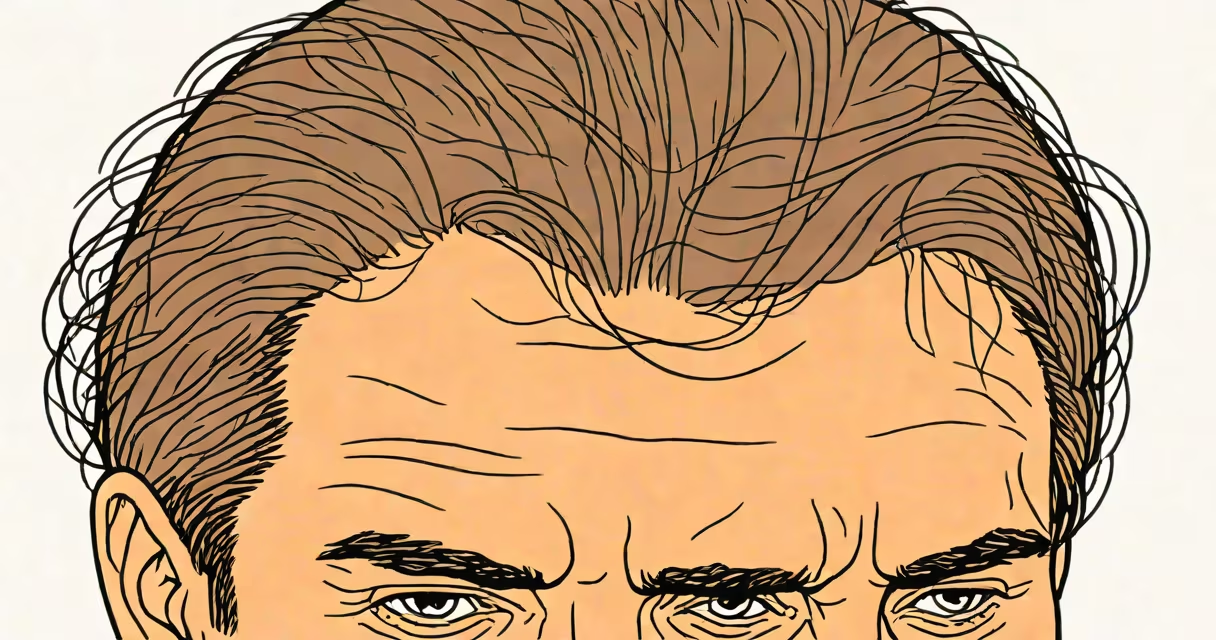
A disease that causes hair loss is a medical condition disrupting the normal hair growth cycle, leading to thinning or complete shedding. These conditions often stem from immune system dysfunction, hormonal imbalances, or chronic illness, not poor hygiene or stress alone.
Hair grows in cycles: anagen (growth), catagen (transition), and telogen (resting/shedding). A disease that causes hair loss typically forces follicles into premature telogen or damages them permanently. The most common culprits include autoimmune disorders, endocrine diseases, and certain infections.
According to the American Academy of Dermatology Association (AAD), about 15 million people in the U.S. have alopecia areata, a primary disease that causes hair loss. The National Institutes of Health (NIH) confirms that autoimmune mechanisms attack hair follicles, mistaking them for foreign threats. This misfire leads to patchy bald spots, often starting around the crown or temples.
The hair follicle is a complex mini-organ embedded in the dermis. When functioning normally, it cycles through growth phases lasting two to six years. Diseases disrupt this process by altering cellular signaling, damaging the follicle's bulge stem cells, or triggering inflammation.
In autoimmune diseases like alopecia areata, T-cells infiltrate the follicle and release cytokines such as interferon-gamma. This triggers a shutdown of the anagen phase. The NIH reports that 60% of alopecia areata patients show elevated levels of these inflammatory markers in scalp biopsies.
Thyroid disorders represent another major category. Hypothyroidism slows metabolism, reducing nutrient delivery to follicles. Hyperthyroidism increases metabolic rate, causing rapid hair cycling and excessive shedding. The American Thyroid Association notes that up to 30% of patients with Graves' disease develop hair thinning due to high thyroid hormone levels.
Diseases that cause hair loss fall into distinct categories based on their root cause. Understanding the type helps determine treatment options.
| Type | Key Features | Prevalence | Common Triggers |
|---|---|---|---|
| Autoimmune | Immune system attacks hair follicles | ~2% of U.S. population | Genetic predisposition, viral triggers |
| Endocrine | Hormonal imbalance affects follicle cycle | ~10% of women aged 20-40 | Thyroid disease, PCOS, pregnancy |
| Infectious | Microbial invasion damages follicles | Varies by region | Tinea capitis (fungal infection), syphilis |
| Systemic | Chronic illness affects whole-body systems | High in cancer, severe illness | Cancer chemotherapy, severe malnutrition |
Autoimmune diseases are the most misunderstood. Alopecia areata often begins with small, round patches of hair loss. The AAD states that 30% of cases progress to alopecia totalis (loss of all scalp hair) or universalis (total body hair loss).
Endocrine-related hair loss is frequently mistaken for male pattern baldness. But unlike androgenetic alopecia, which follows a predictable genetic pattern, thyroid-induced shedding is diffuse and reversible with proper treatment. A 2021 study in JAMA Dermatology found that correcting hypothyroidism restored hair density in 78% of patients within 12 months.
Many assume that hair loss always stems from genetics or aging. But a disease that causes hair loss can strike at any age, including children. A 2020 CDC report noted that alopecia areata appears in 1 in 1,000 children under 18.
Another myth is that stress alone causes permanent hair loss. While acute stress can trigger telogen effluvium-temporary shedding-this is not a disease. It resolves within 6 months after stress removal. True disease-related hair loss involves persistent immune or hormonal disruption.
Smoking is a hidden contributor. Research published in British Journal of Dermatology shows smokers have 30% higher odds of developing androgenetic alopecia. Nicotine reduces blood flow to the scalp and increases oxidative stress, accelerating follicle aging. Quitting smoking improves hair health even in long-term users.
Graves' disease is an autoimmune disorder causing hyperthyroidism. A 34-year-old woman presented with sudden hair thinning, weight loss, and eye bulging. Blood tests revealed elevated TSH receptor antibodies. Her hair loss was confirmed as thyrotoxic alopecia.
After starting methimazole to control thyroid hormone production, her hair shed less and regrew over 9 months. By month 12, she regained 80% of her original density. This case illustrates that treating the underlying disease reverses hair loss in many cases.
For those with suspected disease-related hair loss, testing for thyroid-stimulating hormone (TSH), free T4, and anti-thyroid peroxidase (TPO) antibodies is standard. If abnormal, referral to an endocrinologist is recommended. Early diagnosis prevents irreversible damage.
Not all hair loss is due to disease. But when it is, identifying the root cause is critical. A disease that causes hair loss requires targeted therapy-not just topical treatments. Early intervention improves outcomes and restores confidence.