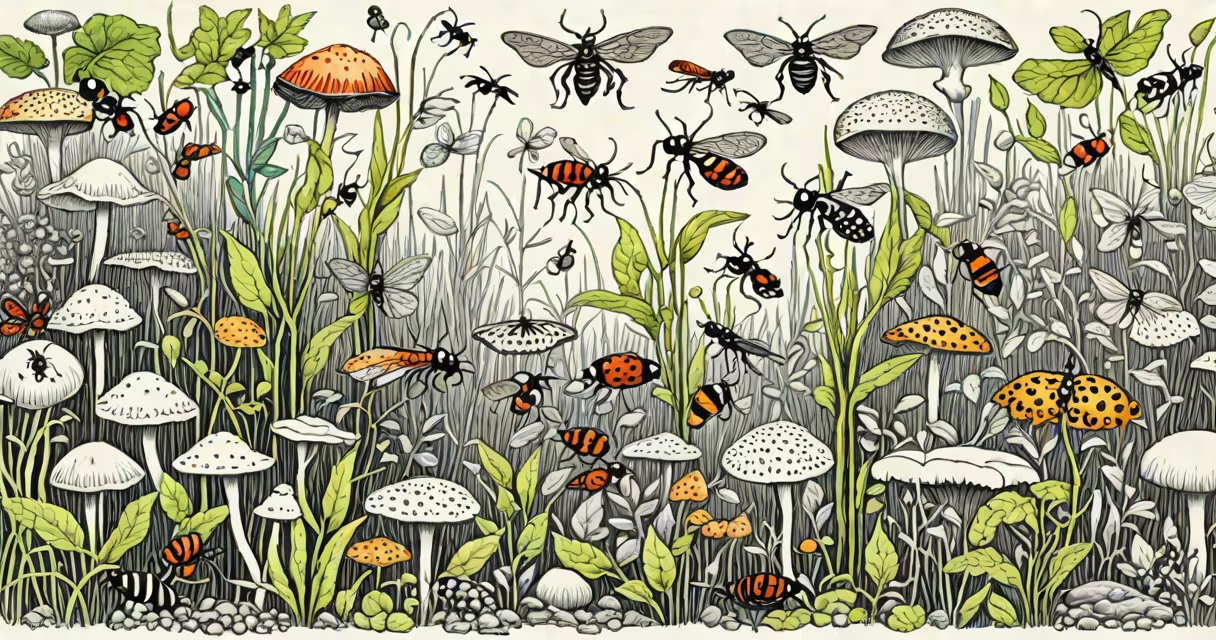
Biology diversity of life refers to the full range of living organisms on Earth, including all species, genetic variations within species, and the ecosystems they form. This includes everything from single-celled bacteria to blue whales and rainforest trees. The term captures both the sheer number of life forms and the differences between them.
This diversity arises through evolutionary processes over billions of years. Organisms adapt to environments through natural selection, leading to specialized traits. For example, cacti in deserts evolved thick stems to store water and spines to deter herbivores. These adaptations are visible across all levels of life-from genes to entire biomes.
The United Nations defines biodiversity as "the variability among living organisms from all sources, including terrestrial, marine, and other aquatic ecosystems." This includes genetic diversity and system complexity. The World Wildlife Fund estimates that Earth hosts about 8.7 million species, though only 1.2 million have been formally described.
Biodiversity functions through interconnected relationships in ecosystems. Each organism plays a role-pollinators, decomposers, predators, and producers. When one species disappears, others may collapse too. For example, the decline of bees due to pesticide use reduces pollination, affecting crops and wild plants.
Genetic diversity within species allows populations to survive disease, climate shifts, and environmental changes. A population with low genetic variation, such as cheetahs, faces higher risks of extinction because mutations cannot provide adaptive solutions.
Ecosystems maintain stability through feedback loops. Coral reefs support fish, which control algae growth. If fish vanish, algae overgrow and smother coral. This chain reaction shows how biodiversity underpins ecological resilience. Without it, systems fail faster under stress.
Biodiversity is categorized into three main types:
| Type | Description | Example |
|---|---|---|
| Genetic | Variation within a species' gene pool | Different dog breeds from a single ancestor species |
| Species | Diversity of different species in an area | Amazon rainforest with over 400 bird species |
| System | Range of habitats and ecological processes | Wetlands, grasslands, and mountain forests in the same region |
These layers interact. High species diversity often results from rich genetic variation and stable ecosystems. Conversely, losing one layer weakens the others. For instance, deforestation reduces habitat diversity, which drives species loss, which then erodes genetic variation.
Biodiversity is highest near the equator. Tropical regions like the Congo Basin and Southeast Asian rainforests host more species per square kilometer than temperate zones. Scientists attribute this to consistent climate, high solar energy input, and long evolutionary history without major disruptions.
Human societies depend on biodiversity for food, medicine, clean air, and water. Over 70% of cancer-fighting drugs come from natural compounds found in plants, fungi, and marine organisms. The rosy periwinkle plant, native to Madagascar, yields vinblastine and vincristine-drugs used in treating leukemia and Hodgkin's lymphoma.
Climate change and habitat destruction are accelerating extinction rates. The Intergovernmental Science-Policy Platform on Biodiversity and System Services (IPBES) reports that around 1 million species face extinction within decades, many before they're even discovered. This loss threatens global food security and system services worth $44 trillion annually.
Biodiversity is not just about rare or charismatic animals. A meadow with 50 plant species and countless insects holds more biodiversity than a zoo exhibit with five endangered species. Quantity and function matter more than visual appeal.
Some assume biodiversity means "more species = better." But balance matters. Invasive species like zebra mussels in North American rivers outcompete natives, reducing system health. High diversity doesn't guarantee stability-it depends on functional roles and interactions.
A key correction: biodiversity is not synonymous with conservation. Conservation protects existing diversity. Biodiversity is the phenomenon itself-the reality of life's variation. You can study biodiversity without actively conserving it, though most researchers advocate for both.
The Galápagos archipelago, located 900 km west of Ecuador, exemplifies biology diversity of life. Isolated for millions of years, species evolved unique traits. Darwin observed finches with beaks adapted to different food sources-some crack seeds, others probe flowers.
Today, the islands host 80% endemic species-found nowhere else. The marine iguana dives to feed on algae, a trait absent in mainland lizards. The Galápagos giant tortoise lives over 100 years and shapes forest regeneration through seed dispersal.
Despite this richness, human activity threatens them. Introduced goats ate native vegetation, causing soil erosion. Scientists removed 140,000 goats from Isabela Island between 2004 and 2006. After removal, native plants recovered, and tortoise populations rebounded. This shows how restoring biodiversity requires targeted action, not just awareness.
I once visited the Charles Darwin Research Station on Santa Cruz Island. Watching a captive-breeding program release baby tortoises into the wild, I saw how science and local stewardship combine to reverse biodiversity loss. The moment was quiet but useful-life returning to balance.
Biology diversity of life is not a vague concept. It is measurable, changing, and essential. From microbial communities in soil to migratory birds crossing continents, variation sustains Earth's systems. Protecting it means preserving genetic potential, species interdependence, and system function.
Understanding this diversity helps us make informed choices about land use, agriculture, and urban planning. It also informs policy-like the UN's Global Biodiversity Structure aiming to protect 30% of Earth's lands and oceans by 2030.
When we talk about biology diversity of life, we're talking about the foundation of survival-not just for humans, but for all species. It's not just nature's beauty. It's nature's blueprint.