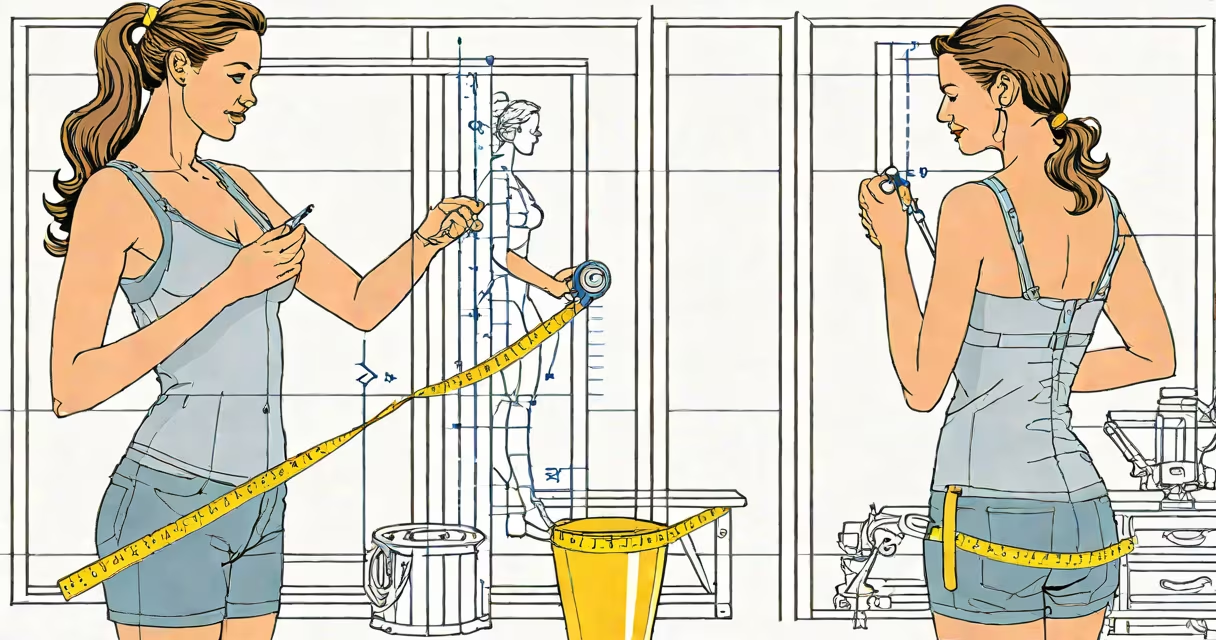
The difference between D and DD cup sizes is 1 inch in cup volume, meaning DD is larger than D by that amount. Cup size increases by 1 inch per letter, so D is 3 inches larger than B, and DD is 4 inches larger than B. This applies consistently across standard US and UK bra sizing systems.
Bra sizing uses two numbers: the band size (around the ribcage) and the cup size (breast volume). The band size is measured around the torso under the breasts. The cup size is determined by subtracting the band size from the bust measurement. For example, a 34-inch band and a 38-inch bust gives a 4-inch difference-classified as a D cup. A 36-inch band and a 40-inch bust also results in a 4-inch difference, which is also a D cup. But a 36-inch band and a 41-inch bust gives a 5-inch difference-classified as a DD cup.
Cup sizes increase alphabetically: A = 1 inch, B = 2 inches, C = 3 inches, D = 4 inches, DD = 5 inches, E = 6 inches, and so on. The jump from D to DD is not a double-letter gimmick-it's a single increment in volume. Some brands use DD, others use E, but both represent the same volume. The key is consistency: always measure the band and bust in inches, then subtract.
| Band Size | Bust Measurement | Difference | Cup Size |
|---|---|---|---|
| 34 inches | 38 inches | 4 inches | D |
| 36 inches | 41 inches | 5 inches | DD |
| 38 inches | 44 inches | 6 inches | E |
Many people assume DD is "double D" and therefore twice as large as D. That's incorrect. D and DD differ by just 1 inch in cup volume. A D cup is 4 inches larger than the band, DD is 5 inches larger. The confusion arises because the alphabet skips letters after C-there's no D+, so DD is used instead. This system was standardized in the early 20th century and remains in use today.
Proper bra fit prevents discomfort, back pain, and long-term posture issues. A study by the American Academy of Orthopaedic Surgeons found that 80% of women wear the wrong bra size. Ill-fitting bras contribute to shoulder strain and poor spinal alignment. A D cup that fits well supports the breast tissue evenly, while a DD cup that's too small causes digging straps and gaps under the cups.
I once measured my own bust during a fitting session at a specialty store. My band was 36 inches. My bust measured 41 inches. The difference was 5 inches-DD. I'd previously worn a D cup, thinking it was close enough. The DD cup eliminated the gap and reduced shoulder pressure. The change was immediate. I didn't realize how much support I'd been missing until I had it.
Some brands use different labeling. For example, in Europe, DD is often labeled E. In Japan, DD is sometimes called F. The volume remains consistent-5 inches of difference. Always check the brand's size chart. A 36DD in one brand may fit differently than a 36DD in another due to differences in cup shaping and fabric stretch.
Common mistakes include assuming that a larger band size automatically means a larger cup. A 38 band with a 42 bust is a D cup, not a DD. The cup size depends solely on the difference between bust and band. Another error is thinking that DD is only for very large breasts. It's not-it's simply one step above D in volume. A woman with a 34 band and 39 bust is a D cup. A 34 band and 40 bust is a DD.
When shopping, try on multiple sizes. Measure your band snugly-not tight-and your bust at the fullest point. Use a soft tape measure. Do not pull it taut. The difference in inches determines the cup. If you're between sizes, go up in cup size rather than band size. A slightly larger band is better than a too-small one.
Always verify your size using a professional fitting or a detailed size chart. The difference between D and DD cup is clear: one inch in volume. Not a leap. Not a doubling. Just a single step in a system designed for precision.