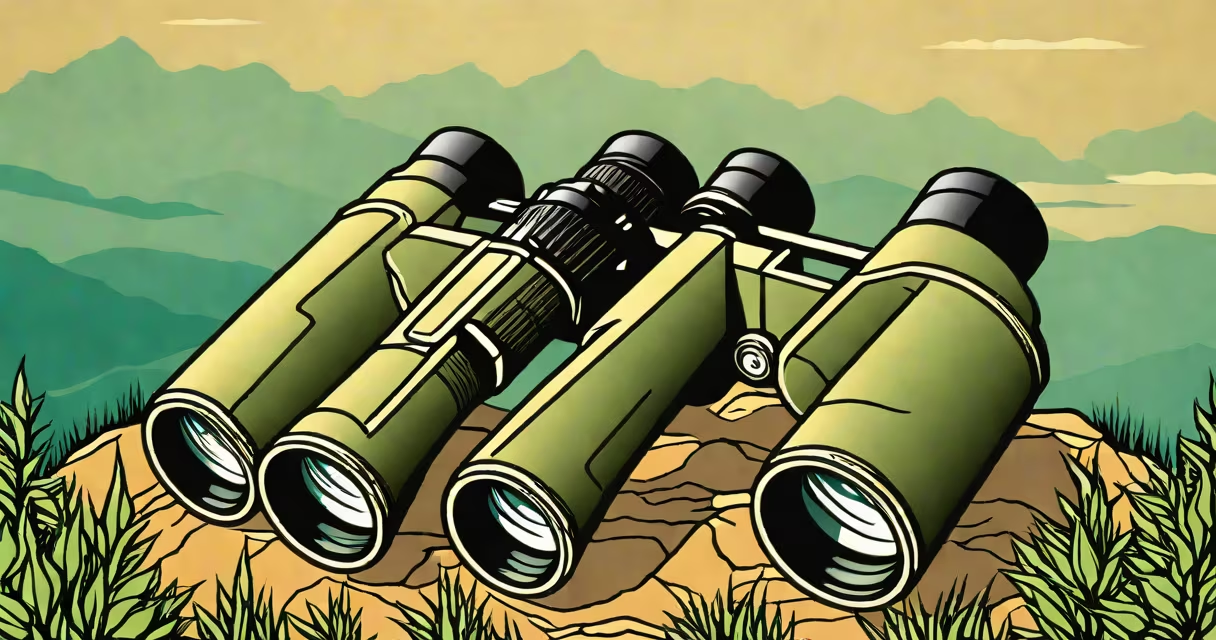
Binocular magnification is the number that indicates how much larger an object appears through the lenses compared to viewing it with the naked eye. A 10×50 binocular makes objects appear ten times closer than they do to the unaided eye. This number is determined by the focal length of the objective lens divided by the focal length of the eyepiece.
Magnification is expressed as a number followed by "x," such as 8x or 10x. The higher the number, the greater the enlargement. However, increasing magnification doesn't always improve visibility-it can also amplify hand shake and reduce the field of view. For most daytime outdoor use, 8x to 10x is optimal.
The standard format for binocular specifications is two numbers separated by an "x." The first number is magnification; the second is the diameter of the objective lens in millimeters. An 8×42 binocular has 8x magnification and a 42mm objective lens. The objective lens size affects light gathering ability and image brightness-larger lenses collect more light, which improves performance in low-light conditions.
When you look through binoculars, light enters the objective lens, travels through a series of prisms (usually Porro or roof prisms), and then passes through the eyepiece. The objective lens focuses the incoming light, and the eyepiece magnifies the resulting image. The ratio between the focal length of the objective lens and the eyepiece determines the magnification.
For example, if the objective lens has a focal length of 240mm and the eyepiece has a focal length of 30mm, the magnification is 240 ÷ 30 = 8x. This is why a 10×50 binocular has a longer objective lens and shorter eyepiece than an 8×42 model-the optics are scaled accordingly.
Higher magnification increases resolution but reduces stability. At 12x or above, even slight hand movement causes noticeable image shake. Most users find 8x to 10x the sweet spot for handheld use. Tripod-mounted binoculars can support higher magnifications, but they're less portable and typically used for astronomy or long-range observation.
Different applications require different magnification levels. Here's how magnification pairs with intended use:
| Magnification | Best For | Common Lens Size | Use Case Example |
|---|---|---|---|
| 6x-8x | Daytime hiking, birdwatching, sports events | 30mm-42mm | Stable images, wide field of view, lightweight |
| 10x | General outdoor use, wildlife spotting | 42mm-50mm | Good balance of zoom and image stability |
| 12x-15x | Astronomy, long-distance surveillance | 50mm+ | Requires tripod; image shake is pronounced |
| 20x+ | Scientific observation, telescope replacement | 70mm+ | Used with tripods; minimal handheld use |
For casual observers, 8×42 binoculars are the most popular choice. They offer enough zoom to see details at moderate distances while maintaining a stable image and wide field of view. The 42mm objective lens gathers sufficient light for twilight use, making them effective during dawn and dusk.
Some manufacturers produce compact binoculars labeled 10×25 or 8×20. These have high magnification relative to their small lens size. While they make objects appear larger, they suffer from poor light transmission and narrow fields of view. They're suitable for short-range viewing but struggle in low light.
Magnification alone doesn't determine image quality. Two binoculars with the same magnification can perform very differently based on lens quality, prism design, and coating technology.
For example, a 10×42 binocular with fully multi-coated lenses and BAK4 prisms will deliver brighter, sharper images than a similarly rated model with uncoated optics. Coatings reduce internal reflections and increase light transmission-up to 95% in high-end models versus 70% in basic ones.
Another overlooked factor is exit pupil size. This is calculated by dividing the objective lens diameter by the magnification. For an 8×42 binocular, the exit pupil is 42 ÷ 8 = 5.25mm. The human eye's pupil dilates to about 7mm in darkness, so a 5.25mm exit pupil provides good light transfer in low-light conditions. A 10×50 binocular has a 5mm exit pupil-slightly smaller but still effective.
As a rule, exit pupils below 4mm reduce visibility in dim light. A 12×50 binocular has a 4.17mm exit pupil-just above the threshold. But because of increased magnification, image shake becomes problematic without stabilization. This trade-off explains why many serious birders avoid magnifications above 10x for handheld use.
Many people assume higher magnification equals better quality. That's false. A 15×70 binocular may show distant birds -but only if mounted on a tripod. Handheld, the image shakes uncontrollably, making it hard to track moving subjects.
Another myth is that magnification affects distance measurement. You cannot estimate how far away something is based solely on magnification. Distance depends on angular size and known reference points. For example, a 10× binocular makes a 1km object appear 10 times closer, but it doesn't tell you the actual distance unless you know the object's size.
There's also confusion between magnification and field of view. Field of view measures how much of the scene fits in your vision at once. A 10× binocular might have a 6° field of view, meaning you see 6 degrees of the sky or field. Higher magnification usually narrows this field. A 7× binocular might show 10°, giving a wider perspective despite lower zoom.
I once tested a pair of 12×50 binoculars on a mountain hike. The image was sharp, but I couldn't keep the target steady. After switching to 8×42 models, tracking birds became effortless. The lower magnification didn't sacrifice detail-it improved usability.
Binocular magnification explained isn't just about numbers-it's about matching optics to real-world use. Choose magnification based on your activity, environment, and handling method. For most people, 8x to 10x offers the best compromise between reach, stability, and clarity.
Always check exit pupil and field of view alongside magnification. A high number doesn't guarantee better performance. Optics matter more than specs. When shopping, test binoculars in person if possible. Even the best specs fail if the image is blurry or the focus is stiff.
Understanding binocular magnification explained helps avoid buyer's remorse. stargazing, the right magnification enhances experience-not just size.