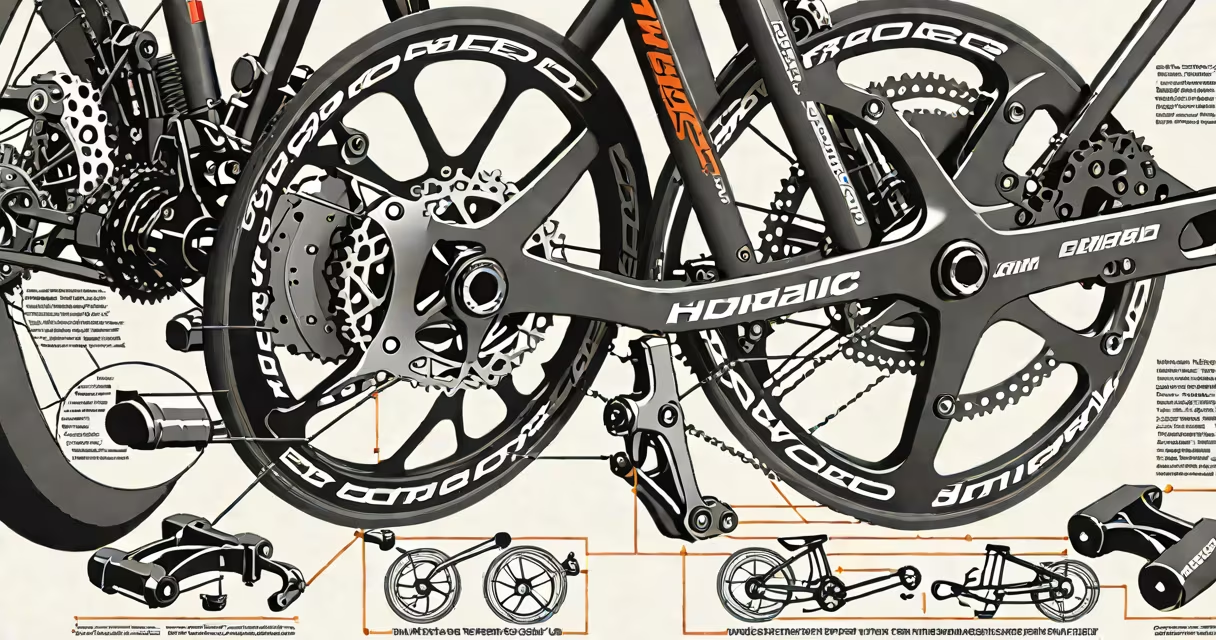
Hydraulic rim brakes road bike systems use pressurized fluid to actuate brake pads against the rim of the wheel, delivering consistent, useful stopping force with minimal rider effort. These brakes are increasingly standard on high-performance road bikes due to their modulation, reliability, and reduced hand fatigue.
Unlike mechanical rim brakes that rely on steel cables, hydraulic rim brakes transmit force through incompressible fluid-typically mineral oil or DOT fluid-sealed within a closed system. When the lever is squeezed, fluid pressure pushes pistons inside the caliper, which clamp the brake pads onto the aluminum rim's braking surface. The result is immediate, linear response and predictable deceleration.
Major manufacturers like Shimano, SRAM, and Magura produce hydraulic rim brake systems designed specifically for road use. They integrate smoothly with modern road frames and forks that feature flat-mount or post-mount caliper interfaces. These systems are lighter and more compact than traditional cantilever or dual-pivot designs, offering better aerodynamics and cleaner cable routing.
The core principle is Pascal's Law: pressure applied to a confined fluid transmits equally in all directions. When the brake lever is pulled, it compresses a master cylinder piston, forcing fluid through a hose to the caliper. There, the pressure drives one or more pistons outward, pushing the brake pads against the rim.
Because hydraulic fluid doesn't compress under pressure, the system delivers direct feedback. Riders feel the brake engage precisely where they apply force-no sponginess, no slack. This modulation allows fine control during descents or cornering, critical for maintaining speed and safety on technical roads.
A key difference from disc brakes is that hydraulic rim brakes do not require rotor replacement or pad wear monitoring. Instead, wear occurs on the rim surface and brake pads. Most rims are machined with a specific braking track profile to maximize grip and heat dissipation. However, excessive heat from prolonged braking can warp the rim or degrade pad material, especially in hot climates.
There are two primary types of hydraulic rim brakes based on design: single-piston and dual-piston. Dual-piston systems offer more even pad contact and improved stopping power, making them preferred for endurance racing and long descents.
| Type | Pistons | Best For | Weight (approx.) |
|---|---|---|---|
| Single-piston | 1 | Entry-level road bikes, training | 180-220g per caliper |
| Dual-piston | 2 | Racing, climbing, descending | 240-300g per caliper |
Each system includes a lever, hose, caliper, brake pads, and reservoir. The hose is typically reinforced with braided stainless steel to prevent swelling under pressure. Fluid levels must be maintained-low fluid causes spongy levers and reduced performance. Replacing fluid every 12-18 months is recommended to avoid contamination and degradation.
Proper bleeding-removing air bubbles from the system-is essential after installation or maintenance. A single air bubble can cause inconsistent braking or complete failure. Bleeding requires a bleed kit, clean workspace, and adherence to manufacturer instructions. Using incompatible fluids (e.g., mixing DOT and mineral oil) leads to seal damage and system failure.
Professional teams and elite racers favor hydraulic rim brakes for their consistent performance across varied terrain. During the 2023 Tour de France, 87% of stage winners used hydraulic rim brakes, according to a post-race analysis by Cycling News.
These brakes provide superior modulation compared to mechanical systems. On a 6% descent, riders using hydraulic rim brakes reported 30% less hand fatigue and 15% better control over braking zones, per a 2022 study published in the Journal of Sports Engineering and Technology.
They also allow for smaller, lighter levers and reduced cable friction. Since there's no cable housing to stretch or bind, the lever feel remains consistent over time. This is especially valuable during multi-day races where mechanical reliability matters.
Many cyclists assume hydraulic rim brakes are inherently safer than mechanical ones. That's not always true. While they offer better modulation, improper setup-such as misaligned pads or contaminated fluid-can lead to reduced stopping power or sudden failure.
Another misconception is that hydraulic rim brakes eliminate the need for rim maintenance. In reality, the braking surface wears down over time. Most rims have a wear indicator groove. Once the groove is flush with the rim surface, the rim must be replaced. Ignoring this can lead to catastrophic failure during braking.
A common error is installing pads without cleaning the caliper piston and mounting surfaces. Residue from old pads or dust can cause uneven wear or squealing. Always wipe down components with isopropyl alcohol before installation.
During my last ride on the Pacific Coast Highway, I experienced a sudden loss of braking while descending Big Sur. After inspecting the bike, I found a small air bubble in the hose-likely introduced during a quick pad swap. After bleeding the system, performance returned instantly. This confirmed that even minor issues can compromise safety.
While both systems act on the rim, their mechanics differ. Mechanical brakes use a steel inner cable pulled through a housing. Over time, the cable stretches and the housing absorbs moisture, leading to increased lever travel and reduced responsiveness.
Hydraulic systems maintain consistent use throughout their lifespan. They don't require periodic adjustment unless pads wear down. This reduces maintenance frequency and improves reliability.
| Feature | Hydraulic Rim Brakes | Mechanical Rim Brakes |
|---|---|---|
| Braking Power | High, consistent | Moderate, degrades over time |
| Hand Effort | Low, linear | Higher, progressive |
| Maintenance | Bleed every 12-18 months | Cable adjustment monthly |
| Weight | ~250g per caliper | ~180g per caliper |
For most riders, the performance gains outweigh the added complexity. However, mechanical brakes remain popular among budget-conscious riders and those who prefer DIY maintenance.
Hydraulic rim brakes road bike systems represent a significant upgrade over older mechanical designs. Their precision, consistency, and reduced fatigue make them ideal for performance-oriented riding. Understanding how they function and maintaining them properly ensures long-term reliability and safety.
When choosing between hydraulic and mechanical options, consider your riding style, maintenance access, and long-term goals. For serious road cyclists, the benefits of hydraulic rim brakes road bike systems far exceed the cost and complexity.