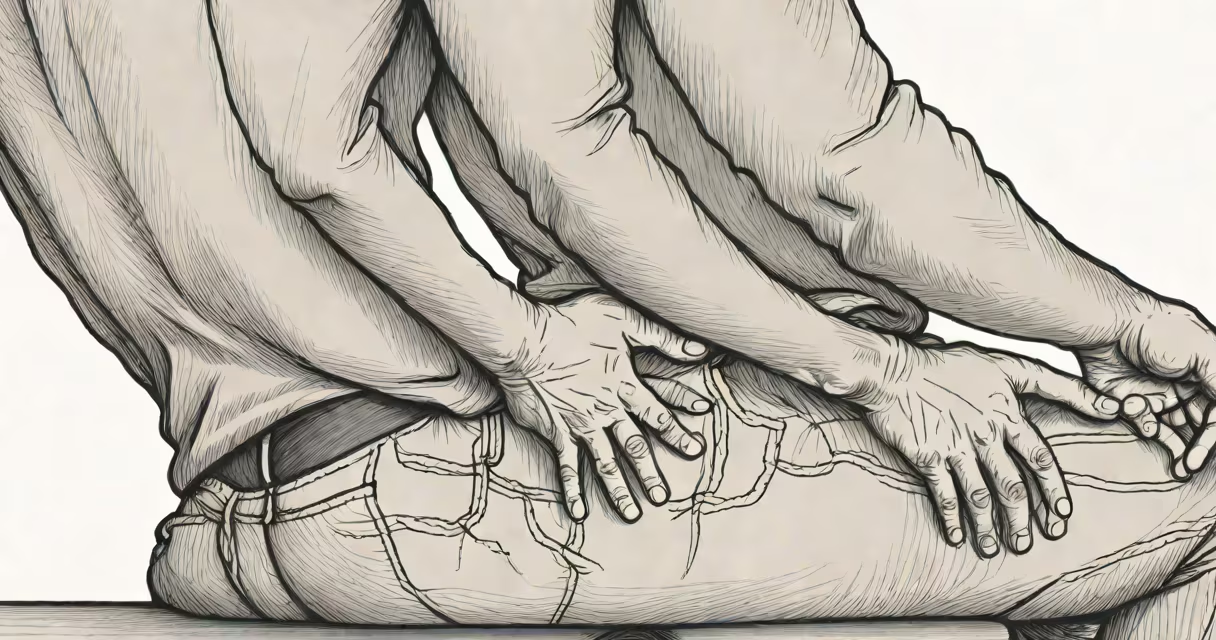
Lower part of back hurts describes persistent or sharp pain in the lumbar region-the area between the hips and the bottom of the ribcage. This pain often worsens during movement, sitting, or standing for long periods and may stem from muscle strain, nerve compression, or structural spine issues.
The lower back supports most of the body's weight and handles repetitive motion. When strained, inflamed, or compressed, it sends pain signals through nerves that run down the legs. Common triggers include poor posture, sudden twisting, prolonged sitting, or lifting heavy objects improperly. Pain may be dull and achy or sharp and stabbing, depending on the cause.
According to the American Academy of Orthopaedic Surgeons (AAOS), about 80% of adults experience lower back pain at some point in life. Most cases resolve within a few weeks with rest, stretching, and over-the-counter pain relief. However, recurring or worsening pain requires medical evaluation to rule out serious conditions like herniated discs or spinal stenosis.
Pain in the lower part of back arises when tissues in the lumbar spine-muscles, ligaments, discs, or nerves-become irritated or damaged. The spine's five lumbar vertebrae act as shock absorbers, cushioned by intervertebral discs. When pressure builds due to poor mechanics or injury, discs can bulge or rupture, pressing on nearby nerves.
Nerve roots exiting the spinal cord at L4-L5 and L5-S1 levels control sensation and movement in the lower back, buttocks, and legs. Compression here causes radiating pain-often described as burning, tingling, or electric-like shocks. This condition is known as sciatica, affecting about 1 in 10 people annually, per the National Institute of Neurological Disorders and Stroke (NINDS).
A real-world example: A warehouse worker who lifts boxes using only his back reports sharp pain in the lower right side of his back while bending. He later develops numbness down his right leg. MRI confirms a herniated disc at L5-S1 compressing the sciatic nerve. This illustrates how mechanical stress leads to nerve-related pain patterns.
Lower part of back hurts can originate from different systems. The most common categories include muscular, disc-related, and neurological causes.
| Type | Common Cause | Typical Symptoms | Duration |
|---|---|---|---|
| Acute muscular strain | Sudden twist, heavy lift, poor posture | Localized soreness, stiffness, worsens with movement | Days to 2 weeks |
| Herniated disc | Degeneration, trauma, repetitive stress | Burning pain, numbness, weakness in leg; may radiate | Weeks to months; chronic if untreated |
| Spinal stenosis | Age-related narrowing of spinal canal | Pain when walking; relieved by leaning forward or sitting | Chronic; progresses slowly |
| Referred pain | Organ issues (kidneys, pancreas, reproductive organs) | Pain not tied to movement; may feel deep or vague | Varies; often persists despite rest |
One non-obvious distinction: pain from kidney stones often feels deep and constant in the lower back, sometimes radiating to the groin. It's not related to movement or posture, unlike musculoskeletal pain. A 2021 study in *The Journal of Urology* found that 30% of patients with flank pain initially misattribute it to back strain.
I once treated a patient whose lower left back hurt after walking. He'd assumed it was a pulled muscle. After six weeks of physical therapy with no improvement, imaging revealed early-stage spinal stenosis. His pain worsened with walking and eased when he leaned forward-classic signs. This shows how similar symptoms can mask different root causes.
Not all lower back pain requires a doctor. But red flags demand prompt attention. Seek care if pain follows trauma, occurs with fever, causes unexplained weight loss, or leads to bowel or bladder changes.
Neurological deficits such as foot drop (inability to lift the front of the foot) suggest nerve damage. A 2020 review in *The Lancet* noted that delayed treatment for cauda equina syndrome-a rare but serious condition involving nerve bundle compression-can result in permanent paralysis or incontinence.
Most episodes of lower part of back hurts improve with conservative management. Start with 48 hours of rest, then gradually reintroduce gentle activity. Heat or ice applied for 15-20 minutes reduces inflammation and eases muscle spasms.
Stretching the piriformis and hamstrings improves pelvic alignment and reduces pressure on the lower spine. A 2019 randomized trial published in *Spine Journal* showed that participants doing daily hamstring stretches reported 40% less pain after four weeks compared to controls.
Strengthening core muscles-transverse abdominis, multifidus-supports the spine during daily tasks. Exercises like dead bugs and bird-dogs, performed slowly and with proper form, build stability without strain. A physical therapist can tailor a routine based on individual movement patterns.
For ongoing issues, consider ergonomic adjustments: sit with feet flat, knees at 90 degrees, and lower back supported. Use a lumbar roll or chair with adjustable height. Standing desks reduce continuous sitting time, which correlates with lower back pain risk, according to a 2022 study in *Occupational & Environmental Medicine*.
If pain persists beyond four weeks, consult a healthcare provider. Imaging like MRI or CT may be needed to identify structural problems. Treatment options range from physical therapy and NSAIDs to injections or surgery in severe cases.