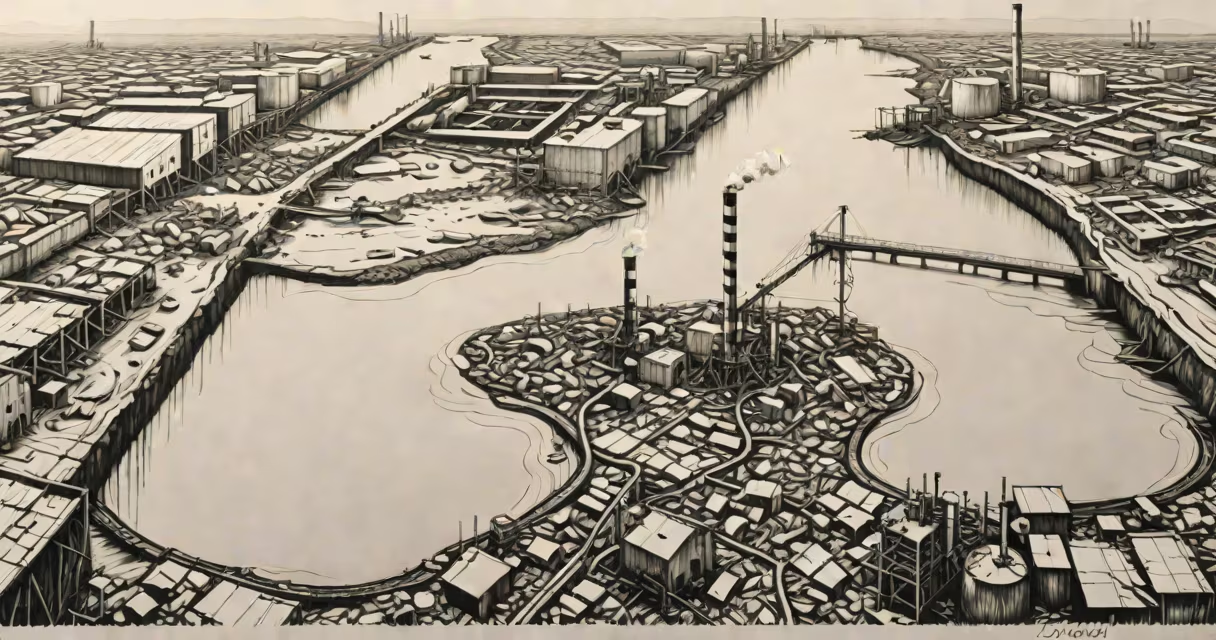
More than 80% of the world's wastewater-over 400 billion cubic meters annually-flows untreated into natural water bodies, according to the United Nations Environment Programme (UNEP). This volume includes sewage, agricultural runoff, and industrial effluent, contaminating rivers, lakes, and oceans globally.
Polluted water originates from multiple sources. Municipal sewage systems in low-income nations often lack treatment infrastructure. Industrial zones discharge heavy metals, solvents, and synthetic chemicals. Agriculture contributes nitrates, phosphates, and pesticides through runoff. These pollutants degrade water quality, harm aquatic life, and threaten human health.
The World Health Organization (WHO) reports that unsafe water causes 1.4 million deaths yearly, primarily from diarrheal diseases. Contaminants like E. coli, lead, mercury, and microplastics persist in drinking water supplies, especially in regions with aging infrastructure or inadequate monitoring.
Water pollution falls into three categories: chemical, biological, and physical. Chemical pollution includes industrial discharges such as arsenic from mining operations in Bangladesh and fluoride from geothermal springs in East Africa. Biological pollution stems from untreated sewage containing pathogens like cholera and typhoid. Physical pollution involves sedimentation and plastic debris-over 14 million tons of plastic enter oceans annually, per UNEP.
| Type | Source Example | Global Impact |
|---|---|---|
| Chemical | Lead from battery recycling in Nigeria | Neurological damage in children; 600,000 annual cases in sub-Saharan Africa |
| Biological | Untreated sewage in Jakarta's Ciliwung River | Cholera outbreaks; 12,000 cases reported in 2022 |
| Physical | Plastic waste in the Pacific Garbage Patch | Over 1.8 trillion pieces; covers 1.6 million km² |
One underreported issue is nutrient pollution. Excess nitrogen and phosphorus from fertilizers trigger algal blooms that deplete oxygen in water-creating dead zones. The Gulf of Mexico dead zone spans over 6,000 square miles during peak season, disrupting fisheries and marine food webs.
South Asia leads in water contamination. India's Ganges River carries 1.5 million liters of untreated sewage daily. In Dhaka, 90% of groundwater samples exceed WHO limits for arsenic. China's Yangtze River sees 30% of its flow classified as "severely polluted" due to textile and steel manufacturing.
Sub-Saharan Africa faces similar challenges. In Nairobi, the Nairobi River receives 120,000 m³ of raw sewage daily. A 2023 study in *The Lancet Planetary Health* found that 75% of urban water sources in Kenya's capital contain fecal coliform bacteria above safe levels.
Even high-income countries contribute. The U.S. Environmental Protection Agency (EPA) estimates that 40% of assessed river miles and 50% of lake acres are impaired due to pollution. The Flint water crisis in Michigan exposed 100,000 residents to lead-contaminated tap water between 2014 and 2016.
Many assume that bottled water is safer than tap water. But bottled water is not regulated for microbial contaminants in the same way as municipal supplies. A 2021 study in *Environmental Science & Technology* found microplastics in 93% of bottled water samples tested worldwide.
Another myth is that rainwater is inherently pure. Rainwater collects airborne pollutants-sulfur dioxide from factories, particulate matter from traffic, and heavy metals from rooftops. In cities like Mumbai, rainwater runoff carries dioxins and polycyclic aromatic hydrocarbons (PAHs) into storm drains.
A lesser-known fact: 70% of global water pollution comes from agriculture, not industry. The Food and Agriculture Organization (FAO) states that 70% of freshwater withdrawals go to farming, and 80% of that water returns contaminated with pesticides and manure.
The Citarum River in West Java is among the most polluted rivers globally. It runs through industrial hubs producing textiles, footwear, and electronics. Over 200 factories dump untreated effluent into the river daily. A 2020 report by the Indonesian Ministry of Environment and Forestry found levels of chromium, cadmium, and formaldehyde exceeding safety standards by 100 times.
Local communities rely on the river for drinking, bathing, and fishing. A 2022 field survey recorded 42% of households reporting skin rashes and respiratory issues linked to water exposure. Despite government cleanup efforts since 2018, pollution remains entrenched due to weak enforcement and lack of alternative waste disposal systems.
When I visited Bandung in 2021, I saw children washing clothes in the river's blackened stretch near a textile factory. The smell was acrid-chemical and sour. A local fisherman told me he hadn't caught a single fish in five years. He said, "This river used to feed us. Now it kills us."
Individual actions reduce demand for clean water and pressure polluters. Reducing meat consumption cuts agricultural runoff-livestock production accounts for 30% of global water pollution. Avoiding single-use plastics lowers ocean contamination. Supporting organizations that monitor water quality strengthens accountability.
Policy changes matter more. Countries that enforce strict wastewater treatment laws-like Germany and Singapore-report 95% treated sewage output. The European Union's Water Structure Directive mandates member states to achieve "good ecological status" in all surface waters by 2027.
Understanding how much polluted water exists is the first step toward action. The scale of contamination demands systemic solutions-not just individual awareness. Addressing this crisis requires investment, regulation, and global cooperation.