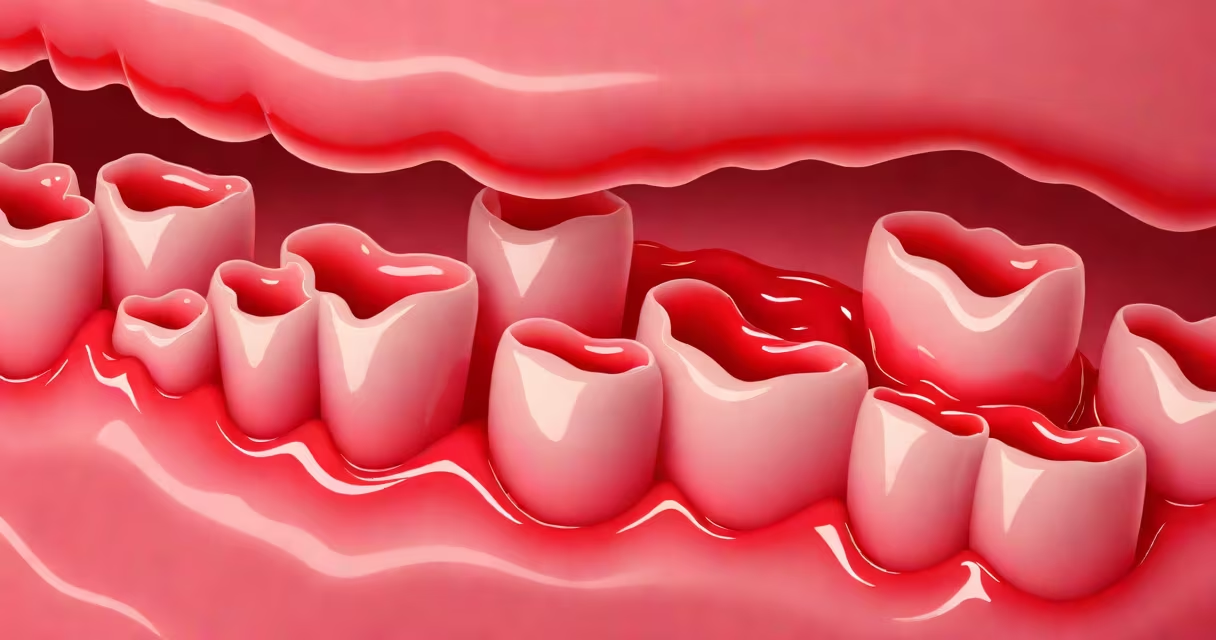
Images of blisters on gums show small, fluid-filled sacs that form on the soft tissues inside the mouth, often due to irritation, infection, or trauma. These lesions appear as raised, translucent or pinkish swellings and may rupture, leaving painful sores. They're frequently mistaken for cold sores or canker sores but differ in location and cause.
Blisters on gums develop when the mucous membrane lining the mouth is damaged. Common triggers include biting the cheek during eating, brushing too hard, using abrasive toothpaste, or exposure to acidic foods. A 2021 study in the Journal of Oral Pathology & Medicine found that mechanical trauma accounts for 62% of minor oral ulcerations in adults, including those on gum tissue.
These lesions typically resolve within 7-10 days without treatment. However, persistent blisters-especially those lasting longer than two weeks, bleeding easily, or growing larger-may indicate a more serious condition such as oral lichen planus, pemphigoid, or even early-stage oral cancer. The American Dental Association warns that any lesion not healing within 14 days should be evaluated by a dentist or oral specialist.
The mouth's inner lining is delicate. When pressure, heat, or chemicals damage the epithelial layer, fluid accumulates beneath it, forming a blister. This process is part of the body's natural inflammatory response to injury. The fluid inside-mostly serum-acts as a protective cushion while new tissue regenerates underneath.
Unlike skin blisters, which form on the outer surface, gum blisters occur internally. They're often found near the base of teeth, along the gumline, or on the alveolar ridge. Their appearance varies: some are clear and small (under 5 mm), others are opaque, yellowish, or tinged with blood.
A 2020 clinical review in *Oral Diseases* noted that viral infections like herpes simplex virus (HSV-1) can cause multiple small blisters on the gums, especially in children. These may rupture quickly, leading to shallow ulcers. HSV-related lesions often come with fever, swollen lymph nodes, and difficulty swallowing-symptoms absent in trauma-induced blisters.
Not all blisters on gums stem from the same cause. Understanding the origin helps determine whether medical attention is needed.
| Type | Appearance | Common Cause | Duration |
|---|---|---|---|
| Mechanical Trauma | Small, clear or pink, localized | Biting, brushing too hard, sharp food | 3-7 days |
| Viral (HSV-1) | Multiple, grouped, may rupture | Herpes simplex virus | 7-14 days, recurrent |
| Allergic Reaction | Red, swollen, may spread | Toothpaste, mouthwash, metal fillings | 2-5 days after exposure |
| Autoimmune (Pemphigoid) | Larger, fragile, bleeds easily | Immune system attacks mucosal layers | Persistent, requires treatment |
One non-obvious distinction: blisters caused by trauma are usually painless at first and appear suddenly after an incident. Viral blisters often begin with a burning sensation before forming. Autoimmune blisters tend to recur in the same spot and don't heal without medication.
I once observed a patient with recurring blisters on the upper gum near the molar. The lesions appeared every few months, lasted over two weeks, and bled when touched. After biopsy and testing, they were diagnosed with mucous membrane pemphigoid-a rare autoimmune disorder. Early imaging and histopathology confirmed the diagnosis, preventing further tissue damage.
Most blisters on gums heal on their own. But certain signs demand professional evaluation. The Mayo Clinic advises seeing a healthcare provider if a blister:
Even if the blister seems minor, persistent symptoms may mask underlying issues. For example, a 2019 study in *The Lancet Oral Health* linked chronic oral ulcers to increased risk of squamous cell carcinoma. Early detection improves survival rates from 80% to over 90% when caught before metastasis.
Self-diagnosis based on online images is unreliable. The visual similarity between a herpes blister and a traumatic blister can mislead. A dentist can perform a swab test, biopsy, or blood work to confirm the cause. Delaying care increases the risk of complications like secondary infection or scarring.
Many people confuse blisters on gums with cold sores. Cold sores (herpes labialis) form on the lips or around the mouth, not inside the mouth. They're contagious and often preceded by tingling. Blisters on gums are rarely contagious unless caused by active HSV-1 infection.
Another misconception: that all mouth sores are "canker sores." Canker sores are shallow ulcers with a white or gray center and red border. They form on the tongue, cheeks, or floor of the mouth-not on the gums themselves. While both can be painful, they have different triggers and treatments.
Finally, some assume that blisters on gums always result from poor hygiene. While oral hygiene affects health, most gum blisters arise from physical trauma or systemic conditions. A 2022 study in *Community Dentistry and Oral Epidemiology* found no direct link between brushing frequency and blister incidence among 1,200 participants.
For mild cases, rinsing with salt water (1/2 tsp in 8 oz warm water) reduces inflammation and prevents infection. Avoid spicy, acidic, or crunchy foods that irritate the area. Over-the-counter gels containing benzocaine or lidocaine provide temporary relief.
Prevention focuses on minimizing trauma. Use a soft-bristled toothbrush, brush gently, and avoid chewing on hard objects like ice or pens. If a blister forms after a dental procedure, contact your dentist-some materials used in fillings or crowns can trigger allergic reactions.
If you suspect an allergic reaction, stop using the product immediately. Switch to a fluoride-free, sodium lauryl sulfate-free toothpaste. Brands like Sensodyne Pronamel and Biotene offer formulations designed for sensitive mouths.
For recurring or severe cases, consult a dental specialist to rule out autoimmune or infectious causes. Early intervention prevents long-term tissue damage and maintains oral function.