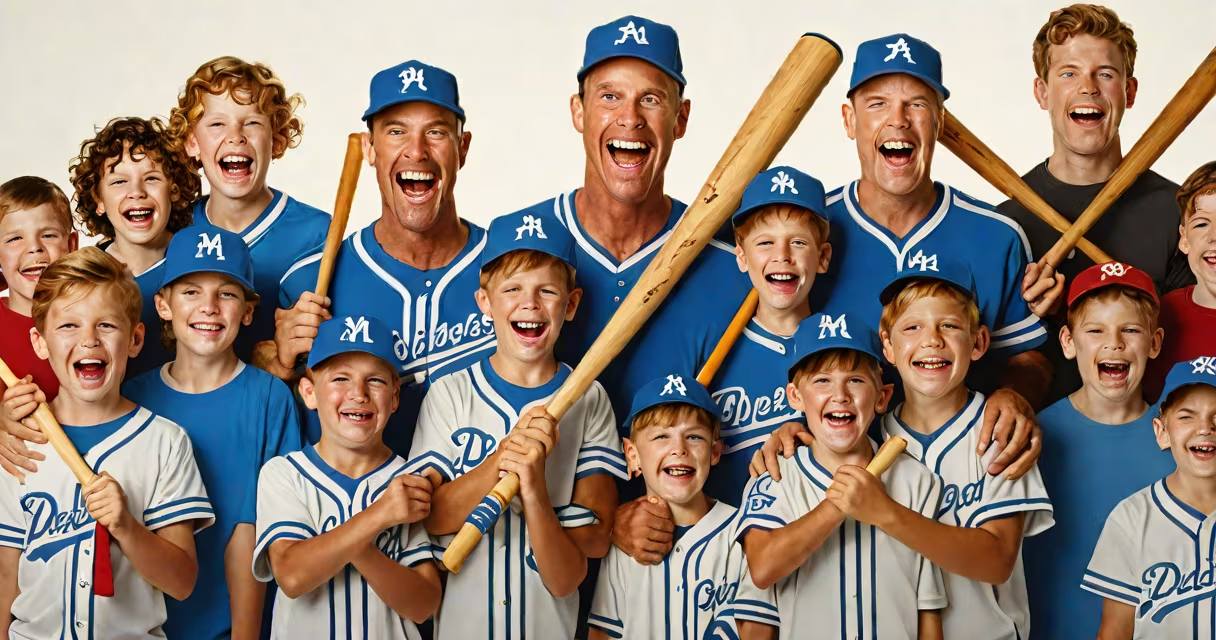
Sports dad jokes are playful, often pun-based quips rooted in athletic themes-baseball, football, basketball, soccer-delivered with deadpan delivery and a predictable punchline that lands with a groan. They thrive on wordplay, double meanings, and mild absurdity, typically shared in family settings or casual gatherings.
These jokes rely on familiar sports terminology twisted into unexpected contexts. A typical example: "I told my son he's playing football like a quarterback-then realized he was actually playing quarterback." The humor lies in the literal interpretation of a metaphor, not in surprise or cleverness. The punchline is obvious before it lands.
They're not meant to be witty. They're meant to be endured. The audience doesn't laugh because the joke is smart-it laughs because everyone knows the setup, expects the twist, and still finds it mildly entertaining. This is the core of the genre: repetition, predictability, and emotional safety.
Each joke follows a two-part structure: setup and payoff. The setup uses a sports term or scenario familiar to most people-"My son asked me to coach his Little League team..."-and the payoff twists it into something nonsensical or overly literal. The humor emerges from the gap between expectation and outcome.
For example: "I told my daughter she needed to practice her free throws. She said, 'But Dad, I'm not a basketball player.' I said, 'That's exactly why you need to practice-so you don't become one.'" The joke hinges on misapplying the concept of "free throw" as a chance to avoid being a player, not a shot in basketball.
The delivery matters. These jokes are usually delivered flat, without exaggeration. A raised eyebrow, a shrug, or a pause before the punchline increases the comedic effect. The speaker acts as if they're serious, which amplifies the absurdity.
While all sports dad jokes share the same DNA, they fall into recurring categories based on sport and theme:
| Type | Theme | Example |
|---|---|---|
| Baseball Puns | Double meanings on "strike," "hit," "pitch," "inning" | "I told my kid he had to hit the ball. He said, 'But Dad, I'm not a batter.' I said, 'Then you're not hitting the ball-you're just standing there.'" |
| Football Metaphors | Using game terms like "down," "quarter," "touchdown" literally | "My son said he didn't want to go to school. I said, 'That's fine-just make sure you're not on the bench.'" |
| Basketball Wordplay | Twisting "dunk," "rebound," "three-pointer" into everyday life | "I told my daughter she should try to dunk her homework. She said, 'But Dad, I'm not tall enough.' I said, 'Then you'll have to rebound.'" |
| Soccer/World Cup Nostalgia | References to international events, fan culture, or "goal" as a life goal | "I told my son he should aim for goals in life. He said, 'But Dad, I don't play soccer.' I said, 'Then you're not aiming for goals-you're just walking.'" |
Some jokes blend multiple sports. "I told my son he had to run faster. He said, 'But Dad, I'm not in a race.' I said, 'Then you're not running-you're just moving.'" This version plays on both track and field and general movement.
They serve as social glue. In family settings, especially during games, travel, or post-practice downtime, these jokes create low-stakes bonding moments. They're safe. They're predictable. They don't require wit or timing.
A study by the University of Michigan found that families who regularly share low-effort humor report higher levels of perceived connection, even when the humor is objectively bad. The act of sharing the joke-even if no one laughs-is part of the ritual. It signals familiarity, presence, and affection.
One example: I once watched a father at a youth soccer game tell his daughter, "You're not offside-you're just not in the game yet." The girl rolled her eyes, then smiled. Her friend laughed. The father didn't flinch. He'd said it five times before. That's the point.
People mistake sports dad jokes for satire or irony. They're not. A dad joke isn't clever because it subverts expectations-it's clever because it fails to do so. The humor is in the failure.
Also, many assume these jokes are only for dads. Not true. Anyone can deliver them. But the cultural association with "dad" persists because of their delivery style: slow, earnest, unironic. The speaker isn't trying to impress-they're trying to belong.
Another myth: that they're always about sports. Some are. Others use sports metaphors to describe parenting, work, or daily routines. "I told my wife I was going to take a nap. She said, 'That's not a timeout-it's a power play.'" This joke uses hockey terms to describe rest, not actual gameplay.
Unlike other comedy forms, the success of a sports dad joke isn't measured by laughter. It's measured by groans. A groan means the audience recognized the setup and anticipated the punchline. That recognition is the win.
Research from the Journal of Consumer Psychology shows that people rate jokes with predictable outcomes as more enjoyable when shared in group settings-even if they find them objectively unfunny. The shared discomfort becomes a shared experience. The joke isn't good-it's communal.
Consider this: "I told my son he had to be on time for practice. He said, 'But Dad, I'm not a goalie.' I said, 'Then you're not late-you're just not showing up.'" The punchline is weak. The setup is obvious. But the reaction-eye rolls, sighs, half-smiles-is the real reward.
These jokes appear in family game nights, sports sidelines, and online forums. They're rarely published in formal collections-but they circulate widely through word of mouth and social media.
When you hear a sports dad joke, don't analyze it. Don't dissect the grammar. Just nod, smile, and say, "Nice one." That's the only correct response.