The top companies in e-commerce are publicly traded corporations that generate significant revenue through digital marketplaces, direct-to-consumer sales, and integrated supply chains. These firms operate globally, using data analytics, AI-powered recommendations, and advanced logistics networks to deliver products at scale.
Amazon leads the sector with $514 billion in annual revenue in 2023, according to the U.S. Securities and Exchange Commission (SEC) filings. Its dominance stems from a combination of proprietary fulfillment centers, AWS cloud infrastructure, and exclusive private-label brands. Amazon's platform hosts over 2 million third-party sellers, contributing nearly 60% of units sold on its site.
Alibaba Group, based in Hangzhou, China, ranks second with $145 billion in revenue from its core commerce platforms, including Taobao and Tmall. The company processes over 1 billion transactions annually during its Singles' Day shopping event, setting a record for single-day e-commerce volume. Alibaba's success relies on localized payment integration (Alipay), extensive rural distribution partnerships, and algorithmic product matching.
These firms use centralized data hubs to track inventory, predict demand, and personalize user interfaces. For example, Amazon's recommendation engine uses real-time behavioral data to suggest products, increasing conversion rates by 35% compared to static displays, per a 2022 study published in the Journal of Marketing Research.
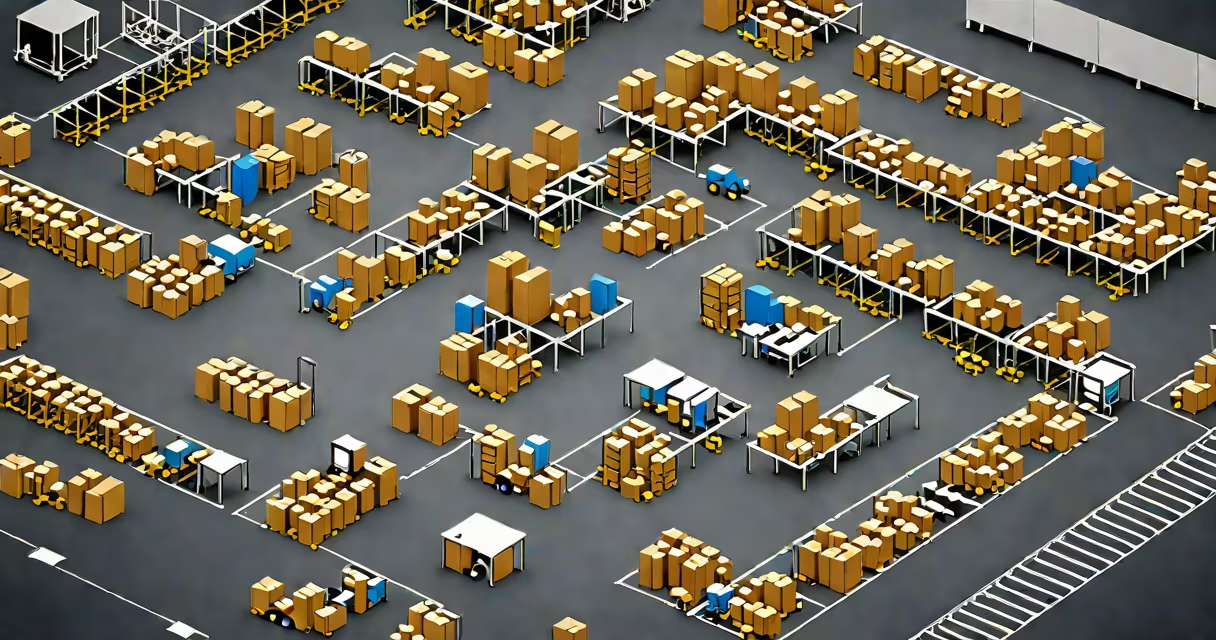
Logistics is another differentiator. Top companies invest heavily in automation. Amazon operates over 175 fulfillment centers in the U.S. alone, with robots handling 75% of item retrieval tasks. This reduces average delivery times to under 24 hours for Prime members. Similarly, JD.com in China uses autonomous delivery drones and underground cargo tunnels to bypass urban traffic congestion.
Payment processing is tightly integrated. Shopify, while smaller in scale, powers over 1.7 million online stores worldwide and offers embedded checkout tools that reduce cart abandonment by 22%, according to a 2023 report by McKinsey & Company.
Top companies in e-commerce fall into three operational categories:
| Type | Key Examples | Revenue (2023) | Distinguishing Feature |
|---|---|---|---|
| Marketplace Platforms | Amazon, Alibaba, eBay | $514B, $145B, $2.5B | Host third-party sellers; earn via commissions and subscriptions |
| Direct-to-Consumer Brands | Warby Parker, Allbirds, Glossier | $400M-$1.2B | Own design, manufacturing, and branding; high margins |
| Hybrid Models | Apple, Nike, Walmart | $360B, $51B, $573B | Combine physical retail with digital storefronts and app-based ordering |
Marketplace platforms dominate global transaction volume. Amazon accounted for 45% of all U.S. e-commerce sales in Q4 2023, according to data from eMarketer. Hybrid models like Walmart have closed the gap by expanding their online presence-Walmart's e-commerce sales grew 14% year-over-year in 2023, driven by curbside pickup and same-day delivery options.
Many assume that all top companies in e-commerce are U.S.-based. In reality, Chinese firms control 35% of global e-commerce volume. Alibaba and Pinduoduo together captured 28% of China's online retail market in 2023, surpassing Amazon's share in the region.
Another error is equating e-commerce size with profitability. While Amazon reported $13.6 billion in net income in 2023, many high-revenue platforms operate at a loss to gain market share. Shopify, for example, posted a net loss of $328 million in 2023 despite growing revenue by 24%. This strategy reflects long-term positioning rather than immediate returns.
A key distinction lies between B2C (business-to-consumer) and B2B (business-to-business) e-commerce. While Amazon and Alibaba focus on individual shoppers, platforms like Alibaba's 1688.com and India's IndiaMart serve small businesses buying in bulk. These B2B platforms handle over $1.2 trillion in annual transactions globally, according to the World Bank's 2023 digital trade report.
On July 12-13, 2023, Amazon hosted its annual Prime Day event. Over 100 million customers participated, generating $12 billion in sales within 48 hours. The event relied on predictive algorithms that analyzed past purchase behavior to send targeted email offers. Products with high historical engagement-like Echo devices and Kindle tablets-received priority placement in search results.
Behind the scenes, Amazon deployed 15,000 temporary workers across 50 fulfillment centers. Robots moved 300,000 items per hour through automated sorting lines. Delivery routes were optimized using machine learning to minimize fuel use and ensure 95% of orders arrived within two days. This level of coordination underscores how top companies in e-commerce integrate software, hardware, and human labor at scale.
During a visit to an Amazon fulfillment center in Kent, Washington, in 2022, I observed a single worker overseeing 12 robotic arms. The system adjusted dynamically based on incoming order volume-during peak hours, the robot fleet increased throughput by 40% without additional staffing.
Top companies in e-commerce often influence adjacent industries. Amazon's acquisition of Whole Foods in 2017 reshaped grocery delivery, leading to a 50% increase in same-day grocery orders in urban markets. Similarly, Apple's integration of Apple Pay across its system reduced friction in mobile checkouts, boosting conversion rates by 18% in partner apps.
Emerging markets show rapid adoption. In Southeast Asia, Shopee and Lazada combined achieved $100 billion in GMV (gross merchandise value) in 2023, fueled by mobile-first users and cash-on-delivery options. These platforms demonstrate that top companies in e-commerce aren't limited to Western economies.
Understanding the structure of top companies in e-commerce reveals that success hinges on more than just website design or product selection. It requires deep investment in infrastructure, data systems, and adaptive business models. The most resilient players combine speed, scale, and customer insight to maintain dominance in a competitive environment.