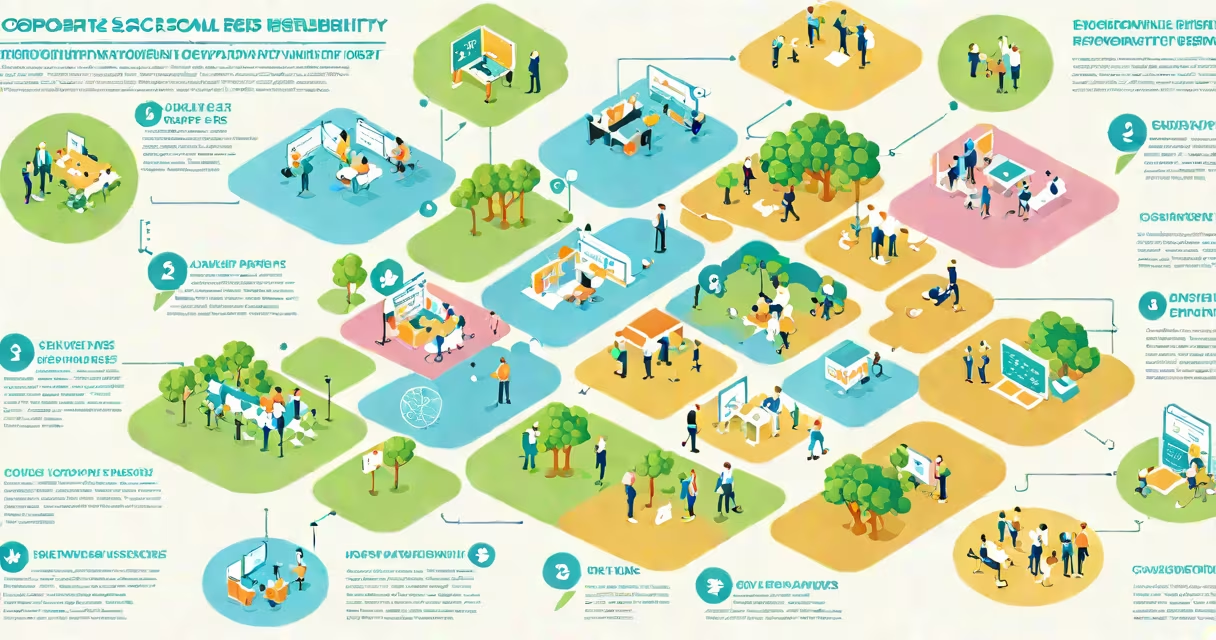
Corporate social responsibility reporting is the formal documentation and public disclosure of a company's environmental, social, and governance (ESG) performance. It outlines actions taken, outcomes achieved, and goals set related to ethical operations, community impact, and sustainable resource use. This practice enables stakeholders to assess long-term value beyond financial metrics.
Companies publish these reports annually or biannually, often aligning with global standards such as the Global Reporting Initiative (GRI) or the Sustainability Accounting Standards Board (SASB). The reports include measurable data-like carbon emissions reduced, diversity statistics, or community investment amounts-alongside narrative explanations of strategy and progress.
For example, Unilever's 2023 Sustainable Living Report disclosed that it reduced greenhouse gas emissions by 67% per unit of production since 2008, achieved 100% renewable electricity in its manufacturing sites, and trained 1.2 million people in sustainable farming practices. These figures were verified by independent auditors and published under GRI guidelines.
CSR reporting follows a structured process: data collection, verification, analysis, and publication. Internal teams gather information from supply chains, HR departments, facilities, and external partners. Data is then validated through internal audits or third-party assurance to prevent misrepresentation.
Reports typically cover three core areas:
A 2022 study by the Harvard Business Review found that firms with standardized CSR reporting had 14% higher investor confidence compared to those without. Transparency in disclosures correlates with lower perceived risk and improved access to green financing.
Organizations choose reporting frameworks based on industry, region, and audience. The most widely adopted include:
| Structure | Primary Focus | Adoption Rate (Global) |
|---|---|---|
| Global Reporting Initiative (GRI) | Complete sustainability metrics across sectors | 30,000+ organizations |
| Sustainability Accounting Standards Board (SASB) | Industry-specific materiality for investors | Over 1,000 listed companies |
| Task Force on Climate-related Financial Disclosures (TCFD) | Climate risk and opportunity assessment | Over 2,500 signatories |
| International Financial Reporting Standard (IFRS) S1 & S2 | Standardized climate and sustainability reporting | Emerging adoption in EU and UK |
The IFRS Sustainability Standards, launched in 2023, represent a major shift toward mandatory, globally consistent reporting. Unlike earlier voluntary models, they require companies to disclose material ESG factors using a "double materiality" lens-assessing both how sustainability issues affect the business and how the business affects society and nature.
One common mistake is conflating CSR reporting with marketing. A report that highlights only positive achievements without addressing failures or risks undermines credibility. For instance, a mining company claiming "zero workplace injuries" while omitting data on local water contamination violates the principle of balanced disclosure.
Investors use CSR reports to evaluate long-term resilience. BlackRock, the world's largest asset manager, requires portfolio companies to submit ESG data annually. In 2023, it excluded 42 companies from its ESG-focused funds due to incomplete or inconsistent reporting.
Regulators are increasingly mandating disclosures. The European Union's Corporate Sustainability Reporting Directive (CSRD), effective January 2024, expands reporting requirements to over 50,000 companies, including subsidiaries of multinational firms. It mandates double materiality assessments and third-party assurance for all large enterprises.
Consumers also respond to transparency. A 2021 NielsenIQ survey showed that 66% of global consumers would pay more for products from companies with strong environmental records. Brands like Patagonia and Ben & Jerry's have built customer loyalty through detailed, verifiable CSR disclosures.
I once reviewed a CSR report for a mid-sized food manufacturer during a consulting project. The initial draft included vague statements like "we care about our workers." After refining the language and adding specific data-such as a 20% reduction in overtime hours and a 92% employee satisfaction rate in a recent survey-the report gained attention from both investors and labor advocacy groups.
Many assume CSR reporting is optional or purely symbolic. That's incorrect. In 2023, the U.S. Securities and Exchange Commission proposed new rules requiring publicly traded companies to disclose climate-related risks and emissions data. Failure to comply may result in enforcement actions.
Another misconception is that CSR reporting applies only to large corporations. Small and medium enterprises (SMEs) are increasingly expected to report. In Germany, SMEs with more than 250 employees must publish a non-financial statement under the German Supply Chain Act.
Finally, CSR reporting is not synonymous with ESG investing. While ESG funds rely on CSR data, they also incorporate financial risk modeling, sector benchmarks, and forward-looking indicators. A company with strong CSR disclosures may still score poorly on ESG indices if its business model remains high-risk or unsustainable.
Understanding what is corporate social responsibility reporting begins with recognizing it as a tool for accountability-not just reputation management. When done correctly, it connects operational decisions to societal outcomes, enabling better choices across capital markets, supply chains, and policy environments.