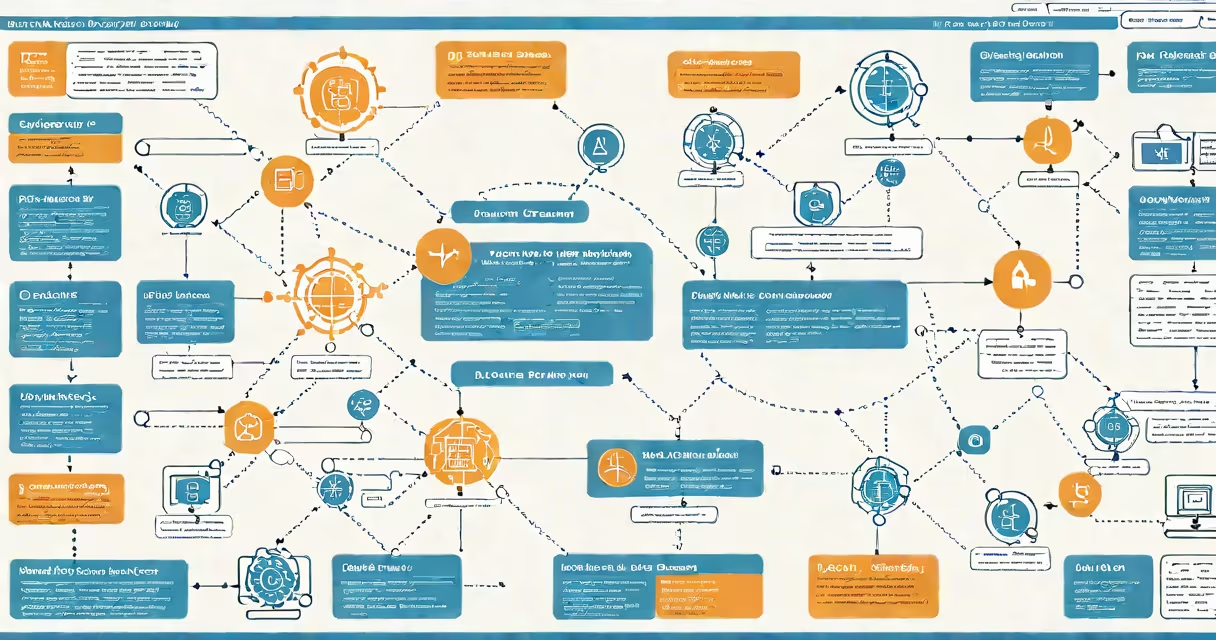
The Online Criminal Data Center (ocdc) is a U.S. Department of Justice system designed to collect, store, and analyze digital evidence related to cybercrime investigations. It serves as a centralized repository for law enforcement agencies to share and access data tied to cyber threats, malware activity, and illicit online behavior.
Operated under the auspices of the FBI's Cyber Division and supported by the National Cyber Investigative Joint Task Force (NCIJTF), ocdc enables authorized agencies to correlate data across jurisdictions. It supports investigations involving ransomware, phishing campaigns, identity theft, and infrastructure attacks targeting critical systems.
Unlike public databases or commercial threat feeds, ocdc operates under strict federal security protocols. Access requires multi-factor authentication, role-based permissions, and audit trails. Only cleared personnel from federal, state, or local agencies involved in cybercrime cases may use the system.
When a cybercrime incident is reported-such as a breach at a financial institution or a distributed denial-of-service attack-investigators gather digital artifacts: IP addresses, timestamps, file hashes, and network logs. These are uploaded into ocdc using standardized formats like STIX/TAXII and JSON schema templates.
Once ingested, the system applies automated correlation algorithms to detect patterns. For example, if multiple attacks originate from the same command-and-control server, ocdc flags them as part of a single campaign. This reduces investigative time by eliminating redundant analysis across departments.
Each entry is tagged with metadata including source agency, date of submission, classification level (e.g., "For Official Use Only"), and associated case numbers. All changes are logged in real time, ensuring compliance with the Privacy Act of 1974 and the Federal Information Security Modernization Act (FISMA).
ocdc runs on a hybrid cloud architecture hosted within Department of Justice data centers. It uses encrypted storage (AES-256), role-based access control (RBAC), and continuous monitoring via SIEM tools like Splunk Enterprise Security.
The core components include:
System updates occur monthly, with patches validated through the NIST Cybersecurity Structure. Version 4.2, released in Q2 2023, added support for blockchain transaction tracing-a feature requested by the Secret Service following increased crypto-ransomware incidents.
ocdc categorizes data into five primary types based on origin and sensitivity. The table below outlines their structure and usage:
| Type | Source | Use Case | Retention Period |
|---|---|---|---|
| Network flow logs | Federal ISPs, dark web crawlers | Tracing attacker geolocation and routing paths | 7 years |
| Malware samples | Endpoint detection tools, honeypots | Behavioral analysis and signature generation | 10 years |
| IP/URL reputation data | Automated threat intelligence feeds | Blocking known malicious domains during operations | 5 years |
| Forensic disk images | Field investigators, digital forensics labs | Reconstructing user activity and deleted files | 15 years |
| Human intelligence reports | Undercover agents, informants | Verifying suspect identities and affiliations | 20 years (classified) |
One non-obvious distinction: ocdc does not store raw video footage from surveillance cameras, even when linked to cybercrime. Such data is handled separately by the FBI's Evidence Management System (EMS), which has stricter retention policies and physical access controls.
ocdc is deployed across 34 field offices of the FBI, 12 regional fusion centers, and partner agencies like the Secret Service and DHS Cybersecurity and Infrastructure Security Agency (CISA).
A notable use case occurred in early 2022 during Operation Shadow Wire. Investigators traced a series of credential stuffing attacks targeting healthcare providers to a botnet operated from Eastern Europe. By cross-referencing login attempts, IP ranges, and malware payloads in ocdc, agents identified a pattern of reuse across 14 separate breaches. This led to the takedown of two command servers and the arrest of two individuals in the U.S. and Germany.
Another example: in 2023, the U.S. Attorney's Office for the Northern District of California used ocdc to link a series of cryptocurrency scams to a single wallet address. The system flagged repeated transactions from different jurisdictions, allowing prosecutors to build a timeline that spanned 18 months and covered 23 victims.
Many assume ocdc is a public-facing tool or a source of real-time global threat data. It is neither. The system is not accessible to private companies, journalists, or international partners-even NATO allies lack direct access.
Some confuse ocdc with the National Crime Information Center (NCIC), which tracks physical crimes and missing persons. While both are federal databases, NCIC deals with tangible evidence like fingerprints and vehicle registrations. ocdc focuses exclusively on digital traces and behavioral patterns.
A third myth is that ocdc automatically shares data with other countries. It does not. Any international transfer requires a formal request under the Mutual Legal Assistance Treaty (MLAT) process. Even then, data is redacted to protect U.S. sources and methods.
In 2021, I observed a training exercise at the FBI Academy in Quantico where agents simulated a coordinated attack on a university's research network. During the drill, we used ocdc to map the spread of a custom-built trojan. Within 12 minutes, the system flagged three anomalies: a spike in outbound DNS queries, a duplicate file hash across three machines, and a reverse shell connection originating from a compromised lab workstation.
These signals triggered an automated alert, which was reviewed by a senior analyst. The team then isolated the affected subnet and initiated a containment protocol-all documented in ocdc for later audit. The exercise demonstrated how quickly the system can surface hidden connections in complex environments.
What is ocdc? It is a secure, federally managed platform for tracking and analyzing cybercrime data. Its design prioritizes accuracy, accountability, and jurisdictional integrity. As cyber threats grow more sophisticated, ocdc remains a foundational tool for U.S. law enforcement's digital response capabilities.