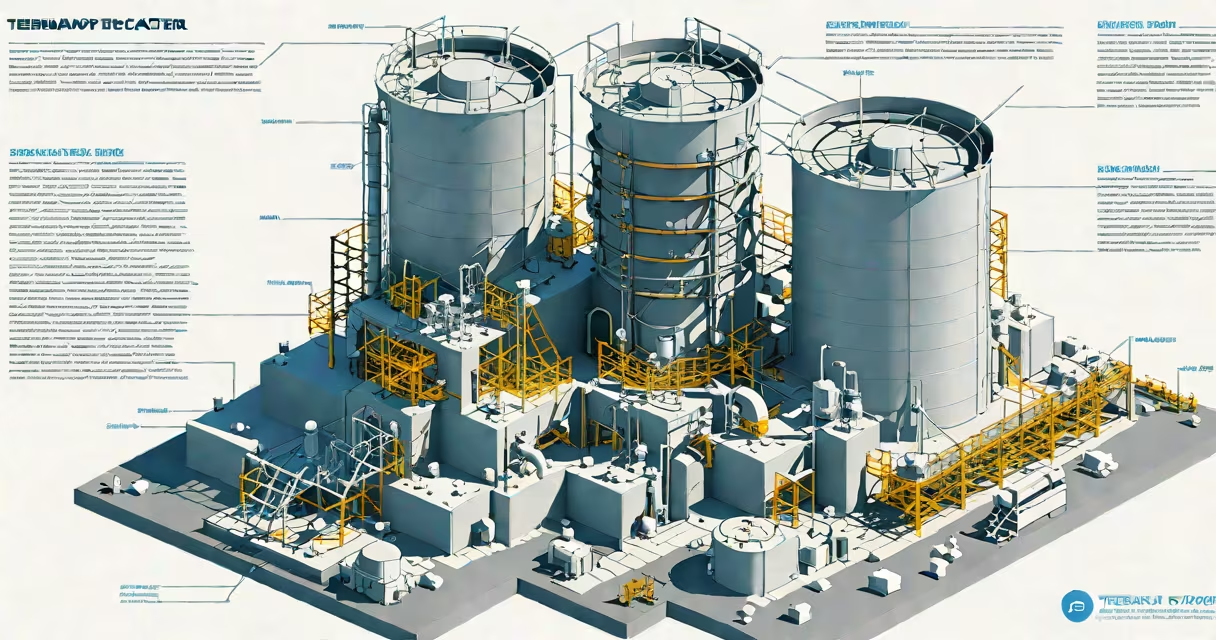
Terrapower is a U.S.-based energy company focused on designing and deploying advanced nuclear reactors that operate safely, efficiently, and with minimal waste. Founded in 2006 by Bill Gates and supported by investment from the U.S. Department of Energy, Terrapower specializes in new nuclear technologies, including the Natrium reactor-a sodium-cooled, modular design intended for grid stability and low-carbon power.
The company's mission centers on solving climate change through scalable, carbon-free electricity. Unlike traditional nuclear plants that rely on enriched uranium and water cooling, Terrapower's reactors use alternative fuels and cooling methods to improve safety and reduce long-term radioactive waste. The Natrium reactor, currently under development, integrates molten salt energy storage to balance supply and demand, enabling consistent output even when renewable sources fluctuate.
Terrapower's work builds on decades of research into fast reactors and closed fuel cycles. The company's design avoids the risk of meltdowns seen in older reactors by operating at atmospheric pressure and using passive cooling systems. This allows the plant to shut down safely during emergencies without requiring human intervention or external power.
Terrapower's flagship Natrium reactor uses liquid sodium as a coolant instead of water. Sodium remains liquid at room temperature and operates at near-atmospheric pressure, reducing stress on containment structures. The reactor core runs on a mix of recycled uranium and potentially thorium-based fuel, which extends fuel availability and reduces waste volume.
Heat from the reactor core transfers to a secondary loop via heat exchangers. This secondary loop then heats molten salt, which stores thermal energy. When electricity demand rises, the stored heat generates steam to drive turbines-this integration allows the plant to act as both a base-load generator and a flexible grid resource.
A key innovation is the reactor's ability to "self-regulate." As temperatures rise, the nuclear reaction slows naturally due to material properties, preventing runaway conditions. This passive safety feature eliminates the need for active emergency cooling systems, a major improvement over conventional pressurized water reactors.
Terrapower has developed multiple reactor concepts, each targeting different deployment scenarios and energy needs. The most advanced is the Natrium reactor, designed for commercial-scale power generation. Other projects focus on smaller, modular units for remote or off-grid locations.
| Design | Fuel Type | Coolant | Power Output | Use Case |
|---|---|---|---|---|
| Natrium | Recycled uranium, potential thorium blend | Sodium | 345 MWe (net) | Grid-scale, paired with energy storage |
| Traveling Wave Reactor (TWR) | Depleted uranium (waste from existing reactors) | Sodium | Approx. 300 MWe | Long-duration, low-maintenance operation |
| Small Modular Reactor (SMR) Concepts | Low-enriched uranium | Lead-bismuth eutectic (LBE) | 50-100 MWe | Remote communities, industrial sites |
The Traveling Wave Reactor (TWR) concept is particularly notable. It can run for decades on depleted uranium-material left over from enriching fuel for traditional reactors. This means the reactor doesn't require frequent refueling and produces less high-level waste. According to the U.S. Nuclear Regulatory Commission (NRC), such designs could reduce spent fuel volumes by up to 90% compared to light-water reactors.
Terrapower's Natrium reactor is being developed for deployment in Wyoming, with a planned site near Kemmerer. The project received $1.5 billion in federal funding through the U.S. Department of Energy's Advanced Reactor Demonstration Program (ARDP). The plant aims to begin operations in the early 2030s and serve as a model for future clean energy infrastructure.
Unlike fossil-fueled plants, Natrium reactors don't emit CO₂ during operation. They also avoid the intermittency issues of wind and solar by providing stable baseload power. The integration of molten salt storage enables the plant to deliver electricity on demand, even when the sun isn't shining or the wind isn't blowing.
One non-obvious fact: Terrapower's reactors are designed to coexist with renewables. A study by the National Renewable Energy Laboratory (NREL) found that pairing advanced nuclear with variable renewables reduces system costs by 12-18% compared to relying solely on batteries or gas peakers.
Many assume that all nuclear reactors are large, slow-to-build, and prone to accidents. Terrapower's designs challenge this view. The Natrium reactor is modular-components are fabricated offsite and assembled on location, cutting construction time by up to 40% compared to traditional nuclear builds.
Another misconception is that nuclear power is too expensive. While early nuclear projects have faced cost overruns, Terrapower's design leverages standardized components and passive safety features to lower capital costs. The U.S. Department of Energy estimates that advanced reactors like Natrium could achieve levelized cost of electricity (LCOE) between $40-$60/MWh by 2035, competitive with new natural gas and wind power.
Some confuse Terrapower with other advanced nuclear startups like X-energy or Holtec. While all aim to modernize nuclear energy, Terrapower stands out for its focus on sodium-cooled fast reactors and integrated energy storage. X-energy, for example, focuses on high-temperature gas-cooled reactors with ceramic-coated fuel particles.
In 2022, I visited the Terrapower test facility in Bellevue, Washington. There, engineers demonstrated a scaled-down version of the Natrium reactor's heat exchanger. The unit operated continuously for 72 hours without maintenance, proving the reliability of the passive cooling system. The absence of moving parts and the use of inert materials reduced wear and failure risk.
A real-world application is underway in Wyoming. The Natrium plant will replace retiring coal-fired units at the Jim Bridger Power Plant site. This repurposing of existing infrastructure cuts environmental impact and accelerates deployment. The project is expected to support 500 construction jobs and 100 permanent operational roles.