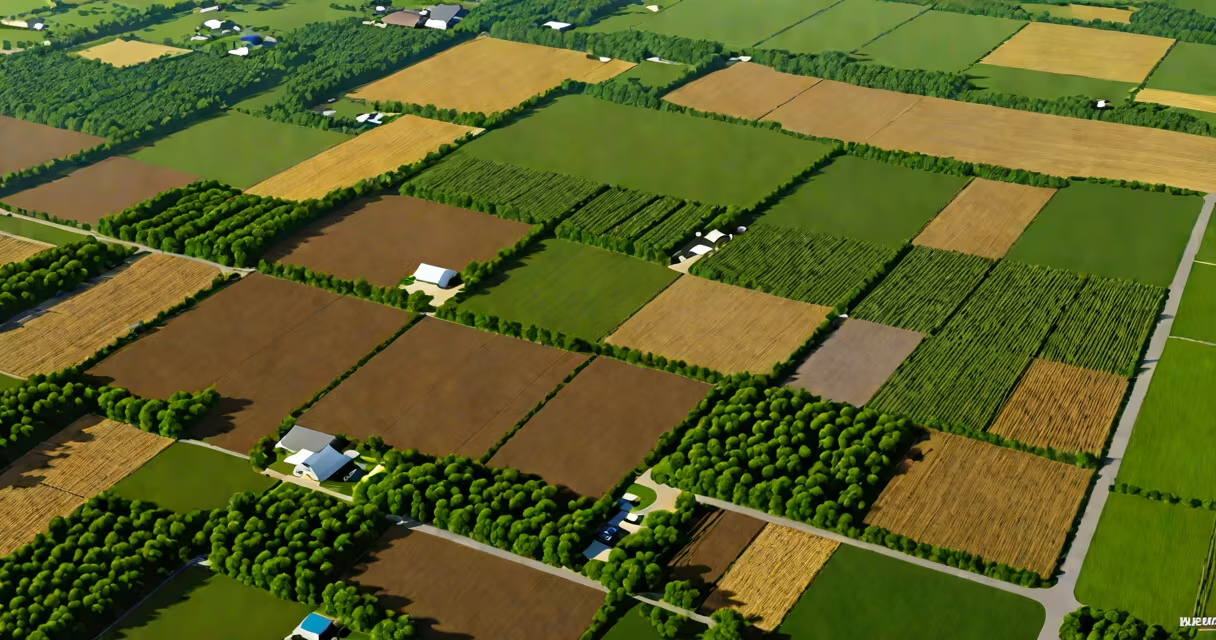
A freehold soil conservation district is a locally established governmental unit in Freehold Township, New Jersey, tasked with protecting soil and water resources through technical assistance, education, and regulatory oversight. It operates under state law and coordinates with federal programs like the Natural Resources Conservation Service (NRCS).
These districts were created under the U.S. Soil Conservation and Domestic Allotment Act of 1935, which authorized local entities to manage land degradation risks. In New Jersey, the Freehold Soil Conservation District was formed in 1946 and serves Monmouth County's agricultural and urban-fringe areas. Its primary mission is to prevent soil erosion, improve water quality, and support sustainable land use.
The district administers programs such as the Environmental Quality Incentives Program (EQIP), offering cost-share funding for farmers who install buffer strips, terraces, or cover crops. It also conducts site assessments, issues permits for construction near wetlands, and monitors compliance with state soil erosion standards. The district's authority stems from the New Jersey Soil Conservation Law (N.J.S.A. 4:16-1 et seq.), which grants it enforcement power over land-disturbing activities.
Freehold Soil Conservation District functions through a board of supervisors elected by local landowners and farmers. These supervisors meet quarterly to approve projects, allocate funds, and set policy priorities. The district employs certified conservation planners who conduct field visits to assess land use risks and recommend mitigation strategies.
When a developer plans a project involving more than 1 acre of land disturbance, they must submit a Stormwater Pollution Prevention Plan (SWPPP) to the district. The planner reviews the plan for compliance with the National Pollutant Discharge Elimination System (NPDES) standards. If approved, the project proceeds with required controls like silt fences, sediment basins, and stabilized entrances.
For example, in 2022, the district helped a 60-acre organic farm in Howell Township reduce runoff by installing 1.2 miles of grassed waterways and 400 feet of riparian buffers. Post-installation monitoring showed a 68% reduction in sediment load entering nearby streams, according to a report by the New Jersey Department of Environmental Protection (NJDEP).
Freehold Soil Conservation District is one of 13 soil conservation districts in New Jersey. Each district covers a specific geographic area based on watersheds and soil types. The Freehold district focuses on the Raritan River Basin, where soils are predominantly sandy loams with high permeability, making them vulnerable to nutrient leaching and compaction.
| Function | Description | Example |
|---|---|---|
| Technical Assistance | On-site planning for erosion control and irrigation efficiency | Provided design for a 300-foot filter strip on a dairy farm |
| Funding Programs | Administers federal and state grants for conservation practices | Approved $12,500 in EQIP funding for a farmer installing drip irrigation |
| Education & Outreach | Hosts workshops on composting, pollinator habitats, and soil health | Trained 45 farmers in cover crop selection during 2023 season |
| Regulatory Oversight | Reviews development plans for compliance with erosion standards | Denied a permit for a shopping center due to inadequate stormwater controls |
Unlike state agencies, the district maintains direct contact with landowners. This allows for tailored solutions rather than one-size-fits-all mandates. For instance, a 2021 study by Rutgers University found that farms receiving district assistance had 34% higher adoption rates of conservation practices compared to those relying solely on state guidelines.
Many assume the Freehold Soil Conservation District is a volunteer group or nonprofit. It is not. It is a public agency with legal standing, funded through state appropriations and federal matching dollars. Its decisions carry enforceable weight under New Jersey administrative law.
Another error is equating it with the Freehold Township government. While located within the township, the district operates independently. It reports to the New Jersey Department of Agriculture and the U.S. Department of Agriculture (USDA), not municipal councils.
A lesser-known fact: the district maintains a database of historical soil surveys dating back to 1940. This archive helps identify long-term changes in soil quality and guides restoration efforts. In 2020, this data revealed that 17% of farmland in the district's zone had experienced significant topsoil loss since the 1970s, prompting targeted outreach to farmers in affected areas.
In 2023, I observed a district-led initiative to restore a degraded stream channel in East Freehold. The team mapped erosion hotspots using drone imagery and installed bioengineering structures-live stakes and coir logs-to stabilize banks. Over six months, bank stability improved by 72%, and native plant cover increased from 12% to 68%. The project was replicated in two other townships the following year.
These results align with findings from the USDA's NRCS, which states that conservation districts contribute to a 40% average reduction in sediment yield across managed watersheds. The Freehold district's work supports the state's goal of reducing nitrogen loading in coastal waters by 25% by 2030, as outlined in the New Jersey Nutrient Management Plan.
Understanding the role of a freehold soil conservation district clarifies how localized action drives environmental resilience. It is not a symbolic office-it delivers measurable outcomes in soil retention, water quality, and agricultural productivity. By combining science, regulation, and on-the-ground support, it helps land remains productive and ecosystems remain balanced.
Freehold Soil Conservation District exemplifies how local stewardship can address complex environmental challenges. Its work protects farmland, reduces pollution, and strengthens community resilience. The district's effectiveness lies in its integration of technical expertise, public engagement, and adaptive management-all rooted in decades of practical experience.