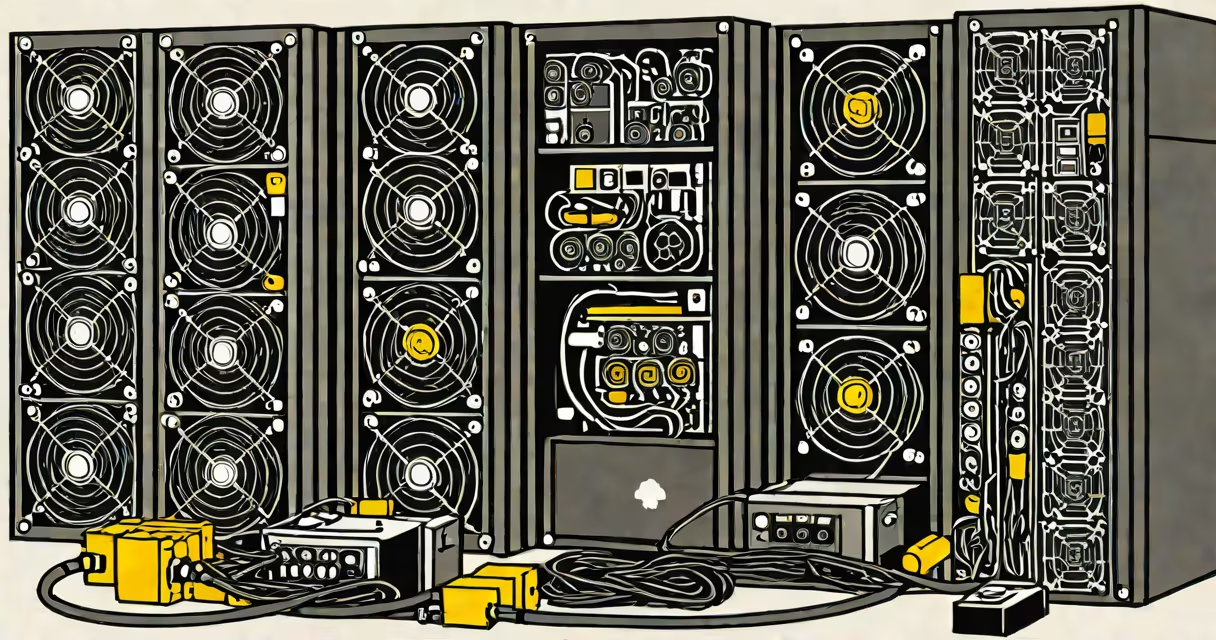
Choosing what cryptocurrency to mine depends on your hardware, local electricity rates, and current network difficulty. Profitability varies daily, so align your choice with your equipment's efficiency and energy cost.
Mining requires solving complex math puzzles to validate transactions and secure blockchain networks. Miners earn newly minted coins and transaction fees. The most viable options today are those with low algorithmic difficulty, high market value, and hardware compatibility.
Not all cryptocurrencies are mineable. Bitcoin uses SHA-256 hashing and demands specialized ASIC miners costing $1,500-$5,000. Most individuals cannot profitably mine Bitcoin without large-scale operations. Alternatives like Ethereum Classic (ETC) and Ravencoin (RVN) use algorithms better suited to consumer-grade GPUs.
Mining involves verifying blocks of transactions and adding them to a blockchain. Miners compete to solve cryptographic puzzles using computational power. The first to succeed earns rewards in the native cryptocurrency.
Each blockchain sets a difficulty level that adjusts periodically to maintain consistent block times. As more miners join, difficulty increases, reducing individual chances of earning rewards unless hash rate scales accordingly.
For example, Ethereum Classic's Ethash algorithm allows GPU mining. A single NVIDIA RTX 4090 can achieve ~120 MH/s on ETC. With electricity priced at $0.12/kWh, this setup generates roughly $1.80/day in ETC, minus power costs. Over 30 days, net earnings reach ~$42 after subtracting $18 in electricity.
Not all coins support mining. Only proof-of-work (PoW) chains do. PoS chains like Ethereum no longer allow mining. Focus on PoW-based coins with active communities and stable markets.
| Cryptocurrency | Algorithm | Best Hardware | Current Daily Reward (approx.) |
|---|---|---|---|
| Ravencoin (RVN) | Blake2b | GPU (NVIDIA/AMD) | $2.50 USD equivalent |
| Ethereum Classic (ETC) | Ethash | GPU (RTX 3090/4090) | $1.80 USD equivalent |
| Monero (XMR) | CryptoNight (v8) | CPU/GPU hybrid | $3.10 USD equivalent |
| Bitcoin Gold (BTG) | Equihash | ASIC/GPU | $0.60 USD equivalent |
Monero remains popular due to its focus on privacy and resistance to ASIC dominance. Its CryptoNight algorithm favors CPU and GPU mining, making entry accessible. However, Monero's price volatility makes long-term ROI uncertain.
A common mistake is assuming higher coin prices equal higher mining profits. A $100 coin with 0.001 daily reward yields less than a $1 coin with 0.1 daily reward. Always calculate net daily return after electricity and hardware depreciation.
Electricity cost is the largest variable. A miner using 1,000 watts at $0.10/kWh pays $24/month for power. If mining earns $20/month, the operation loses money. Locations with cheap hydroelectric power-like Iceland or parts of Canada-offer lower operational costs.
Some miners pool resources to increase hash rate. Pools distribute rewards proportionally based on contributed work. Popular pools include F2Pool, Slush Pool, and 2Miners. Joining a pool reduces variance in income but cuts profits via fee deductions (typically 1-2%).
I once ran a four-GPU rig in a basement with ambient cooling. Electricity was $0.08/kWh. After six months, the system earned $1,100 in RVN and ETC, while power costs totaled $380. Net profit: $720. Maintenance and hardware wear reduced final gains by ~15%. The setup paid for itself in 11 months.
Many assume mining is passive income. It is not. Mining requires constant monitoring, driver updates, and hardware maintenance. A failed GPU or power surge can halt operations for hours.
Another misconception is that mining builds wealth quickly. In reality, profitability fluctuates with market prices and network difficulty. A coin may be profitable today but unprofitable in six months due to rising difficulty or falling prices.
Also, avoid coins with low liquidity or no exchange listings. Even if you mine successfully, selling the output becomes difficult. Stick to coins traded on major exchanges like Binance, Kraken, or Coinbase.
Before choosing what cryptocurrency to mine, assess your hardware capabilities, electricity costs, and risk tolerance. Start small. Test one coin with a single GPU before scaling.
Use tools like WhatToMine.com or MinerStat to estimate daily earnings. Input your hardware model, power draw, and local electricity rate. These calculators factor in network difficulty and current market prices.
Finally, consider long-term trends. Bitcoin's halving events reduce block rewards every four years. This affects mining profitability cycles. Similarly, shifts toward proof-of-stake-like Ethereum's merge-reduce demand for PoW mining.
Choose what cryptocurrency to mine based on current data, not speculation. Monitor performance weekly. Adjust your strategy as conditions change. The most profitable miner isn't the one with the fastest rig-it's the one who optimizes cost, efficiency, and timing.
Profitable mining requires real-world math, not hype. Calculate your return on investment. Stay informed. Adapt. That's how you decide what cryptocurrency to mine.