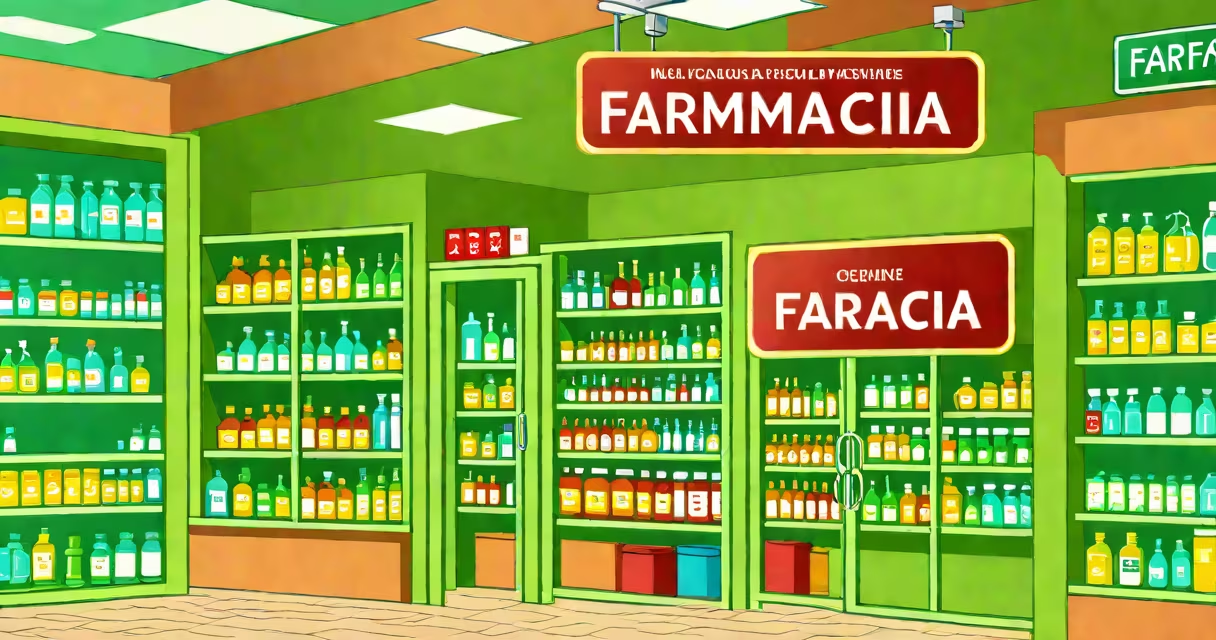
"Pharmacy in Spanish" translates directly to "farmacia," the standard term used across Latin America and Spain for a retail outlet that dispenses prescription medications, over-the-counter drugs, and health-related products. The word originates from the Latin "pharmacia," meaning "preparation of drugs."
In everyday conversation, "farmacia" refers to both the physical location and the service it provides. For example, a person might say, "Necesito ir a la farmacia a comprar medicamentos para mi madre," meaning "I need to go to the pharmacy to buy medicine for my mother." This usage applies in Mexico City, Madrid, Bogotá, and Santiago alike.
The term "farmacia" appears in official signage, medical records, and public health communications. In Spain, pharmacies often display the red cross symbol alongside "Farmacia" in large letters. In Peru, the word may appear in bilingual signs alongside English or Quechua.
When someone says "farmacia" in Spanish, they're referring to a licensed establishment regulated by national health authorities. In Spain, pharmacists must hold a university degree in pharmacy and pass a state exam. In Colombia, the Ministry of Health oversees licensing, requiring at least five years of study and a practical internship.
Pharmacies in Spanish-speaking countries typically operate under strict hours. In Mexico, most pharmacies close between 9 PM and 6 AM unless located in major cities like Mexico City or Monterrey, where 24-hour services exist. In Argentina, many pharmacies remain open until midnight on weekdays and 10 PM on weekends.
Patients often visit a pharmacy to refill prescriptions. A doctor's written order-called una receta médica-is required for controlled substances. In Chile, patients must present their national ID card (RUN) when purchasing certain medications, such as antibiotics.
Not all pharmacies serve the same function. Here are the primary categories and their corresponding Spanish terms:
| Type | Spanish Term | Use Case |
|---|---|---|
| Community Pharmacy | Farmacia comunitaria | General medication sales, over-the-counter drugs, basic health supplies |
| Hospital Pharmacy | Farmacia hospitalaria | Dispenses medications within hospitals; staffed by clinical pharmacists |
| Specialty Pharmacy | Farmacia especializada | Serves patients with chronic conditions like diabetes or HIV; handles complex drug regimens |
| 24-Hour Pharmacy | Farmacia de guardia | Open overnight during emergencies; found in urban centers across Spain and Latin America |
Some pharmacies offer additional services. In Costa Rica, "farmacia" locations may provide free blood pressure checks or flu vaccinations. In Ecuador, certain pharmacies have on-site clinics where patients can consult with a nurse.
Many learners assume "farmacia" refers only to the place where prescriptions are filled. But in practice, it includes the sale of vitamins, cosmetics, and even baby formula. In Panama, a "farmacia" might sell condoms, toothpaste, and energy drinks alongside prescription drugs.
A frequent error is confusing "farmacia" with "laboratorio." While "farmacia" is the store, "laboratorio" refers to a pharmaceutical manufacturer. For example, "Este medicamento fue producido por un laboratorio en Barcelona" means "This medicine was produced by a lab in Barcelona." Mixing them up leads to misunderstandings about supply chains.
Another mistake is assuming all Spanish-speaking regions use the same terminology. In parts of Central America, people sometimes say "droguería" for a pharmacy, especially in rural areas. However, "droguería" is less formal and may refer to a general store selling medicines, not necessarily a licensed pharmacy. According to the World Health Organization, only 62% of "droguerías" in Guatemala meet minimum safety standards for drug storage.
Imagine you're visiting Tijuana, Mexico, and you need to refill a prescription for insulin. You walk into a shop labeled "Farmacia del Sol." Inside, a pharmacist asks, "¿Tiene la receta médica?" ("Do you have the prescription?"). You hand over your doctor's note, which lists the brand name "Humalog" and dosage instructions. The pharmacist confirms the details, checks inventory, and hands you a vial with a label in Spanish: "Insulina Humalog 100 unidades/mL - 30 días."
Later, you ask for advice on treating a cold. The pharmacist recommends a combination of acetaminophen and pseudoephedrine, available as "Tylenol Cold & Sinus" in English. In Spanish, it's sold as "Tylenol Congestión y Fiebre," with ingredients listed on the packaging. You pay with cash, and the receipt shows the total in Mexican pesos.
This scenario illustrates how "pharmacy in Spanish" functions beyond translation-it reflects local regulations, cultural norms, and operational differences across regions.
I once needed antihistamines while traveling in Barcelona. I entered a small shop marked "Farmacia" with a red cross. The pharmacist, speaking quickly, asked, "¿Qué síntomas tiene?" ("What symptoms do you have?"). I replied, "Picazón en las manos y ojos irritados," meaning "Itching in my hands and irritated eyes." She recommended a tablet called "Claritin," then checked her computer for availability. After confirming stock, she handed me a pack with instructions in Catalan and Spanish. The entire interaction took under five minutes.
That experience taught me that "pharmacy in Spanish" isn't just about vocabulary-it's about understanding context, urgency, and regional variation. What works in Madrid won't always apply in Quito.
Knowing "farmacia" is just the start. Here are related terms you'll encounter:
For example, if you're asking for something to reduce fever, you'd say, "Necesito un medicamento para la fiebre," or "I need a medicine for fever." If you're asking about side effects, you might say, "¿Qué efectos secundarios puede tener este medicamento?" ("What side effects can this medicine have?").
These phrases are essential for safe communication. According to the U.S. Centers for Disease Control and Prevention, miscommunication about medication use contributes to nearly 1 in 5 adverse drug events in non-English-speaking populations.
Understanding "pharmacy in Spanish" goes beyond memorizing words. It involves grasping how language shapes access to care, how regional differences affect communication, and how precise terminology prevents harm. working in healthcare, mastering this term ensures clarity and safety.