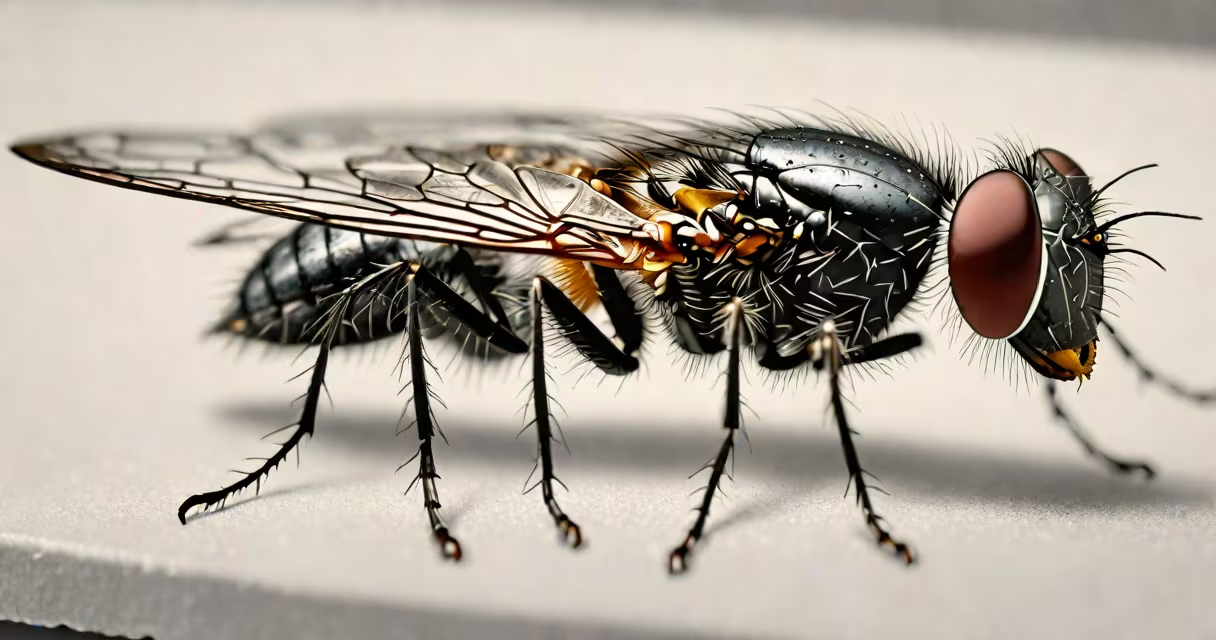
Flies are attracted to decaying organic material, moisture, fermenting sugars, and warmth. They locate these resources using highly sensitive olfactory receptors and visual cues, often entering homes through small openings or around trash areas.
Houseflies (Musca domestica) rely on smell to detect food sources from up to 100 meters away. Their antennae contain thousands of sensory neurons tuned to volatile compounds like ammonia, acetic acid, and ethanol-byproducts of rotting meat, fruit, or waste. Once within 10-30 meters, they use their compound eyes to track movement and light gradients, guiding them toward entry points.
Flies don't just land-they lay eggs in suitable substrates. A single female can deposit up to 500 eggs in her lifetime, typically in damp, nutrient-rich environments such as garbage, compost piles, or pet waste. Eggs hatch in 8-20 hours, and larvae develop into adults in 7-14 days under warm conditions (25-30°C).
Flies use a combination of chemical detection and vision. Their mouthparts are spongy and designed to absorb liquid nutrients, so they must feed on broken-down organic matter. This limits their diet to substances already decomposed or fermented.
They detect carbon dioxide exhaled by mammals and birds, which helps them find hosts. Fruit flies (Drosophila melanogaster) are especially sensitive to ethanol and acetaldehyde-compounds released during fruit fermentation. A single ripe banana can emit enough ethanol to attract dozens of fruit flies within minutes.
Entry points are often overlooked. Flies can squeeze through gaps as narrow as 1.5 mm-small enough to fit through cracks around windows, doors, or ventilation grills. Sealing these gaps reduces indoor fly presence by up to 70%, according to the National Pest Management Association (NPMA).
Different fly species respond to distinct stimuli. The table below outlines common household pests and their preferred attractants.
| Type | Attracted To | Common Entry Method | Prevention Tip |
|---|---|---|---|
| Housefly | Rotting meat, manure, garbage, dirty dishes | Open windows, door gaps, trash bins | Seal trash containers, clean spills immediately |
| Fruit fly | Fermenting fruit, wine, beer, damp sponges | Through drains, open fruit bowls, window screens | Wipe sink edges daily, store fruit in fridge |
| Drain fly | Organic buildup in plumbing traps | Through pipes, drains, vents | Flush drains weekly with boiling water |
| Mosquito | Warm-blooded animals, standing water | Through open doors, screens with holes | Eliminate standing water, repair screen tears |
Many people mistake drain flies for regular flies. Drain flies (Psychodidae family) are tiny, fuzzy, and breed exclusively in moist pipe residue. They're not drawn to food but to the gelatinous biofilm in drains. Cleaning drains with enzyme-based cleaners disrupts their breeding cycle.
Flies do not "appear out of nowhere." They enter homes via existing openings or are carried in on clothing, groceries, or pets. A study by the University of Florida IFAS Extension found that 83% of indoor fly infestations originated from external sources, not internal decay.
Another myth: flies are attracted to light. While some species (like moths) are phototactic, most flies avoid bright light. Houseflies prefer dimmer areas near food sources. They're not drawn to lamps unless those lights are near a food source or heat source.
Flies are not inherently unclean. However, they carry pathogens on their legs and bodies. The Centers for Disease Control and Prevention (CDC) reports that houseflies can transmit over 100 disease-causing organisms, including Salmonella, Shigella, and E. coli. They walk on surfaces, regurgitate digestive fluids, and defecate while feeding-spreading contamination.
In a 2022 case documented by the NPMA, a family in suburban Atlanta reported seeing 15-20 flies in their kitchen over three days. The source was traced to a forgotten bowl of overripe bananas left on the counter. Within 24 hours, fruit flies emerged from eggs laid in the peel's surface moisture.
After removing the fruit and cleaning the counter with vinegar and water, the fly population dropped by 90% within 48 hours. The remaining flies were eliminated by placing a DIY trap: a jar with apple cider vinegar and a drop of dish soap. The soap breaks surface tension, trapping flies that land on the liquid.
This scenario illustrates that fly presence is rarely random-it reflects environmental conditions. Addressing the root cause prevents recurrence.
I once monitored a fly population in a community garden using sticky traps and camera traps. Over six weeks, I observed that fruit flies arrived within 12 minutes of cutting open a ripe tomato. The data confirmed that even brief exposure to fermenting tissue triggers rapid colonization.
Effective fly management begins with eliminating attractants. Keep trash sealed in lidded bins. Wipe down counters after meals. Clean sponges and dishcloths regularly-damp sponges harbor bacteria and attract flies.
Use physical barriers: install fine-mesh screens on windows and doors. Repair torn screens with replacement mesh. Seal gaps around utility lines with silicone caulk. These measures reduce fly entry by up to 85%.
Flies are not just a nuisance-they indicate environmental conditions favorable to disease spread. Addressing the root causes of fly infestations improves both health and comfort. Knowing why flies appear helps prevent them before they start.