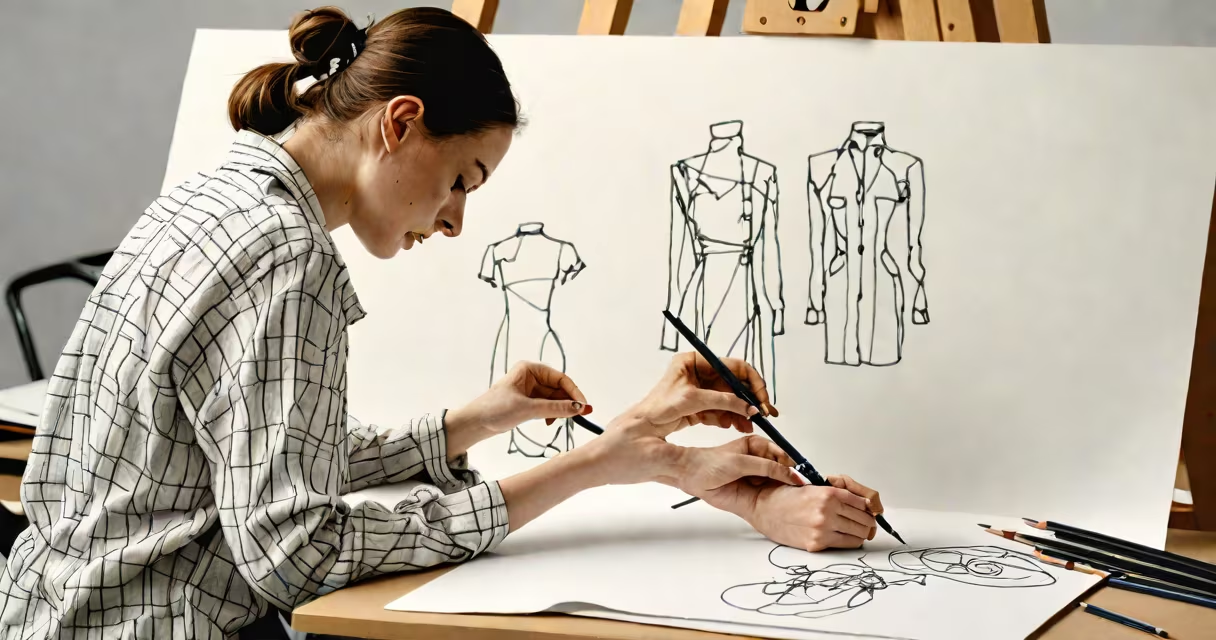
A fashion designer typically needs a bachelor's degree in fashion design or a related field. This degree provides foundational skills in sketching, patternmaking, textile selection, and garment construction, which are essential for creating wearable art and commercial apparel.
The most common academic path begins with a Bachelor of Fine Arts (BFA) or Bachelor of Science (BS) in Fashion Design. These programs require four years of full-time study and include hands-on studio work, internships, and portfolio development. Graduates emerge with a professional body of work ready for entry-level roles in design studios, retail brands, or freelance projects.
According to the U.S. Bureau of Labor Statistics (BLS), about 60% of employed fashion designers hold at least a bachelor's degree. The BLS notes that formal education improves job prospects and salary potential, especially in larger firms where structured training is valued. A 2022 report from the National Association of Schools of Art and Design (NASAD) confirms that accredited fashion programs emphasize technical precision, industry standards, and ethical sourcing-skills rarely gained through self-study alone.
Fashion design degrees blend creative expression with technical execution. Students begin with drawing fundamentals-learning to render silhouettes, fabrics, and details using both pencil and digital tools like Adobe Illustrator. They progress to constructing muslins (prototype garments), selecting materials based on durability and sustainability, and understanding grading systems for size scaling.
Courses often include textiles science, where students learn how fiber composition affects drape, stretch, and care instructions. They also study color theory, trend forecasting, and consumer behavior. These components ensure designs are viable for mass production and market demand.
Many programs require a capstone project-an original collection presented at a runway show or portfolio exhibition. This final work serves as a résumé piece and is frequently reviewed by recruiters from major retailers like Anthropologie, Target, or Nike.
While a bachelor's degree is standard, several degree types exist, each serving different career goals:
| Program Type | Duration | Focus Areas | Best For |
|---|---|---|---|
| Bachelor of Fine Arts (BFA) | 4 years | Artistic development, advanced sketching, experimental design | Aspiring artists aiming for avant-garde or high-fashion roles |
| Bachelor of Science (BS) | 4 years | Technical skills, manufacturing processes, supply chain basics | Those targeting roles in sportswear, activewear, or corporate fashion |
| Associate Degree | 2 years | Basic patternmaking, sewing, CAD software | Entry-level assistants or those seeking quick workforce entry |
Some institutions offer dual-degree tracks-such as fashion design combined with business or marketing. These programs prepare graduates for leadership roles, including creative director positions or launching independent labels.
One widespread misunderstanding is that a fashion designer can succeed without formal education. While exceptions exist-like designers who rise through social media or apprenticeships-these paths are rare and often unsustainable. The fashion industry operates on tight deadlines, complex material logistics, and client expectations that demand professional training.
Another error is assuming all fashion degrees are equal. Accreditation matters. NASAD-accredited schools meet rigorous standards in faculty qualifications, curriculum depth, and studio access. Non-accredited programs may lack industry connections or fail to teach sustainable practices, which are now central to brand compliance.
For example, a 2021 study by the Council of Fashion Designers of America (CFDA) found that 83% of designers hired by major American fashion houses had graduated from NASAD-accredited programs. This statistic underscores the weight employers place on institutional credibility.
In 2020, Maya Lin, a graduate of Parsons School of Design's BFA program, launched her debut collection at New York Fashion Week. Her work was selected after a competitive review process that evaluated not just aesthetic appeal but also technical feasibility and production cost analysis. She credits her success to the school's requirement that each senior project include a detailed production plan and a budget spreadsheet.
Her collection used recycled polyester and organic cotton, meeting the sustainability criteria increasingly demanded by buyers. The entire process-from initial sketches to final fittings-was documented in her portfolio, which she submitted alongside her application to the CFDA's Emerging Designers Program.
This example illustrates that a fashion design degree is not just about creativity-it's about translating ideas into manufacturable products under real-world constraints.
Admission to top fashion programs is highly selective. Most schools require a portfolio of 15-20 original drawings, a personal statement, and sometimes an interview. Some accept applicants with high school diplomas and a strong artistic record, but even then, the rigor of the curriculum demands preparedness.
I once observed a fashion design studio class at the Rhode Island School of Design (RISD), where students spent six hours refining a single sleeve detail. The instructor emphasized that precision in small elements defines professionalism. That level of attention to detail is cultivated through structured education-not picked up casually.
Some roles, such as fashion merchandising or styling, may accept candidates with associate degrees or certificates. But for core design work-especially in competitive markets-a bachelor's degree is expected.
While talent and passion matter, the industry rewards those who can communicate their vision through technical language, measurable outputs, and proven processes. A fashion designer needs a degree not because it's mandatory-but because it equips them to turn imagination into reality.
Understanding what degree a fashion designer needs is critical for anyone entering the field. Without a solid foundation in design principles, materials, and production, even the most new concept risks failure in the marketplace.