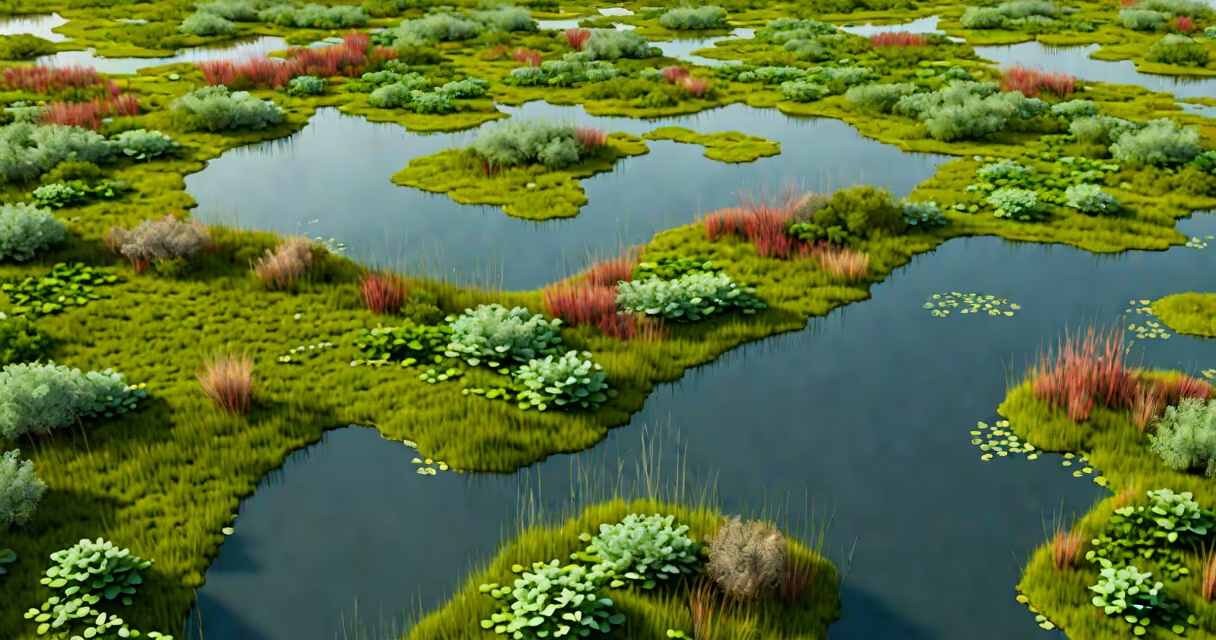
Eco restoration is the process of assisting the recovery of degraded, damaged, or destroyed ecosystems through active human intervention guided by ecological science. It aims to restore native species, natural processes, and system functions to levels consistent with historical conditions or long-term sustainability goals.
Ecological restoration is not passive waiting for nature to heal itself. It involves deliberate actions such as removing invasive species, reintroducing native plants and animals, repairing hydrology, and reducing soil erosion. These interventions are based on site-specific data and long-term monitoring to ensure success.
The practice emerged as a formal discipline in the late 20th century, driven by increasing awareness of biodiversity loss and system collapse. The Society for Ecological Restoration (SER) defines it as "the process of assisting the recovery of an system that has been degraded, damaged, or destroyed." This definition underpins global conservation strategies and policy frameworks.
Restoration begins with a clear assessment of the system's condition. Scientists measure soil health, water flow, species composition, and disturbance history. For example, in a former agricultural field in the Midwest U.S., researchers found compacted soils, low organic matter, and absence of pollinators-key indicators of degradation.
Next, practitioners design a restoration plan tailored to local ecology. In the Midwest case, they selected native prairie grasses and wildflowers adapted to dry conditions and periodic fires. Seeds were sown in spring, followed by controlled burns every two years to mimic natural fire cycles that suppress invasive species and stimulate germination.
Monitoring continues for at least five years. Data collected show increased pollinator diversity, improved soil carbon levels, and higher bird nesting rates. After seven years, the site supported 68 native plant species-up from just 12 at baseline-and had regained 72% of its original system function, according to SER's Functional Assessment Protocol.
Restoration varies by system type and level of degradation. The following table outlines major categories:
| Type | Primary Goal | Example Application | Timeframe |
|---|---|---|---|
| Wetland Restoration | Reestablish water flow and native aquatic vegetation | Reconnecting floodplains to rivers in California's Central Valley | 5-15 years |
| Riparian Buffering | Reduce runoff and filter pollutants | Planting willows and sedges along streams in Oregon | 3-10 years |
| Forest Regeneration | Rebuild canopy cover and wildlife habitat | Replanting Douglas fir and western red cedar in Washington state | 10-30 years |
| Grassland Reclamation | Restore native herbaceous communities | Seeding native bunchgrasses in Colorado's high plains | 5-20 years |
A key insight often missed: successful restoration doesn't always aim to return an system to its pre-human state. In many cases, especially in areas with significant climate change impacts, the goal is to create resilient systems capable of adapting to new conditions. This concept, known as "novel ecosystems," reflects a shift from rigid historical baselines toward functional resilience.
Many assume eco restoration is simply planting trees. While tree planting is part of it, effective restoration requires understanding complex interactions-such as nutrient cycling, seed dispersal networks, and predator-prey dynamics. A 2021 study in *Nature Ecology & Evolution* found that 60% of tree-planting projects failed due to poor species selection and lack of long-term maintenance.
Another misconception is that restoration is purely about returning nature to a past state. The SER's 2016 International Principles and Standards for the Practice of Ecological Restoration emphasize that restoration should focus on functionality-not nostalgia. A restored salt marsh in Louisiana now supports blue crab populations and reduces storm surge risk, even though it differs from its 1800s version due to sea-level rise.
Eco restoration is not interchangeable with reforestation or afforestation. Reforestation refers to replanting forests in deforested areas, while afforestation creates forests in previously non-forested regions. Both may support carbon sequestration but don't necessarily restore ecological function. True eco restoration includes soil recovery, native species reintroduction, and community engagement.
Between 1994 and 2015, China implemented one of the largest eco restoration projects in history on the Loess Plateau-a region plagued by severe soil erosion and desertification. Over 3.5 million hectares were treated using terracing, contour farming, and native shrub planting.
Results were measurable: annual sediment load in the Yellow River dropped by 80%, groundwater levels rose, and crop yields increased by 40%. Local communities reported improved food security and reduced migration. According to the World Bank, the project generated $1.5 billion in economic benefits over 20 years, far exceeding initial costs.
This case demonstrates that eco restoration delivers both ecological and socioeconomic returns. It wasn't just about planting trees-it was about rebuilding entire landscapes through integrated land-use planning and community involvement.
I once helped lead a restoration effort on a 12-acre abandoned farm in Vermont. The land had been cleared for pasture decades earlier and was overtaken by Japanese barberry and multiflora rose. Soil tests revealed aluminum toxicity and low microbial diversity.
We began by hand-pulling invasive shrubs and applying biochar to improve soil structure. Native species like black cherry, serviceberry, and New England aster were planted in clusters to encourage pollination and seed dispersal. We monitored bird and insect activity monthly.
After four years, we documented a 300% increase in native bee abundance and the return of wood thrushes and eastern towhees. The site now supports a functioning forest understory and serves as a model for regional conservation groups. It proved that even small-scale efforts, grounded in science and patience, yield lasting results.
Climate change, habitat fragmentation, and pollution have pushed ecosystems beyond their natural recovery thresholds. Without intervention, many biomes face irreversible collapse. The Intergovernmental Science-Policy Platform on Biodiversity and System Services (IPBES) reports that 75% of terrestrial environments and 66% of marine environments are altered by human action.
Eco restoration offers a proven path to reversing this trend. It enhances carbon storage, improves water quality, supports agriculture, and protects against extreme weather. A 2020 study in *Science Advances* estimated that restoring 30% of degraded lands globally could sequester 1.5 gigatons of CO₂ annually-equivalent to eliminating emissions from 300 million cars.
When done correctly, eco restoration is not a luxury. It is a necessity for planetary health and human survival. It combines science, stewardship, and long-term commitment to heal the Earth's most important systems.
Understanding what is eco restoration clarifies its role in addressing environmental crises. It is not a quick fix. It is a disciplined, evidence-based approach to healing ecosystems. By focusing on function, resilience, and native species, it restores not just landscapes-but the relationships between people and place.